A first-time guide to Cuyabeno Wildlife Reserve / The independent traveller’s blueprint
Cuyabeno, Ecuador, travel tips and essential jungle guide for first-time visitors
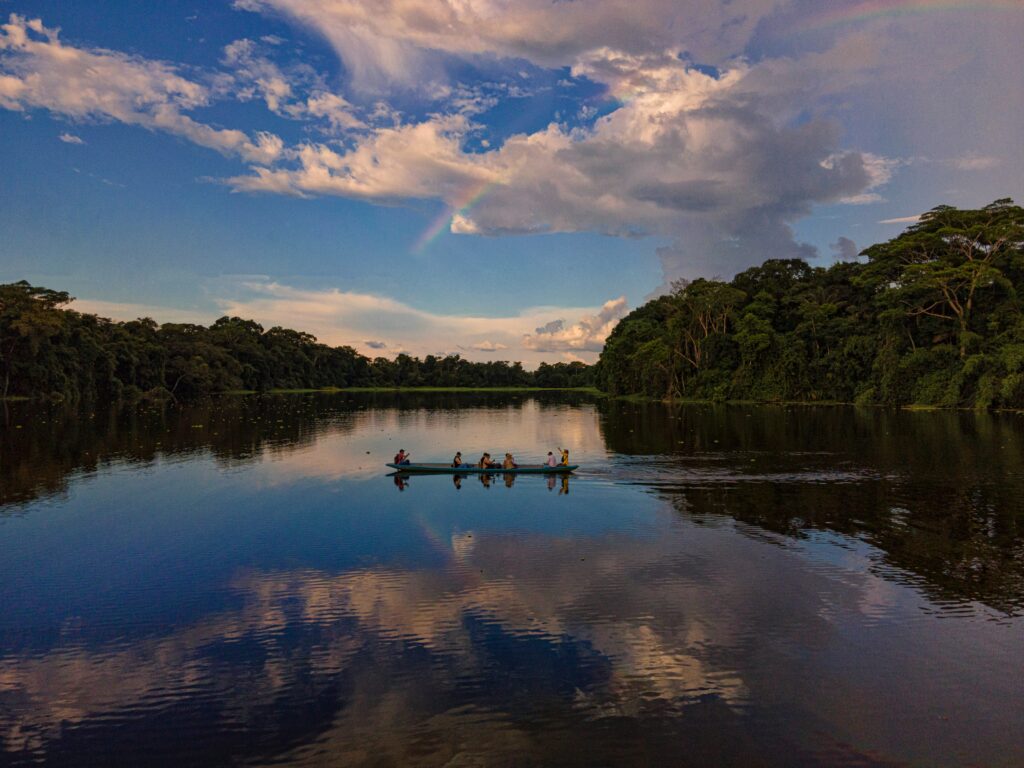
Trade the rigid tour-bus schedule for the deep rhythm of the Amazon
BEN FINCH
The Amazon basin is often marketed as an inaccessible frontier, a place where you must hand over total control of your itinerary to an all-inclusive agency before you even step off the plane in Quito. For travellers who value autonomy, who prefer the gentle friction of local buses to the sterile isolation of a private tour shuttle, this narrative can feel discouraging.
But the Reserva de Producción de Fauna Cuyabeno breaks the mould. Located in the north-eastern corner of Ecuador, this vast protected area of flooded forests, blackwater lagoons, and intricate river systems is remarkably accessible to the self-sufficient voyager. While regulations require you to enter the reserve itself with a licensed guide and boat, how you get there, how you manage your time, and how you prepare for the environment remain entirely in your hands.
If you are planning your first venture into this extraordinary ecosystem, setting your own pace is the key to truly absorbing it. This guide skips the generic tourist fluff to deliver the practical, boots-on-the-ground knowledge needed to navigate Cuyabeno independently.
An adventure to the flooded forest
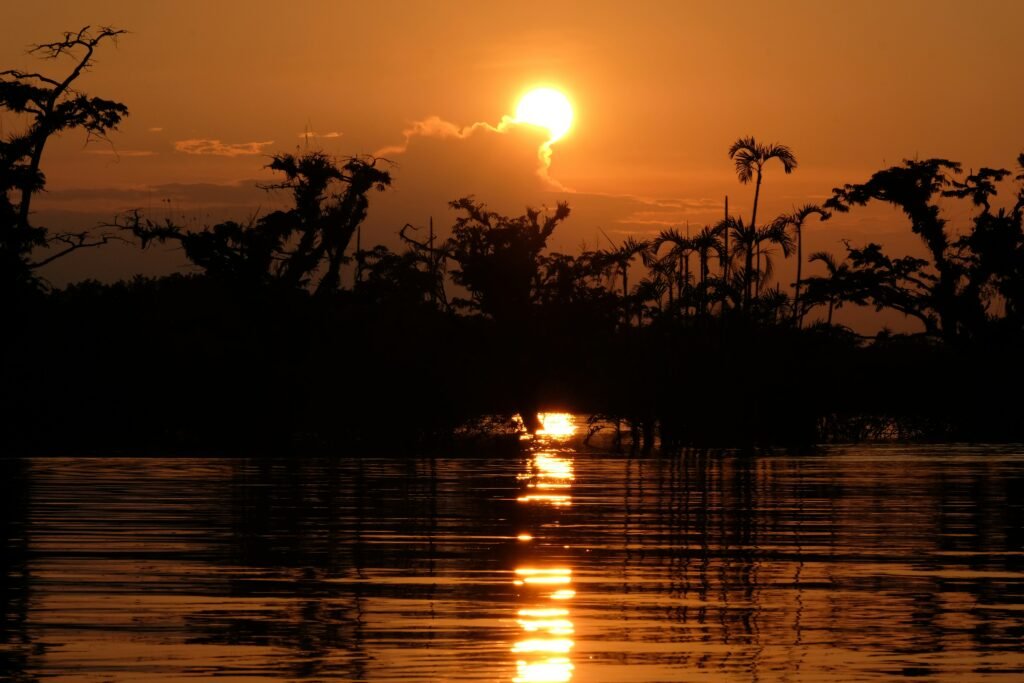
The Ecuadorian Amazon reveals its truest self to those who forgo the insulated tour bus. By navigating this intricate water world on your own terms, you unlock a raw, unhurried side of the rainforest that structured itineraries simply cannot reach.
- Independent transit hub: Lago Agrio serves as the essential gateway, easily reached via reputable overnight public buses from Quito’s Terminal Terrestre Carcelén
- The end of the road: El Puente is the official bridge over the Cuyabeno River where tarmac stops, local shared transport unloads, and motorised canoes take over
- The nocturnal chill: Midnight canoe safaris introduce a surprising microclimate quirk, where racing along blackwater rivers under the canopy causes temperatures to drop significantly
- The fabric rule: High humidity hovering around 90 per cent prevents cotton garments from drying, making technical, quick-drying synthetic fabrics an absolute necessity
- The boot barrier: Heavy-duty rubber wellingtons provided for jungle treks protect against mud but cause severe blisters unless paired with thick, knee-high wool socks
- The currency vacuum: Cash is the absolute law at the river’s edge, requiring small-denomination US dollar bills for community visits, snacks, and local tips
- The ancestral hosts: The Siona, Secoya, and Cofán peoples offer profound cultural exchanges, where traditional flatbread making represents a living village heritage rather than a tourist performance
Cuyabeno Wildlife Reserve.
Explore the Amazon’s flooded forest
Navigating to the edge of the Amazon
Most commercial packages bundle transport from Quito directly into their fees, packing travellers into private minibuses for an uncomfortable overnight drive. To maintain your independence and save a significant amount of money, you can easily manage this journey using Ecuador’s robust public transport network.
Your primary transit hub is Lago Agrio, also known as Nueva Loja. From the Terminal Terrestre Carcelén in the north of Quito, several reputable bus lines run overnight services to Lago Agrio. The journey takes roughly seven to eight hours, winding down from the high Andes into the tropical lowlands. Choosing a night bus allows you to sleep through the winding mountain roads and arrive in Lago Agrio in the early hours of the morning.
Once you step off the bus in Lago Agrio, you have skipped the mass-tourist pipeline. From the terminal, local shared transport or buses run frequently to El Puente, the official gateway bridge over the Cuyabeno River. This two-hour drive takes you through local communities and agricultural landscapes that visitors on private transfers completely miss. El Puente is where the road ends and the water begins. Here, you will connect with your pre-arranged local guide or independent eco-lodge boat, stepping away from tarmac and into the primary rainforest.
Weather quirks and the Amazonian microclimate
First-time visitors often assume the Amazon is simply hot and wet all the time. While that is true on a macro level, Cuyabeno possesses distinct microclimates and weather quirks that catch unprepared travellers off guard.
Because Cuyabeno is a flooded forest system, water levels dictate everything from wildlife spotting to temperature. The region experiences a less rainy season from December to February, but downpours can happen on any given afternoon. The most significant surprise for first-timers is the dramatic temperature drop during night-time canoe safaris. When the sun dips below the canopy and you are moving along the blackwater rivers at speed, the damp air turns remarkably chilly. A lightweight, wind-resistant jacket is just as vital as a swimsuit.
Midday heat is intense, but the dense canopy provides natural shade. The real challenge is humidity, which frequently hovers around 90%. This means clothes do not dry naturally. If you get caught in a sudden equatorial downpour on day one, your cotton shirts will remain damp for the rest of the trip. Synthetic, quick-drying fabrics are non-negotiable for anyone wishing to stay comfortable without relying on a lodge laundry service.
The Ecuadorian Amazon.
The most biodiverse place in the world
What first-timers constantly overlook
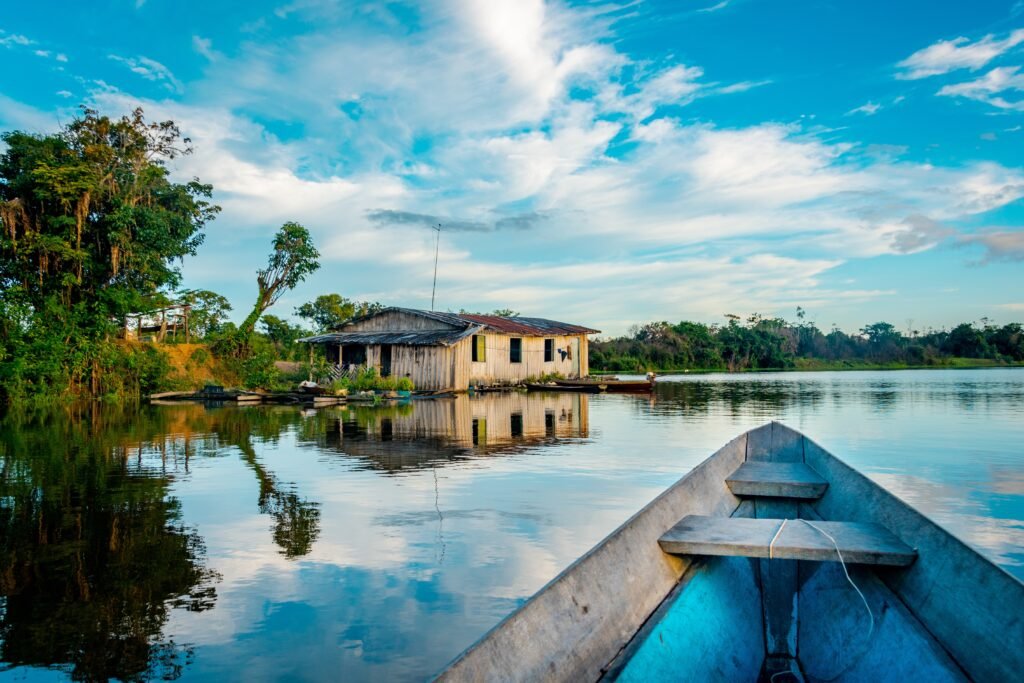
When preparing for a remote wilderness environment, it is easy to focus on big-ticket gear and miss the minor details that dictate your daily comfort. Through experience, independent travellers have identified several crucial factors that mainstream guides omit.
The footwear trap
Most eco-lodges and guiding services will provide tall rubber Wellington boots for jungle walks. While this solves the problem of mud and snake safety, it introduces a new issue: severe friction blisters. Wellies do not breathe, and they do not fit like hiking boots. First-timers often pack short trainer socks, leading to painful chafing against the rough rubber interior. Bring several pairs of thick, knee-high synthetic or merino wool socks to shield your calves and lower legs.
The cash vacuum
El Puente and the communities within the reserve operate entirely on cash, specifically small-denomination US dollars (the official currency of Ecuador). There are no cash machines in the jungle, and the ATMs in Lago Agrio are notoriously unreliable or prone to running out of money. Do not risk arriving at the river edge without enough cash for tipping local boat captains, buying artisanal crafts from indigenous Siona communities, or purchasing local snacks. Ensure you carry bills smaller than 20 dollars, as changing a large note is practically impossible in the forest.
Tactical illumination
Electricity in the reserve is a luxury, usually provided by limited solar arrays that shut down after 10:00 pm. A reliable headlamp is essential, but many travellers forget to bring extra batteries or a power bank to recharge it. When the jungle goes dark, it is absolute. A headlamp keeps your hands free while navigating wooden boardwalks at night or searching your pack for dry clothes.
The Ecuadorian Sierra.
Get lost in the hills
Siona culture and local etiquette
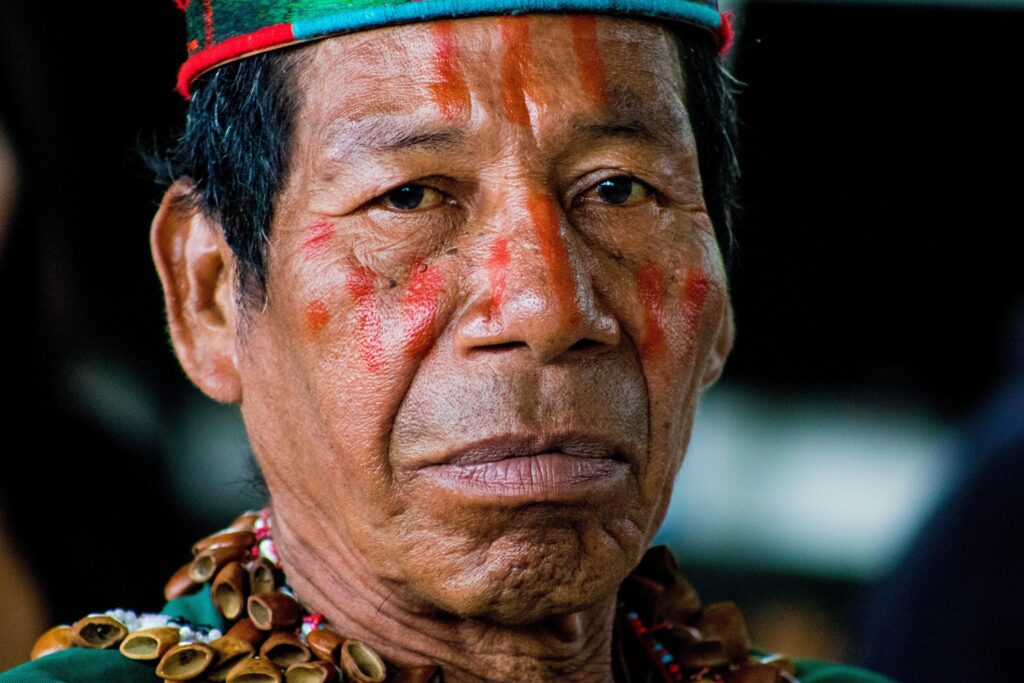
Cuyabeno is not merely a wildlife sanctuary; it is the ancestral home of several indigenous groups, including the Siona, Secoya, and Cofán peoples. Independent travel is about meaningful connection, which requires a deep respect for local customs.
When visiting a community, remember that you are entering a living village, not a living museum. Always ask for permission before taking photographs of individuals, particularly children. While the community members are exceptionally welcoming and often share their traditional methods of making casabe (cassava flatbread), treat the interaction as a mutual cultural exchange rather than a tourist performance. Supporting local community-led tourism initiatives ensures that the economic benefits of your visit remain directly with the people who protect the forest.
Amazonian flavours / Moving beyond western comfort food
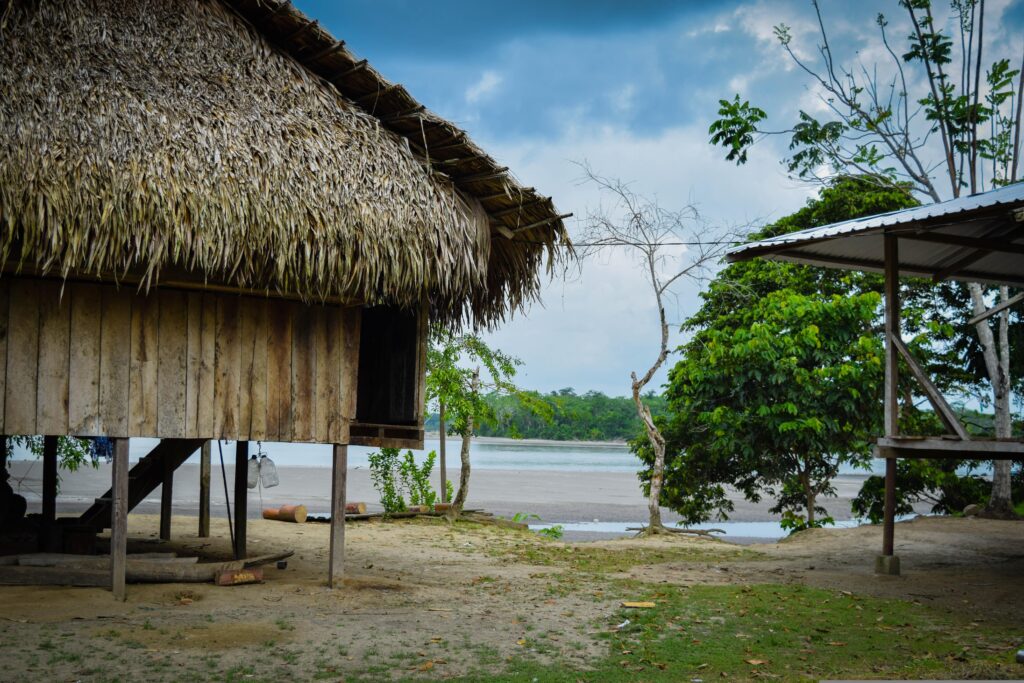
While many large-scale lodges serve sanitised international cuisine to appease tour groups, seeking out authentic Amazonian food offers a profound insight into the region’s relationship with nature. Embracing these staples connects you directly to the landscape, revealing a sustainable culinary heritage that predates modern farming by millennia.
Maito
Maito represents the pinnacle of riverside culinary ingenuity, a dish born entirely from the immediate environment. Local cooks take fresh river fish, frequently catfish or tilapia caught in the complex river networks, and season it subtly with wild coriander and local salt. The fish is then wrapped tightly in multiple layers of bijao leaves, which are broad, durable leaves harvested directly from the rainforest floor.
Once securely bound into a neat, watertight pouch, the package is placed directly onto hot wood charcoal. The moist leaves steam the fish in its own juices while infusing the flesh with a delicate, smoky, earthy aroma that cannot be replicated by modern kitchen appliances. When you peel back the charred layers of foliage at the dinner table, the fish falls away from the bone, incredibly tender and entirely untainted by heavy oils or artificial flavourings. It is a masterclass in low-impact, sustainable cooking.
Casabe
Casabe is a crisp, unleavened flatbread that has served as the baseline carbohydrate for indigenous Amazonian communities for thousands of years. The process of creating casabe is both labour-intensive and culturally significant. It begins with the harvesting of bitter yucca, a starchy root vegetable that thrives in the nutrient-poor soils of the rainforest. Because raw bitter yucca contains naturally occurring cyanogenic glucosides, the root must undergo a meticulous extraction process to make it safe for consumption.
Women of the Siona and Secoya communities grate the yucca down to a fine pulp, then place the wet mash into a long, woven strain-sleeve known as a matafrío or tipití. By stretching this ingenious device, they squeeze out the toxic liquid juices, leaving behind a safe, dry flour. This flour is then sifted and spread evenly onto a large, flat clay plate called a budare, positioned over an open wood fire. With no oil or water added, the heat quickly binds the starch into a durable, round flatbread. For the independent traveller, tasting casabe straight from the hot clay offers a direct connection to ancient survival techniques, yielding a food that is lightweight, highly nutritious, and capable of keeping for months without spoiling.
Chicha de yuca
Chicha de yuca is far more than a simple beverage; it is the social glue of the Ecuadorian Amazon. This traditional fermented drink is crafted from boiled yucca roots that are mashed down into a thick, smooth paste. In traditional preparation, a small portion of the mash is chewed by the women preparing it to introduce salivary enzymes that accelerate the breakdown of complex starches into fermentable sugars, though modern variations sometimes rely on natural wild yeasts found on the plant skins.
The mixture is left to ferment in large ceramic pots for anywhere from a few hours to several days, depending on the desired strength. The result is a dense, slightly tart, and incredibly refreshing beverage that provides vital hydration and calories to workers returning from the forest. In local communities, offering a bowl of chicha to an arriving guest is an essential welcoming ritual. As an independent traveller, accepting the bowl with both hands and drinking deeply is a foundational gesture of mutual respect, signalling your willingness to step outside your comfort zone and participate fully in the local way of life.
The Galápagos.
Ecuador’s Enchanted Isles
Discover Cuyabeno naturally
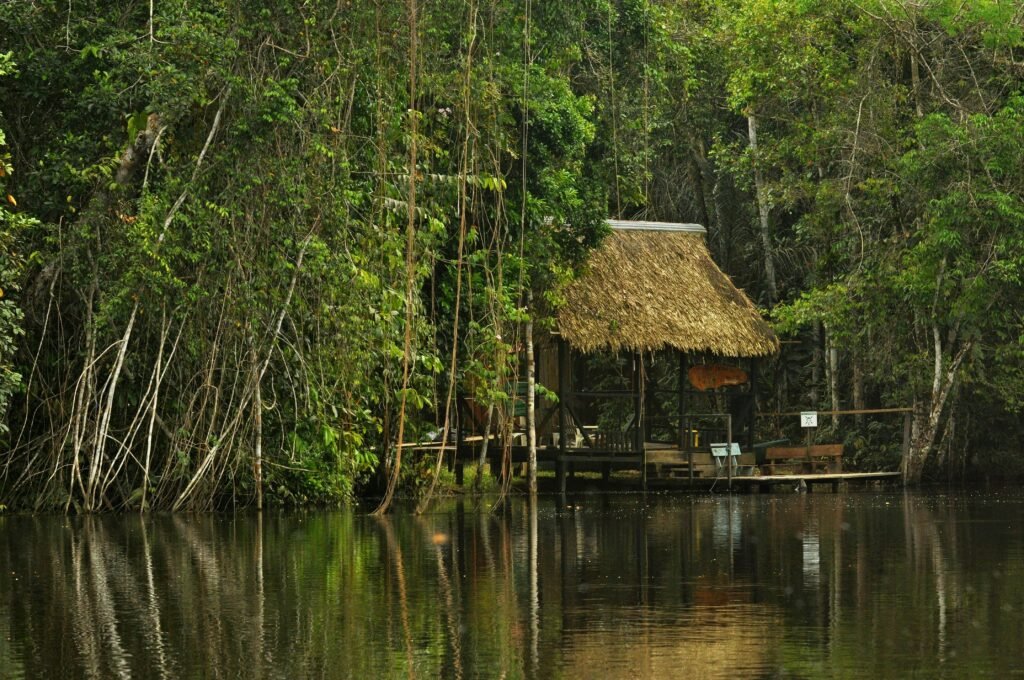
Read this far?
At Wheely Tyred, we advocate for the joy of unhurried, self-directed exploration. Whether you are charting a route across a continent on two wheels or navigating the complex waterways of the Ecuadorian Amazon by public transport and motorised canoe, the underlying principle is identical: the journey matters far more than a checklist of sights.
Stepping outside the safety bubble of an all-inclusive tour group allows you to experience Cuyabeno with open eyes. You notice the subtle shift in vegetation as the bus drops from the mountains to the jungle. You engage in genuine conversations with local drivers at the transit stops. Most importantly, you gain a profound respect for a fragile ecosystem by experiencing it on its own terms. Pack light, plan your own trajectory, and let the Amazon unfold before you naturally.
Affiliate Disclaimer: Some of the links on Wheely Tyred are affiliate links. If you click through and make a booking or purchase, we may earn a small commission at no extra cost to you. We only recommend gear, tours, stays, and services we genuinely use, trust, and stand behind — our editorial independence always comes first. These commissions help keep our independent cycling guides and travel stories free to read. You can also buy me a coffee here — thanks for supporting the ride!
The Ecuadorian Coast.
Where you’ll find the very best food
Frequently asked questions about visiting Cuyabeno
You can take a public overnight bus from Terminal Terrestre Carcelén in the north of Quito directly to Lago Agrio, a journey of roughly seven to eight hours. From the terminal in Lago Agrio, regular local shared transports and buses run onwards to El Puente, the official gateway bridge where the river navigation begins.
While days are intensely hot and humid, nights on the open water are remarkably cold. You will need lightweight, quick-drying synthetic clothing for daytime trekking, alongside a wind-resistant, lightweight jacket for night-time canoe safaris. Avoid cotton, as the 90 per cent humidity means it will not dry.
Local guides and lodges standardly provide tall rubber Wellington boots for safety in the mud. Because these do not breathe or fit like traditional hiking boots, you must pack several pairs of thick, knee-high synthetic or merino wool socks to protect your lower legs from painful friction and chafing.
No. The entire reserve and the transit point at El Puente operate strictly on cash using US dollars. ATMs in Lago Agrio are notoriously unreliable, so you must withdraw ample cash in Quito before departing, ensuring you request bills smaller than 20 dollars to facilitate local transactions.
Always remember that you are a guest in a functioning, living village. Always ask for explicit permission before taking photographs of residents, and approach cultural demonstrations, such as the baking of casabe flatbread, as a respectful mutual exchange rather than a commercial show.
Keep an eye out for maito, which is fresh river fish seasoned with local herbs, wrapped in bijao leaves, and grilled over hot charcoal. You should also try casabe, a crisp flatbread made from grated yucca root, and chicha de yuca, a traditional fermented beverage deeply tied to local welcoming rituals.
Ecuador.
Pure wonder on the equator.