Sustenance in the rainforest / A culinary guide to Cuyabeno
Discover authentic Amazonian cuisine in the heart of the Cuyabeno Wildlife Reserve, from traditional maito to indigenous chicha
Uncover ancestral ingredients and forest-to-table traditions
BEN FINCH
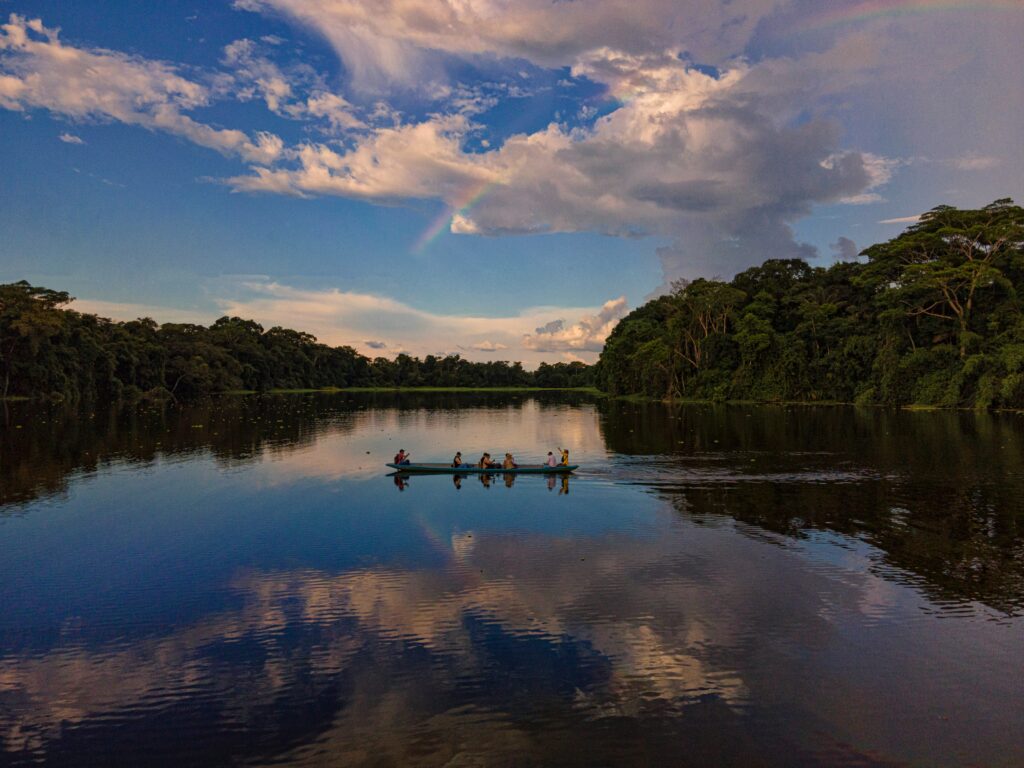
The Cuyabeno Wildlife Reserve is not a place for the casual diner. Here, in the sprawling, emerald expanse of the Ecuadorian Amazon, food is not merely fuel—it is an ancient dialogue with the rainforest. For the independent traveller navigating the intricate waterways by motorised canoe or hiking along muddy jungle trails, the culinary landscape is entirely defined by the rhythm of the river, the botanical wisdom of the Siona, Secoya, and Kichwa communities, and the incredible biodiversity of the jungle canopy.
In this remote corner of South America, gastronomy is deeply rooted in ancestral practice, isolation, and environmental adaptation. There are no urban restaurants here, nor are there standard street-food tours. Instead, the most profound meals are found in the open-air dining houses of eco-lodges or shared around communal hearths during visits to indigenous community villages. When you travel through Cuyabeno, you are consuming the living history of a wilderness that has been nurtured and managed sustainably for millennia.
A culinary tradition inseparable from the ecosystem
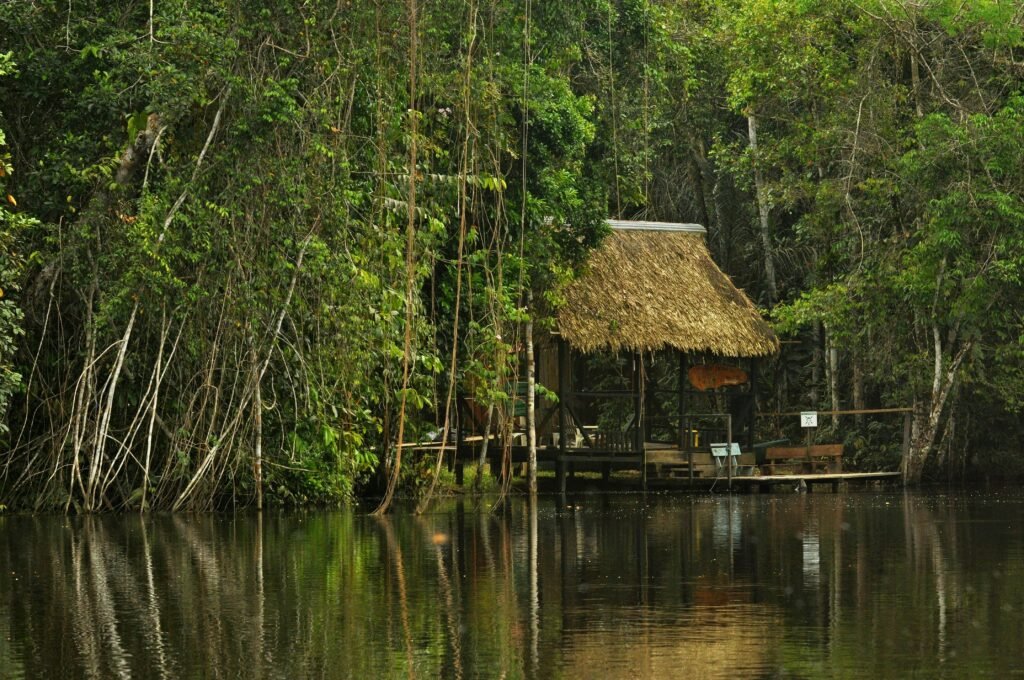
Navigating the intricate waterways of Cuyabeno reveals a culinary tradition completely inseparable from the surrounding ecosystem. For the self-reliant traveller, true luxury lies in understanding these ancestral, forest-to-table connections.
- Ancestral Stream-Roasting: Discover maito, a brilliant cooking technique where fresh river fish is seasoned with wild herbs, wrapped securely in waxy bijao leaves, and slow-roasted directly over charcoal embers
- The Lifeblood Root: Learn the complex process behind casabe, an ancient, crispy flatbread painstakingly prepared by Siona and Secoya artisans using grated, compressed yuca pulp
- Foraged Superfoods: Challenge conventional culinary boundaries with grilled chontacuro larvae, a highly nutritious delicacy harvested from decaying palm trunks that tastes surprisingly of roasted nuts and bacon
- Wild Seasonings: Move beyond commercial spices with indigenous ingredients like ajo sacha, a wild forest vine delivering a potent garlic aroma, and neapia, a fiery black chilli paste made from reduced bitter yuca juice
- Ritual Hospitality: Experience the immense cultural weight of chicha de yuca, a tangy, fermented beverage that serves as an essential gesture of welcome and community cohesion in indigenous homes
- Responsible Sourcing: Support the delicate regional economy by choosing eco-lodges that partner with indigenous families and purchase crops directly from riverbank communities at fair-trade rates
Cuyabeno Wildlife Reserve.
Explore the Amazon’s flooded forest
The botanical tapestry of the Upper Amazon
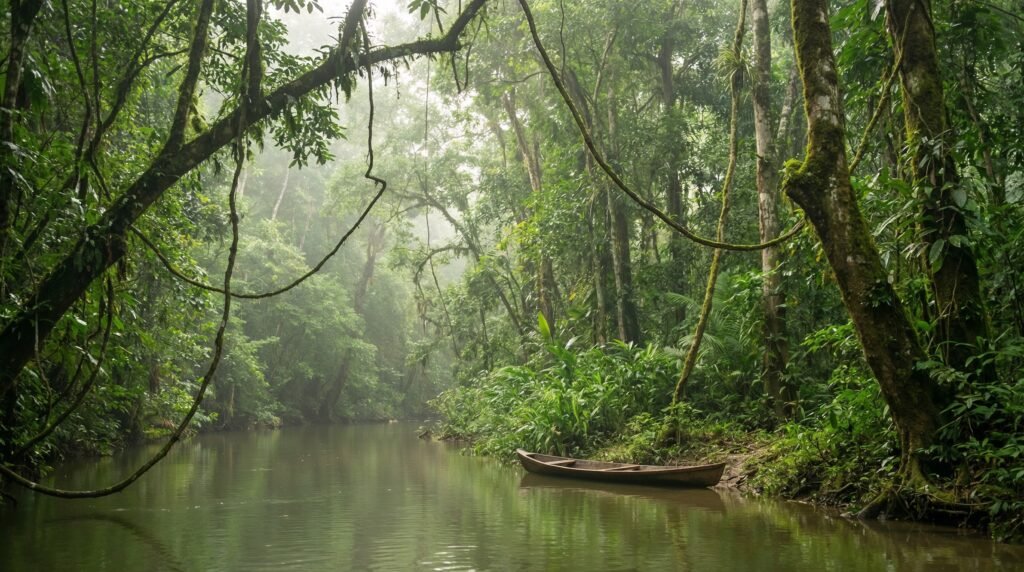
To truly appreciate the food of Cuyabeno, one must understand that the jungle itself is a vast, natural market. Indigenous cooks do not rely on imported commercial spices or mass-produced oils. Instead, the forest floor and understory provide an array of aromatic leaves, root herbs, and sour fruits that define the flavour profile of regional dishes.
Bijao (Calathea lutea)
The wide, waxy leaves of the bijao plant are fundamental to Amazonian culinary architecture. Growing abundantly in damp, shaded areas of the primary forest, these sturdy leaves function as natural aluminium foil. They are remarkably heat-resistant, allowing food to be placed directly onto glowing embers. Beyond their utility as packaging, bijao leaves exude a delicate, herbaceous, and slightly sweet aroma when heated, infusing whatever is cooked inside them with a distinct jungle terroir that cannot be replicated by any modern cooking medium.
Ajo sacha (Mansoa alliacea)
Garlic vine, known locally as ajo sacha, is a wild forest liana that acts as the primary seasoning agent across the western Amazon basin. When the leaves of this woody vine are crushed, they release an incredibly pungent aroma identical to cultivated garlic. Siona and Kichwa families use fresh ajo sacha leaves to marinate river fish and forest meats, providing a sharp, savoury depth to stews and roasts without the need for agricultural garlic bulbs. The plant is also highly revered for its medicinal properties, often used to ward off fatigue during long treks.
Neapia
Neapia is one of the most intriguing and complex condiments found in the Ecuadorian jungle. Created primarily by Kichwa and Secoya communities along the river basins, it is a thick, dark, umami-rich black chilli paste. The production process requires immense skill: the toxic, cyanogenic juice squeezed from wild bitter yuca is gathered and boiled continuously for hours until the dangerous compounds evaporate, leaving behind a thick, concentrated reduction. This reduction is then mixed with crushed jungle hot peppers, wild coriander, and salt. The result is an intense, fiery condiment used to liven up mild river fish or serve as a dipping paste for starches.
Guayusa (ilex guayusa)
While not a food dish, guayusa is the essential beverage that fuels life in the reserve. This native holly tree contains a unique combination of caffeine, antioxidants, and L-theanine. Brewed in large clay pots over wood fires at the break of dawn, guayusa tea offers a smooth, sustained energy boost without the jittery crashes associated with coffee. For the independent traveller, a gourd of warm guayusa is the ultimate remedy after a long, exhausting journey by bus and boat to reach the reserve boundary.
Jungle fruits / Arazá and cocona
The humidity of the rainforest demands constant hydration, which is met by an array of highly acidic, vibrant wild fruits. Arazá is a bright yellow, spherical fruit with an intense citrus-like fragrance and a sharply sour flesh, usually blended with filtered water and a touch of wild honey to create a refreshing juice. Cocona, often described as the jungle tomato, is a golden-orange fruit used both for tart beverages and chopped raw into fiery hot sauces along with local chillies and wild herbs to cut through the richness of fried starches.
The Ecuadorian Amazon.
The most biodiverse place in the world
Pillars of Amazonian sustenance and the dishes to try
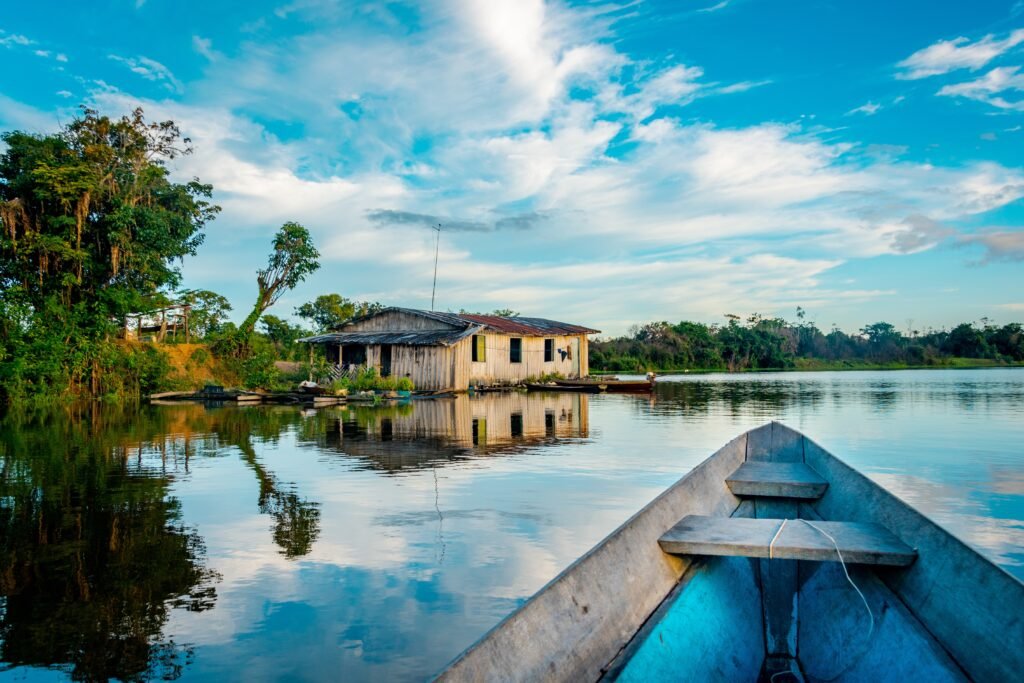
The core diet of Cuyabeno revolves around a few incredibly versatile staples. Each ingredient is utilised in multiple ways, forming the basis of unique dishes that every independent traveller should seek out during their stay.
Yuca (cassava) and the art of casabe
Yuca is the indisputable lifeblood of the Amazon. Unlike the starchy potatoes of the high Andean sierra, this robust root thrives in the acidic, nutrient-variable soils of the lowlands.
The most celebrated dish derived from this root is casabe, an ancient, unleavened flatbread prepared principally by the women of the Siona and Secoya communities. To experience casabe, travellers accompany community members to small forest clearings to unearth the tubers. The yuca is peeled, washed, and finely grated on wooden boards studded with sharp river stones. The damp pulp is then placed inside a sebucán—a long, flexible, woven basketry tube suspended from a tree branch. By twisting the tube, the powerful toxins and liquid starch are compressed out of the yuca, leaving behind a dry, crumbly flour.
This flour is sifted and spread evenly onto a large, piping-hot clay griddle called a budare, heated by a carefully managed wood fire. No oil, salt, or binding agents are added. Within minutes, the natural starches fuse together, forming a thin, large, crispy cracker. Casabe is entirely gluten-free, neutral in flavour, and can be preserved for months without spoiling. It is eaten dipped into fish broths, spread with fresh wild avocado, or used as an edible spoon to scoop up spicy neapia paste.
Aside from casabe, yuca appears at almost every meal. It is boiled until buttery soft to accompany breakfasts, fried into crisp wedges for dinner side dishes, and used as the thickener for caldo de bagre—a robust, restorative catfish soup seasoned with wild tree tomatoes, garlic vine, and cumin that is traditionally consumed by river fishermen to regain their strength.
The Ecuadorian Sierra.
Get lost in the hills
Maito / The masterclass in steam-roasting
If yuca is the starch of the jungle, maito is its definitive protein dish. Maito is not an ingredient itself, but rather an ancestral cooking methodology that showcases the synergy between the river and the flora of the banks.
To prepare maito de pescado, a fresh river fish—frequently native tilapia, boca chico, or the prized, colossal freshwater paiche—is scaled and gutted. The interior of the fish is lightly rubbed with sea salt and crushed ajo sacha leaves. The cook then takes three to four overlapping bijao leaves, wraps the fish into a tight, secure parcel, and ties the top with strips of natural palm fibre.
The parcel is laid directly onto the glowing embers of an open fire. The outer layers of the bijao leaves char and smoke, while the inner layers trap the moisture of the fish. This creates an enclosed steam environment where the fish cooks gently in its own juices, infused simultaneously with the smoky, woodsy essence of the burning timbers and the herbal oils of the cooking leaf. When the parcel is cut open at the dining table, the fish is incredibly moist, flaking away from the bone with a pristine, unadulterated flavour profile that captures the clean simplicity of traditional forest cooking.
Variations of this dish include maito de palmito, where tender, ivory-coloured rounds of fresh heart of palm are chopped with wild mushrooms, wrapped in the same leaves, and roasted to create a wonderfully savoury, entirely plant-based version that is highly recommended for vegetarian travellers.
Chontacuro / The energy delicacy of the chonta palm
For the culturally curious traveller, the chontacuro represents the pinnacle of traditional forest foraging. These large, plump larvae of the palm weevil live exclusively inside the decaying trunks of the chonta palm tree (Bactris gasipaes). The chonta palm is a vital botanical resource in itself, producing hardwood for tools, delicate hearts of palm for salads, and dense, nutritious orange fruits used to make seco de chonta—a thick, slow-cooked winter stew combining the nutty palm pulp with local proteins.
When a chonta palm reaches the end of its life, it is intentionally felled by community members to create a habitat for the weevils. After several weeks, the trunk is split open with machetes to harvest the larvae, which are exceptionally high in healthy fats, protein, and vitamins.
The most traditional way to sample chontacuro is chontacuro asado—skewered onto thin bamboo sticks and grilled over charcoal. As they cook, the outer skin becomes intensely crispy, while the interior melts into a rich, creamy texture. The flavour is surprisingly mild and complex, closely resembling roasted almonds, bacon, and charred chicken skin. It is considered a medicinal superfood by local guides, frequently recommended to treat respiratory ailments and boost immune systems during the rainy season.
The Galápagos.
Ecuador’s Enchanted Isles
The social and ritual beverage / Chicha de yuca
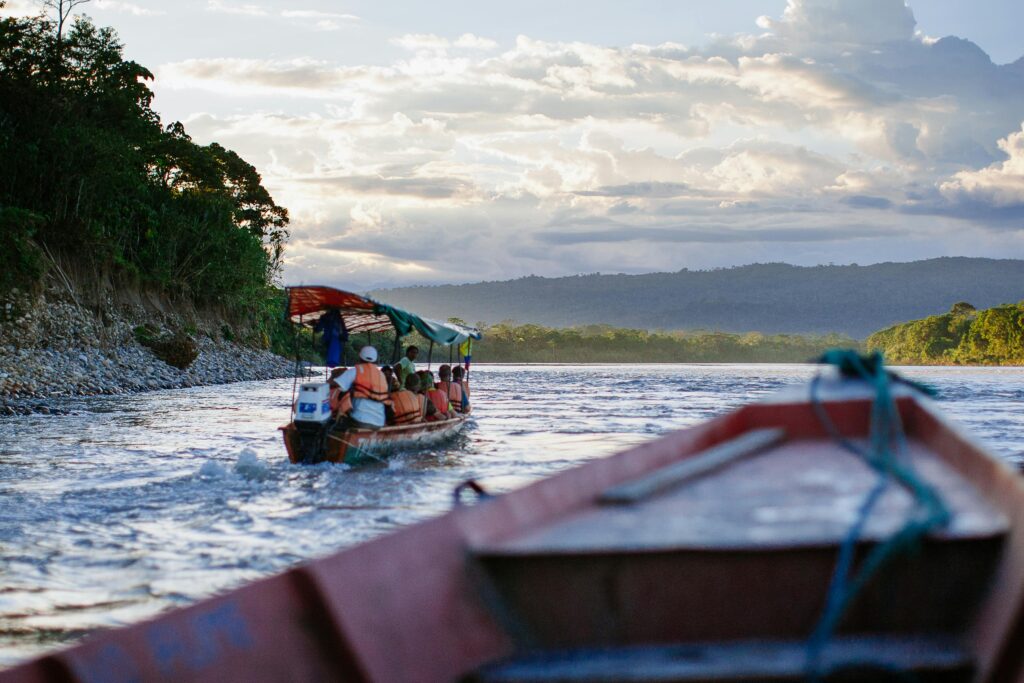
No culinary exploration of the Cuyabeno Reserve is complete without understanding chicha de yuca. This fermented beverage transcends simple nutrition; it is a profound symbol of hospitality, community cohesion, and social structure across all indigenous nationalities of the Ecuadorian Oriente.
The preparation of traditional chicha is a meticulous, labour-intensive ritual. Huge quantities of yuca are boiled in large cauldrons until completely tender. The hot yuca is then transferred to a large wooden trough, where it is thoroughly mashed using heavy wooden mallets. In the strictly traditional method, women chew portions of the mashed yuca and return them to the trough. The natural enzymes present in human saliva break down the complex starches of the root into simple, fermentable sugars, accelerating the natural fermentation process.
The mash is then packed into large clay storage vessels, covered with bijao leaves, and allowed to ferment anywhere from two days to over a week. The resulting drink is thick, opaque white, slightly effervescent, and possesses a tangy, sour, yoghurt-like acidity. It is low in alcohol during its early stages, serving as a highly nutritious, hydrating beverage that community members drink throughout the day while farming or paddling canoes. When a visitor enters a Siona or Kichwa home, being offered a gourd of chicha is a sign of welcome; accepting it with gratitude is an essential mark of respect for the independent traveller.
Navigating logistics / How to dine responsibly
Because Cuyabeno is a highly protected wildlife reserve, independent travellers cannot simply wander into the jungle to find a restaurant. Food logistics must be approached thoughtfully, keeping sustainability and cultural respect at the forefront.
Gateway sustenance in Lago Agrio
Your culinary journey will begin in the gateway town of Lago Agrio (Nueva Loja), where the roads end and the wilderness begins. Before boarding your motorised canoe at El Puente de Cuyabeno, seek out small, independent, family-run eateries near the transport hubs. Look for local establishments serving authentic coastal-jungle fusion food, such as:
- Cevicheria La Bomba: An excellent, clean text-only recommendation for independent travellers waiting on transit connections. Cevicheria La Bomba is highly praised for its exceptional ceviche de pescado, featuring incredibly fresh river and coastal catches marinated in local wild lime juice and topped with crispy plantain chips (chifles). It offers the perfect, light, high-protein nourishment required before embarking on the deep-water canoe transit into the humid interior of the reserve.
The lodge and community system
Read this far?
Once inside the reserve boundaries, your dining will be centred around the eco-lodges or the community homestays. To ensure your food journey is both ethically responsible and delicious, select lodges like the Cuyabeno Wildlife Centre or partnerships with the Tarabeaya Siona Community. These operations operate on strict farm-to-table and river-to-table methodologies, buying their yuca, plantains, chonta fruits, and fish directly from the riverbank families at fair-trade prices.
Menus in these open-air, thatched-roof dining halls are intentionally designed to reflect the seasonal availability of the forest. You will dine surrounded by the symphonies of tree frogs and nocturnal birds, eating modern interpretations of ancient dishes—such as hearts of palm tossed in wild passionfruit dressings, or fresh river catfish pan-seared with local wild coriander.
By stepping away from commercial tour packages and choosing to engage deeply with the authentic, slow-cooked, botanical foodways of Cuyabeno, you gain far more than basic nourishment. You walk away with a profound, grounded appreciation for the intricate, living relationship between the people of the Amazon and the magnificent forest they call home.
Affiliate Disclaimer: Some of the links on Wheely Tyred are affiliate links. If you click through and make a booking or purchase, we may earn a small commission at no extra cost to you. We only recommend gear, tours, stays, and services we genuinely use, trust, and stand behind — our editorial independence always comes first. These commissions help keep our independent cycling guides and travel stories free to read. You can also buy me a coffee here — thanks for supporting the ride!
The Ecuadorian Coast.
Where you’ll find the very best food
Frequently asked questions about Amazonian foods to try in Cuyabeno
Because Cuyabeno is a highly protected, remote sanctuary, standard restaurants do not exist deep within the forest. All dining is integrated into the eco-lodges or arranged during cultural community visits. Travellers journeying by bus or bike to the gateway town of Lago Agrio must take a motorised canoe from El Puente, meaning your meals are inherently tied to your chosen base or host community.
Maito is an ancient method of steam-roasting where fresh river fish, such as tilapia or paiche, are lightly salted, wrapped in large bijao leaves, and cooked over open embers. The leaf traps the moisture and infuses the fish with a delicate, smoky terroir. To eat it, simply unwrap the charred leaf parcel at the table and enjoy the tender, flaky fish directly from nature’s own biodegradable plate.
Yes, despite the reliance on river fish, the rainforest offers incredible plant-based options. Travellers can request maito de palmito, which replaces fish with tender, fresh hearts of palm and wild mushrooms. Additionally, casabe flatbread is entirely vegan and gluten-free and can be paired with wild avocado or refreshing, tart jungle fruit juices like arazá.
Receiving a bowl or gourd of chicha de yuca is a sacred gesture of welcome across Siona, Secoya, and Kichwa communities. Even if the tangy, slightly fermented flavour profile is unfamiliar to your palate, accepting the offering with gratitude is an essential mark of respect for your hosts and their ancestral traditions.
The transit hub of Lago Agrio is the ideal spot to refuel before heading into the deep jungle. Wheely Tyred recommends seeking out small, independent eateries to enjoy a fresh, citrus-cured ceviche de pescado served with crisp plantain chips, providing light yet substantial energy for the long canoe journey downriver.
Ecuador.
Pure wonder on the equator.