How Paris beat traffic / The blueprint for a car-free urban revolution
The urban transformation of Paris through cycling infrastructure
The liberation of the Seine and the death of the commute
BEN FINCH
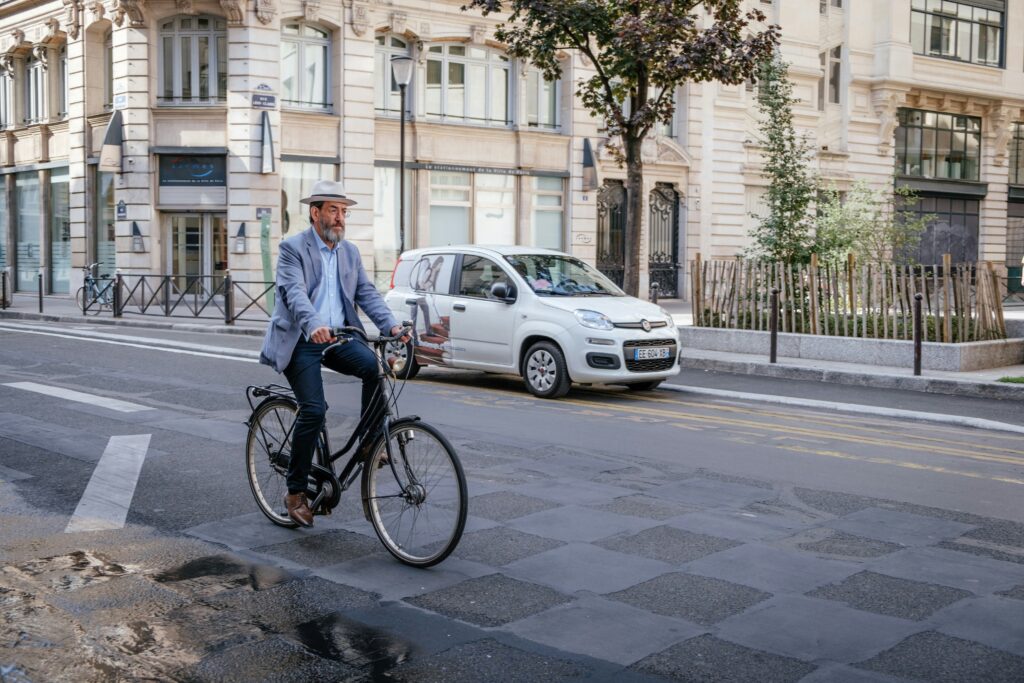
For decades, the image of Paris was inseparable from the roar of engines and the grey haze of exhaust fumes. The City of Light was frequently the City of Gridlock, where the grand boulevards designed by Haussmann served as little more than multi-lane pipes for private vehicles. But walk down the Rue de Rivoli today and the transformation is nothing short of miraculous. Where four lanes of cars once idled, there is now a cycling motorway. The sound of honking horns has been replaced by the quiet whirr of e-bikes and the chatter of pedestrians.
Paris has not just reduced traffic; it has fundamentally re-engineered the logic of the city. This change was not an accident of history or a byproduct of the pandemic, though the latter certainly accelerated the process. It was the result of a deliberate and radical vision for urban life. By prioritising people over pistons, Paris has provided a masterclass in how to reclaim the urban environment for the benefit of the climate, the local economy, and the soul of the citizen.
Urban revolution / How Paris re-engineered the logic of the city
The transformation of Paris from a gridlocked car sewer to a global leader in active transport provides a radical blueprint for modern urbanism. By prioritising people over private vehicles, the city has fundamentally reclaimed its streets for the benefit of public health, the local economy, and the environment:
- The 15-Minute City (Ville du quart d’heure): At the heart of the Parisian model is the philosophy that every resident should have their basic needs—work, shopping, healthcare, and leisure—within a fifteen-minute walk or cycle from their home
- Plan Vélo and the Vélopolitain: Backed by over €1.5 billion in investment, the city is building a network of high-capacity, physically separated bike lanes that mirror the underground metro lines, lowering the barrier to entry for cyclists of all ages
- The Liberation of the Seine: Reclaiming the Voie Georges-Pompidou expressway and turning it into a UNESCO-recognised parkland proved that high-traffic roads can be successfully converted into green spaces for pedestrians and cyclists
- The E-Bike Revolution: E-bikes have been identified as a primary game-changer, effectively flattening the city’s hills and expanding the feasible commuting distance for thousands of residents
- Reclaiming Public Space: Paris has removed over 70,000 parking spaces, repurposing that land for wider pavements, trees, schoolyard green islands, and secure bike hangars
- Traffic Evaporation: The city’s success has debunked the myth of permanent gridlock, proving that removing road space actually reduces the total number of car trips as people adapt by switching to walking, cycling, or the revamped public transport system
Bike opinions.
Would you believe I have thoughts?
The political courage of the 15-minute city

At the heart of this revolution is the concept of the ville du quart d’heure — the 15-minute city. Popularised by Carlos Moreno, championed by former mayor Anne Hidalgo, and continued by current mayor Emmanuel Grégoire, this philosophy posits that every urban resident should have their basic needs — work, shopping, health, and leisure — within a fifteen-minute walk or cycle from their front door. It is a direct challenge to the 20th-century model of segregated zoning that forced people into long, soul-crushing commutes from suburbs to city centres.
The 15-minute city is a YIMBY dream. It demands density, mixed-use development, and a rejection of the car-centric sprawl that has blighted global cities for seventy years. In Paris, this has meant turning schoolyards into green islands of coolness, removing over 70,000 parking spaces, and repurposing that land for wider pavements, trees, and bike hangars. For the active traveller, this makes Paris more than just a destination; it makes it a lived experience where the journey is as pleasant as the arrival.
Plan Vélo / The billion-euro bet on two wheels
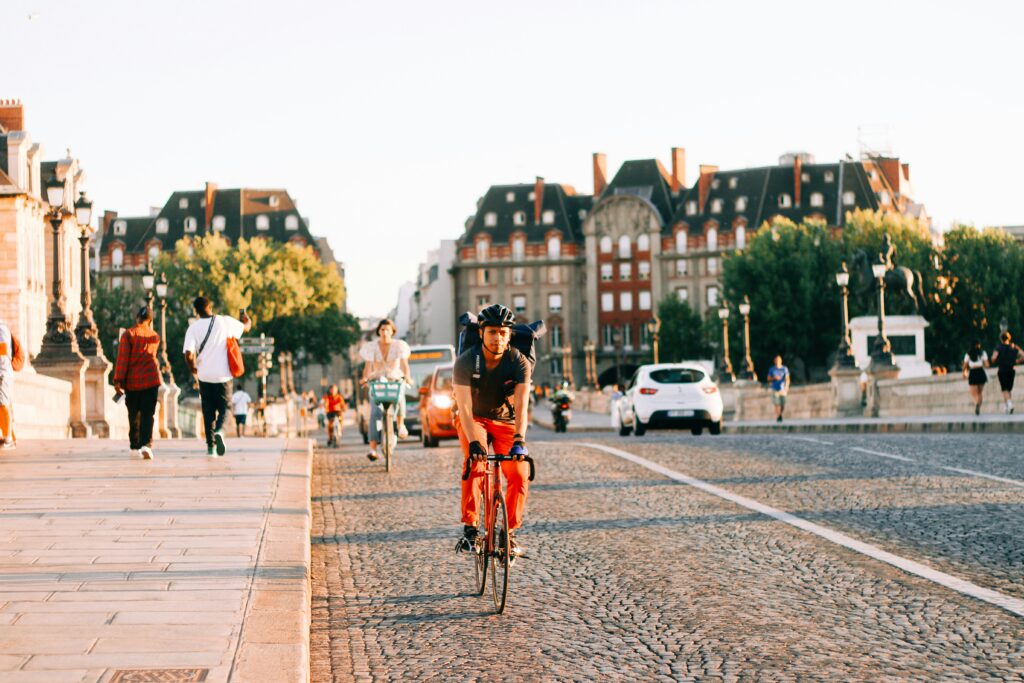
You cannot fix a city with half-measures or painted lines on a gutter. Paris understood that to get people out of cars, the alternative must be safer, faster, and more dignified. The city’s Plan Vélo is a massive infrastructure project backed by over 1.5 billion euros in investment. The goal is simple but ambitious: to make Paris 100% cyclable.
This involves the creation of the Vélopolitain, a network of high-capacity bike lanes that mirror the underground metro lines. By providing physical separation from motor traffic, Paris has lowered the barrier to entry for cycling. It is no longer a niche activity for the brave or the lycra-clad; it is a primary mode of transport for grandmothers, parents with cargo bikes, and office workers on e-bikes.
E-bikes, in particular, have been the game-changer. They have flattened the city’s few hills and expanded the commutable distance for thousands. By subsidising the purchase of e-bikes and investing in secure parking, Paris has ensured that the cycling revolution is inclusive. It is a victory that levels the playing field, providing cheap, efficient mobility that doesn’t rely on the rising costs of fuel or the environmental degradation of car manufacturing.
Czechia.
The heart of Europe
The end of the car is the beginning of the city
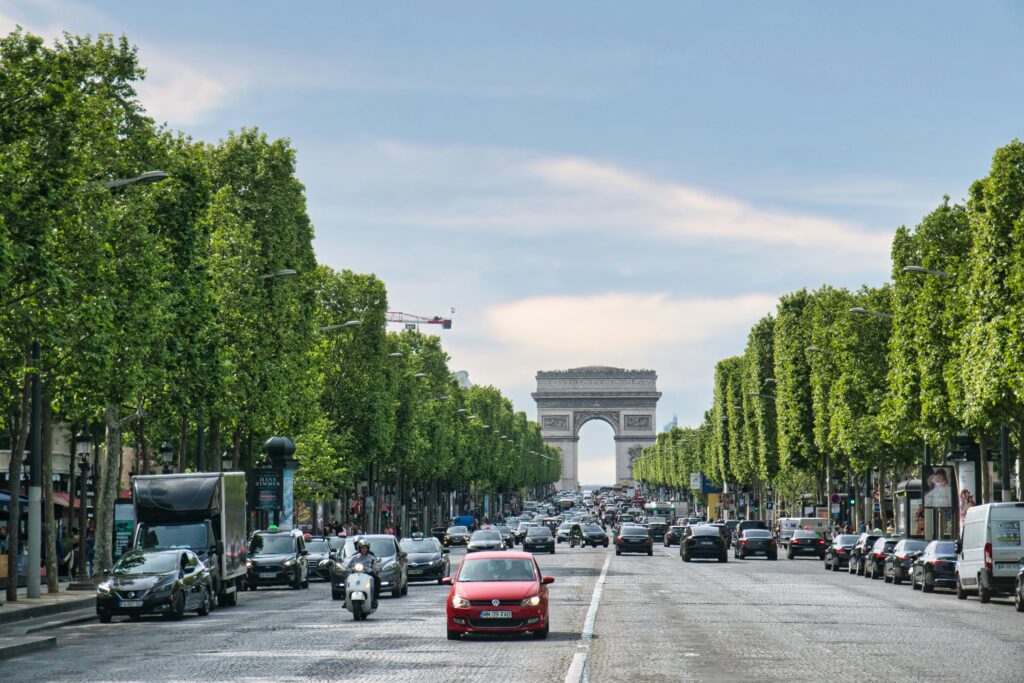
The most controversial — and most successful — element of the Parisian model has been the direct restriction of private vehicles. The closure of the Voie Georges-Pompidou, a former expressway along the Right Bank of the Seine, was met with fierce opposition from the pro-car lobby. Critics predicted economic collapse and permanent gridlock on surrounding streets.
Instead, the opposite happened. The reclaimed riverbanks are now a UNESCO-recognised parkland where children play and commuters cycle in the fresh air. Evaporated traffic — a phenomenon where removing road space actually reduces the total number of car trips rather than just displacing them — proved the critics wrong. People adapted. They switched to the revamped RATP public transport system, they walked, or they bought a bike.
This is the hard truth that other global cities must face: you cannot manage traffic; you must abolish it. Cars are an inherent inefficiency in an urban environment. They take up too much space, they kill too many people, and they contribute to a climate crisis that we are only just beginning to grapple with. Paris has shown that when you remove the cars, the city doesn’t die. It breathes. It thrives.
A model for the active traveller
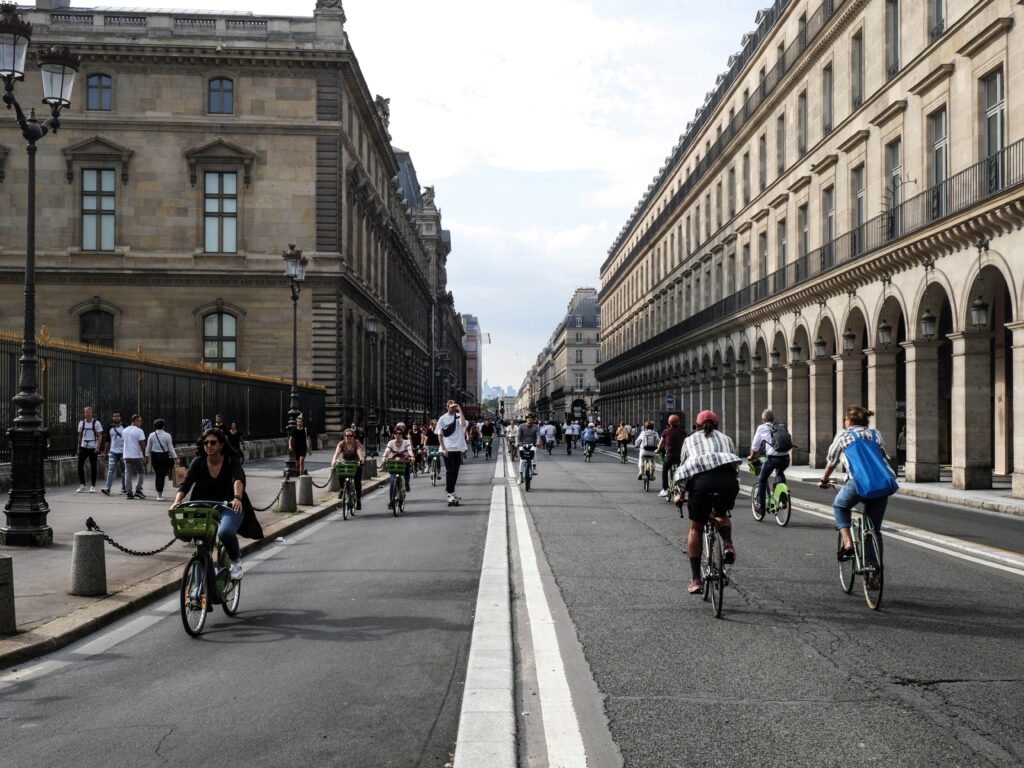
For those who believe in the power of active transport, the new Paris is a beacon of hope. It proves that change can happen quickly when political will meets public demand. For Wheely Tyred, Paris represents the pinnacle of what we advocate for: a world where travel is synonymous with the bicycle.
Whether you are navigating the historic Marais or heading out towards the Bois de Vincennes, the experience is now defined by the rhythm of the pedals rather than the frustration of the brake lights. The city has become more granular, more detailed, and more human. Small businesses are flourishing because people on bikes stop and shop, whereas people in cars simply drive past.
Prague.
There’s no other city like it
The path forward / Why we must embrace the Parisian model
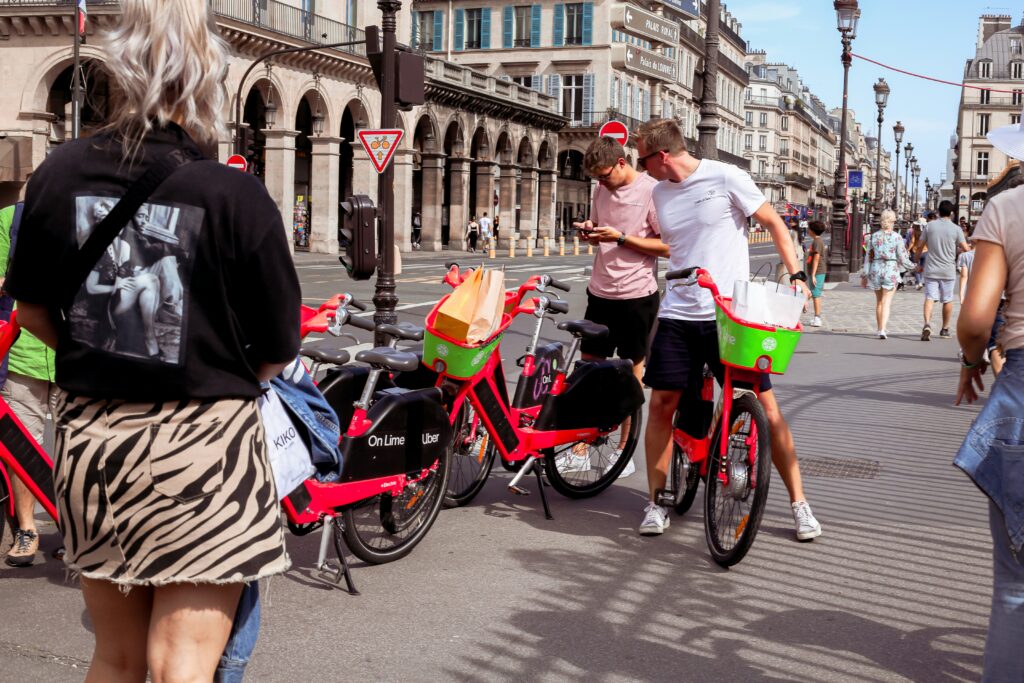
The Parisian transformation is not finished. There are still battles to be won regarding the peripheral ring road and the expansion of the network into the Greater Paris region. But the momentum is irreversible. The success of Paris has sparked a chain reaction across Europe, from London’s Low Traffic Neighbourhoods to Milan’s Open Streets.
To save the world from the worst effects of climate change, we must embrace the Parisian model. We must be YIMBYs who demand more housing in our city centres to reduce the need for long commutes. We must believe that public space belongs to the public, not to the storage of private metal boxes. And we must be cyclists who recognise that the simplest machine ever invented is still our best tool for the future.
Paris has beaten traffic by realising that traffic is a choice. By choosing the bicycle, the city has chosen life, health, and a future that actually works for everyone.
Frequently asked questions about Paris’ cycling transformation
The 15-minute city is an urban planning model where the city is designed to be hyper-local. Instead of segregated zones that require long commutes, the model promotes high-density, mixed-use neighbourhoods where everything a citizen needs is accessible within a short 15-minute walk or bike ride.
Research and observations in Paris have demonstrated a phenomenon called traffic evaporation. When road capacity is reduced, the total number of car trips actually decreases over time. Drivers adapt by changing their routes, timing, or, most importantly, their mode of transport, leading to a more efficient use of urban space.
The removal of these spaces has allowed Paris to combat the urban heat island effect by planting more trees and creating green spaces. It has also improved the safety and comfort of pedestrians and cyclists by providing wider pavements and dedicated infrastructure, making the city more human-centric.
The goal of the Vélopolitain is to make cycling inclusive for everyone, from grandmothers to parents with cargo bikes. By providing physical separation from motor traffic and incentivising e-bikes, the city has removed the primary barriers—safety concerns and physical exertion—that previously kept people from cycling.
Contrary to fears of economic collapse, many small businesses have flourished. Studies show that people on bikes or on foot tend to stop and shop at local establishments more frequently than those driving past in cars, who are often focused on reaching a distant destination.
The key takeaway is that traffic is a choice. Paris has shown that with political will and radical investment, even the most car-congested cities can be transformed. The Parisian blueprint suggests that cities must focus on high-quality, safe alternatives that make the car the least convenient option for urban travel.
Bike opinions.
Your source for my thoughts on bikes, road safety and active transport
Our latest posts
Bike lanes speed up emergency services: Debunking the myth

A bicycle is a toy and a tool | Urban cycling & e-bikes
How highways destroyed America: The cost of car cities
How Barcelona beat traffic and reclaimed its streets for the people
Why cars are absurd for city transport and what we should do instead