The essential guide to Yasuní / A journey into the heart of the Amazon
Top attractions and must-see sights in Yasuní National Park
An independent explorer’s roadmap to the most biodiverse forest on Earth
BEN FINCH
Deep within the Ecuadorian Amazon lies a region so biologically dense that it defies standard classification. Yasuní National Park is not merely a wilderness; it is a prehistoric cathedral of green, a place where the sheer volume of life feels heavy in the humid air.
For the traveller who prefers to set their own pace and values authentic, regional history over the typical tour-bus narrative, Yasuní offers a profound sense of discovery. This UNESCO Biosphere Reserve covers nearly one million hectares of primary rainforest, sitting at the intersection of the Andes, the Equator, and the Amazon basin. It is a location that rewards the patient, the curious, and those who understand that the best views are often found at the end of a long, quiet paddle.
At Wheely Tyred, the journey is just as important as the destination. While the primary passion is the freedom offered by two wheels, some landscapes require a different mode of transport to truly appreciate their scale. In Yasuní, that mode is the canoe. However, the spirit remains the same: a desire for deep knowledge, local authenticity, and the freedom to see the world without following a tour guide’s umbrella.
Whether arriving in the gateway town of Coca with a bike in tow or planning a multi-day immersion in the deep jungle, these are the iconic sights that make Yasuní a non-negotiable addition to an Ecuadorian itinerary.
The emerald pulse of the Amazon
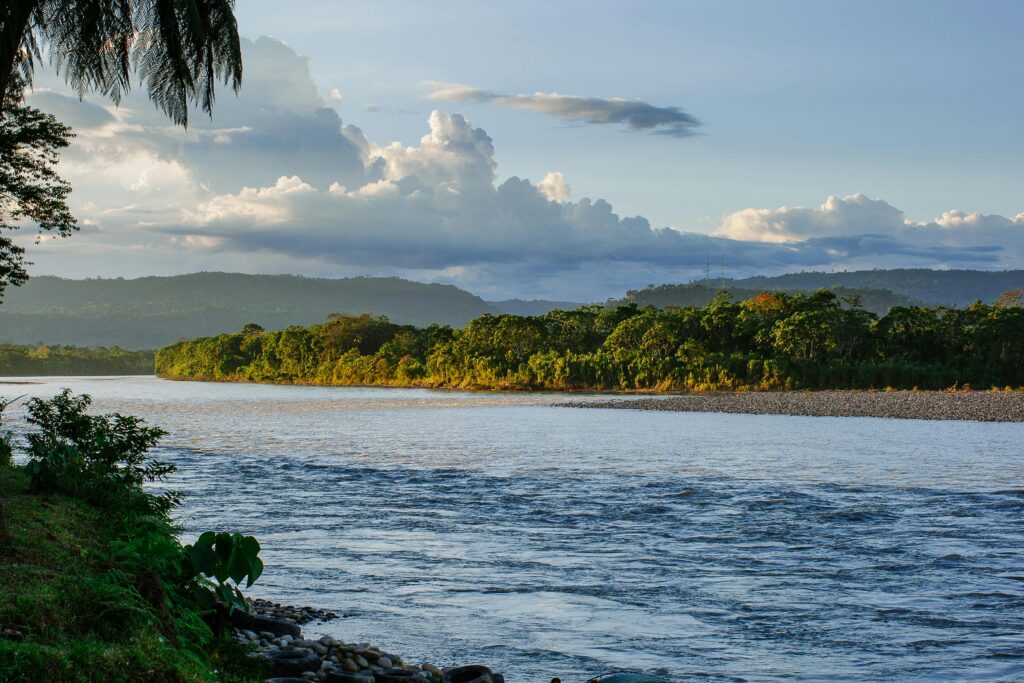
While the world moves at a frantic pace, Yasuní remains a place of deep, prehistoric rhythms and unparalleled biological density. Navigating this vast green cathedral requires a shift from two wheels to the quiet dip of a paddle, revealing a landscape where every layer of the forest tells a story of survival and community.
- Laguna Añangu: A mirror-still black-water lagoon managed by the Kichwa Añangu community, offering a silent approach to a world of giant otters and black caiman
- The Saladero de Loros: A daily natural spectacle where hundreds of vibrant parrots and parakeets descend on riverbank cliffs to consume mineral-rich clay
- Canopy Observation Towers: Architectural feats built around ancient Ceiba trees that provide a 35-metre-high vantage point over the endless, misty roof of the forest
- Ancestral Heritage: The Napo Cultural Centre provides a grounded look at Kichwa history, from blowgun mastery to the delicate preparation of forest-sourced meals
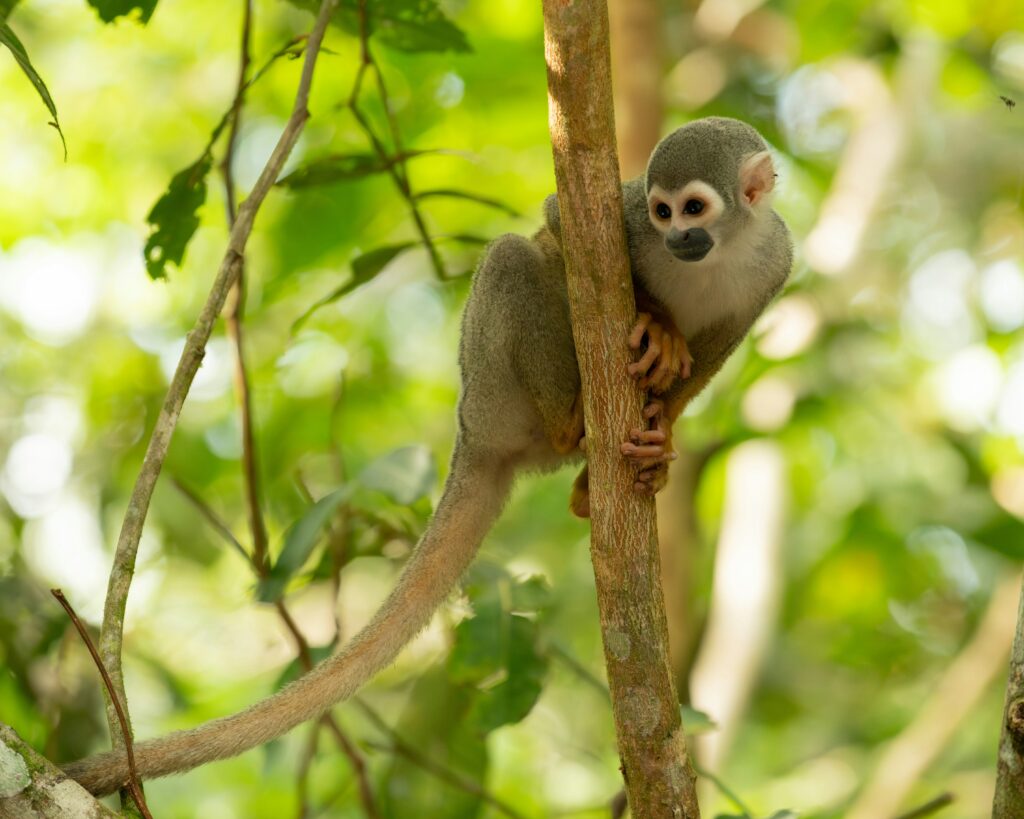
- Tiputini Research Frontier: A remote scientific outpost where the primary forest remains untouched, offering the highest density of primates and rare mammals in the park
- The Napo River: The massive waterway that serves as the region’s main artery, where travellers can spot elusive pink dolphins amidst shifting sandbars
- The Gateway at Coca: The starting point for any expedition, offering paved, undulating roads like the Vía a Loreto for those looking to cycle through the tropical outskirts
Yasuní National Park.
Home to the black water
Napo Wildlife Centre and Laguna Añangu
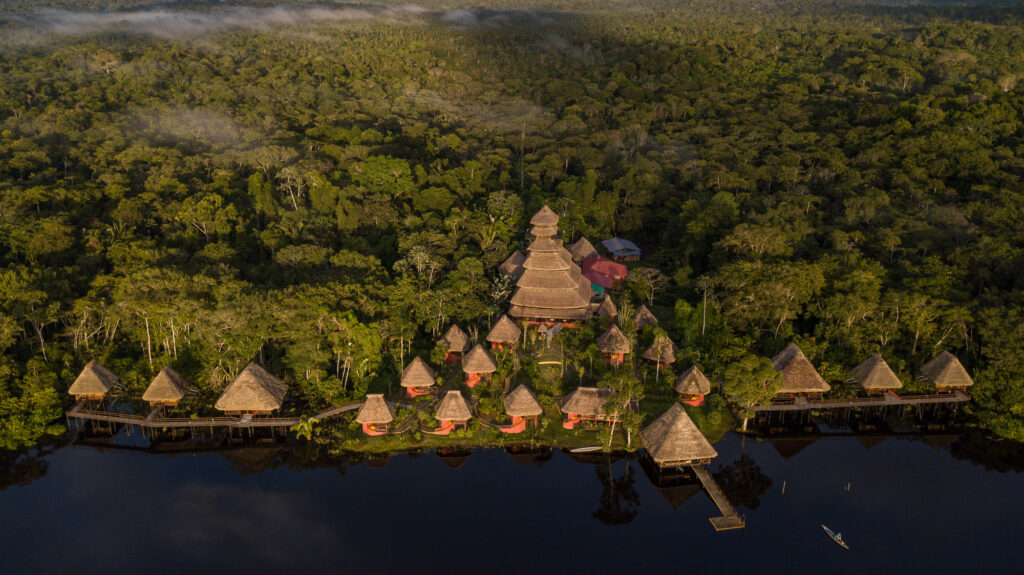
For many, the defining image of Yasuní is the mirror-still black water of Laguna Añangu, where the Napo Wildlife Centre sits as a model of sustainable, community-led tourism. This is not a standard resort; it is a project owned and managed by the Kichwa Añangu community, and every detail reflects a deep respect for the surrounding ecosystem. Accessing the lagoon requires a transfer from a motorised boat into a paddle canoe, a transition that marks the moment the noise of the modern world is left behind.
As the canoe glides across the water, the silence is punctuated only by the rhythmic dip of the paddle and the occasional splash of a giant otter. The lagoon itself is a hub of activity for black caiman and prehistoric-looking hoatzin birds. Visiting this site provides more than just a place to sleep; it offers a vantage point into the primary forest that few other locations can match. The community has worked tirelessly to protect this land from hunting and logging, resulting in wildlife that is remarkably bold and visible.
The Ecuadorian Amazon.
The most biodiverse place in the world
The Yasuní parrot clay licks
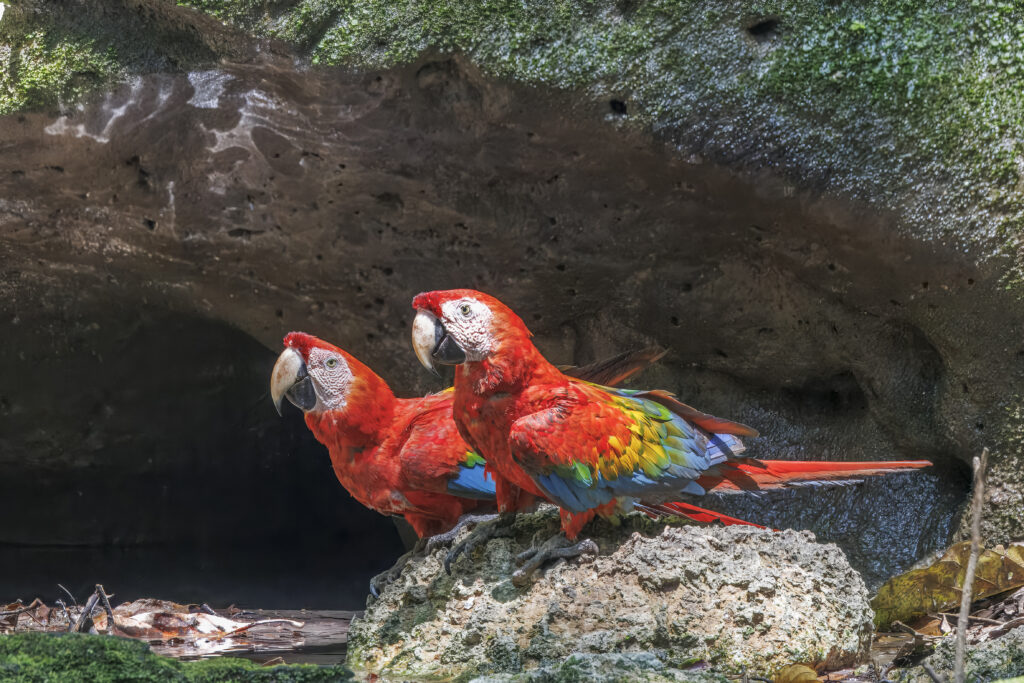
One of the most spectacular natural displays in South America occurs daily along the banks of the Napo River. The Saladero de Loros, or parrot clay licks, are exposed cliffs of mineral-rich soil that attract hundreds of birds every morning. These include mealy amazons, blue-headed parrots, and dusky-headed parakeets, all of whom descend in a riot of colour and sound to neutralise toxins in their diet by consuming the clay.
There are two primary licks accessible to visitors near the Añangu territory. The first is located directly on the riverbank, making it easy to observe from a boat. The second involves a short walk into the forest to a semi-enclosed blind, providing a more intimate view of the birds as they socialise and squabble over the best spots on the cliff. For the independent traveller, the appeal here lies in the raw, unscripted nature of the event. There are no staged performances; it is a fundamental part of the jungle’s daily rhythm that has remained unchanged for centuries.
The Ecuadorian Sierra.
Get lost in the hills
The canopy observation towers
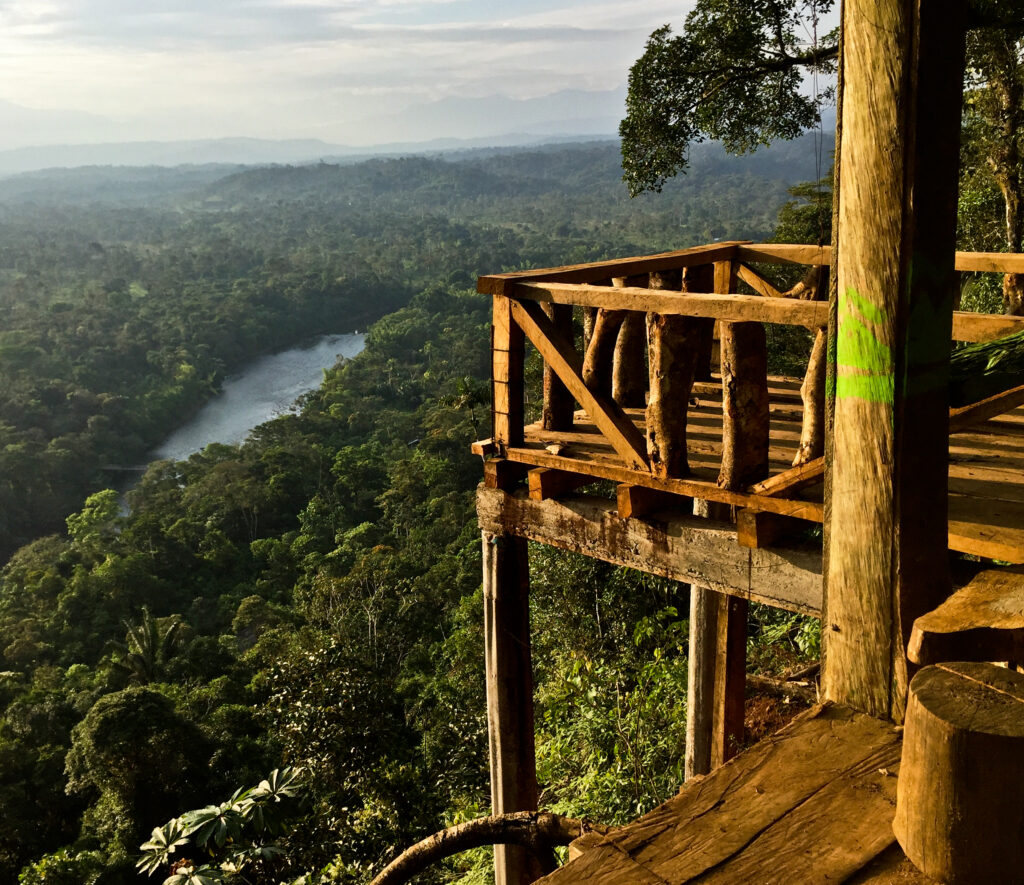
To understand the Amazon, one must see it from above. The majority of the forest’s life exists in the canopy, a hundred feet above the dark, damp floor. Throughout Yasuní, several lodges have constructed sophisticated observation towers, often built around massive, ancient Ceiba trees. The towers at Sacha Lodge and Napo Wildlife Centre are particularly iconic, rising over 35 metres into the air.
Climbing these towers at dawn is an experience that lingers in the memory. As the mist clears, the forest canopy reveals itself as an endless sea of green, broken only by the occasional flash of a scarlet macaw or the distant roar of a howler monkey. From this elevation, the complex layers of the forest and the way the trees compete for sunlight become clear. It is a perspective that makes the immense scale of Yasuní feel tangible. For those who value technical detail and regional history, the engineering of these towers—built to withstand the elements while minimising impact on the trees—is as fascinating as the wildlife they reveal.
The Kichwa Añangu Community and Napo Cultural Centre
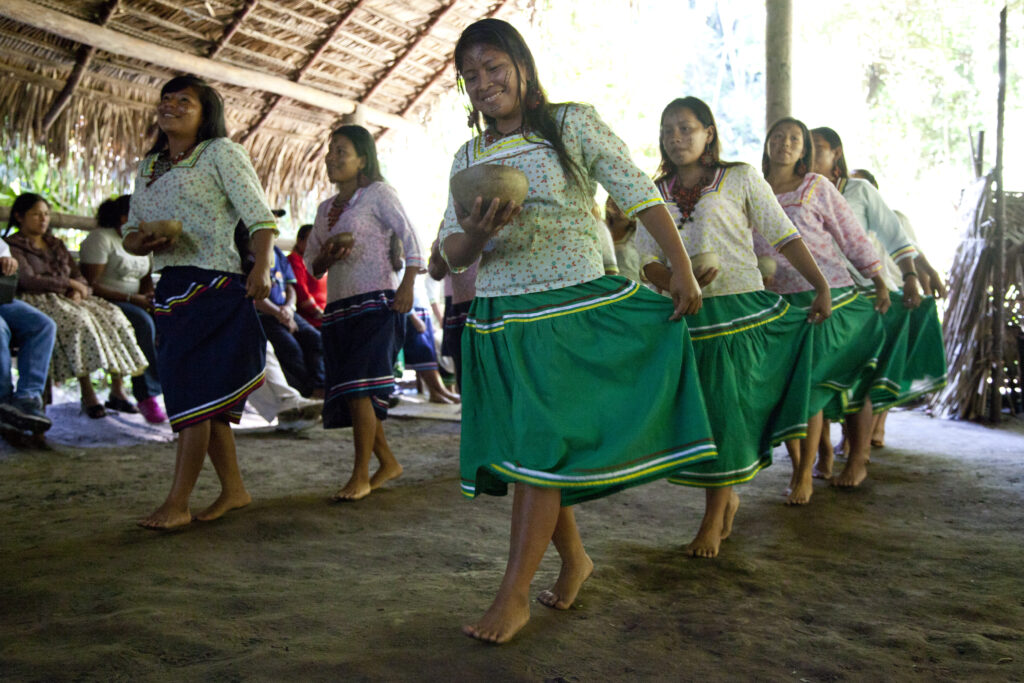
While the wildlife of Yasuní is the primary draw for many, the human history of the region is equally compelling. The Kichwa Añangu community has inhabited these lands for generations, and their transition from traditional hunting to eco-tourism is a vital part of the Yasuní story. A visit to the Napo Cultural Centre allows travellers to learn about ancestral customs, from the preparation of maito—fish wrapped in leaves—to the traditional use of blowguns and medicinal plants.
This is not a performative cultural show. It is an opportunity to engage with the people who are the primary guardians of this biosphere. Learning about their legal battles to protect the park from oil extraction adds a layer of contemporary relevance to a visit. For the Wheely Tyred traveller, this provides the deep knowledge and local authenticity that defines a truly successful trip. It is about understanding the social fabric of the landscape, not just its flora and fauna.
The Galápagos.
Ecuador’s Enchanted Isles
The Tiputini Biodiversity Station
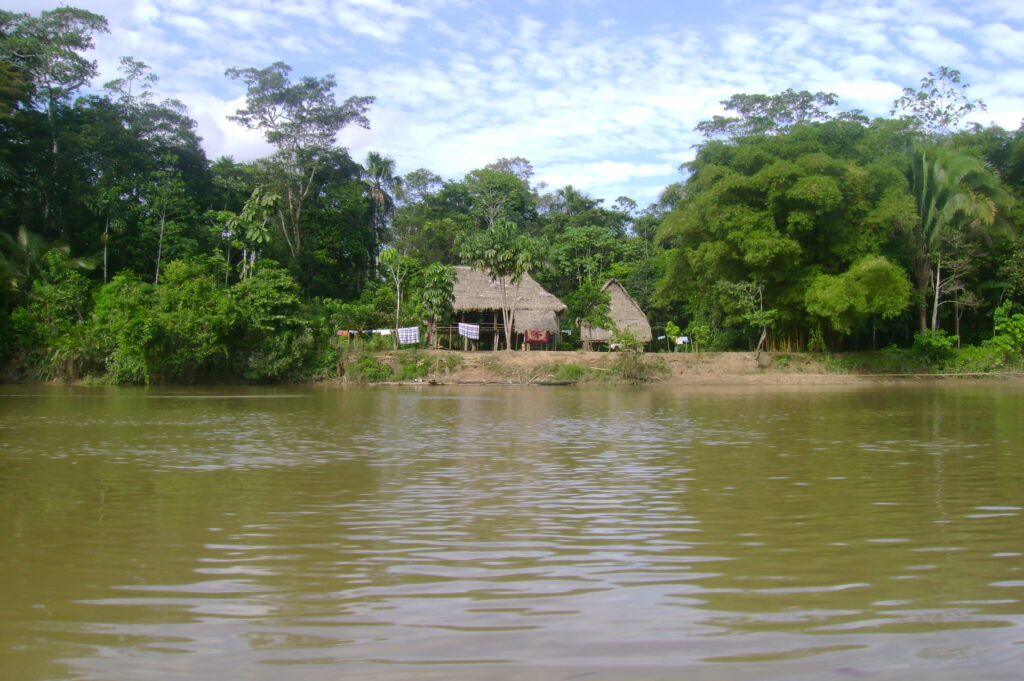
For those willing to venture further off the beaten track, the Tiputini Biodiversity Station represents the frontier of Amazonian research. Located on the banks of the Tiputini River, this station is primarily a scientific facility, but it welcomes a limited number of visitors who are interested in a more educational, stripped-back experience.
The forest surrounding Tiputini is arguably the most pristine in the entire park. Because the station is located outside the areas of heavy human transit, the density of primates and large mammals is significantly higher. Walking the trails here with a resident researcher provides a level of insight that goes far beyond a standard nature tour. The nuances of seed dispersal, the complex social structures of spider monkeys, and the ongoing efforts to document species that are still new to science are all part of the experience.
The Napo River
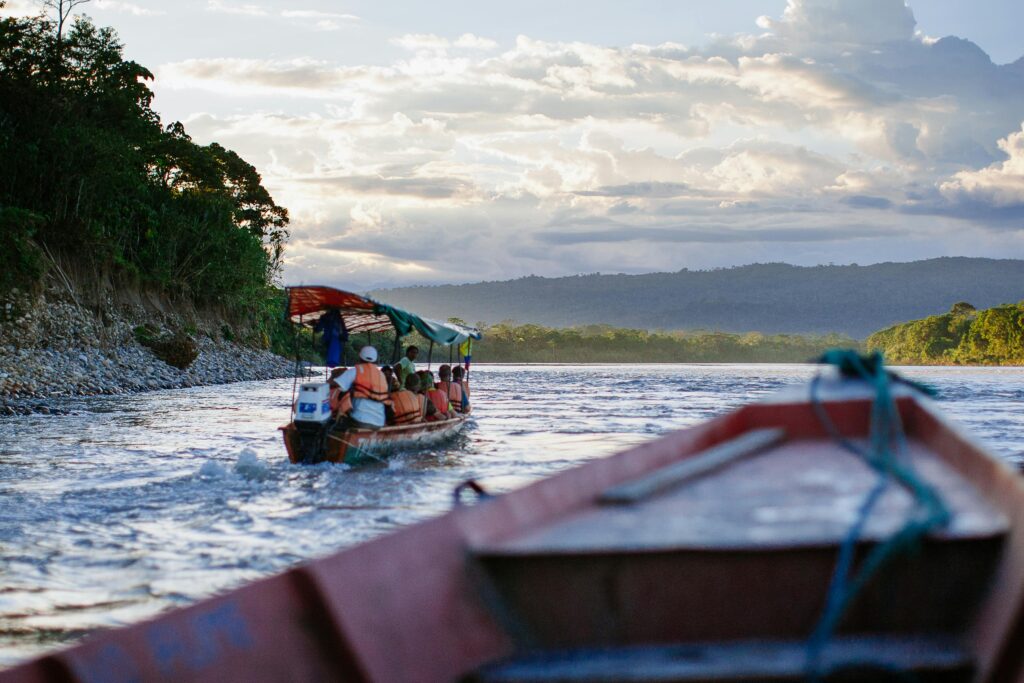
The Napo River is the lifeblood of Yasuní, a massive tributary of the Amazon that serves as the park’s main highway. While it may seem like a mere transit route, the river itself is a top attraction. The journey from Coca into the park involves several hours of navigating this wide, brown expanse, passing indigenous settlements and observing the transition from secondary to primary forest.
Keep a sharp eye on the water for the pink river dolphin, a species that feels like a myth until a dorsal fin breaks the surface near the boat. The sandbars that appear during the dry season are also prime locations for spotting nesting turtles and various wading birds. The scale of the Napo serves as a constant reminder of the Amazon’s power and the sheer distance travelled from the urban centres of the highlands.
The Ecuadorian Coast.
Where you’ll find the very best food
Cycling and exploring beyond the jungle
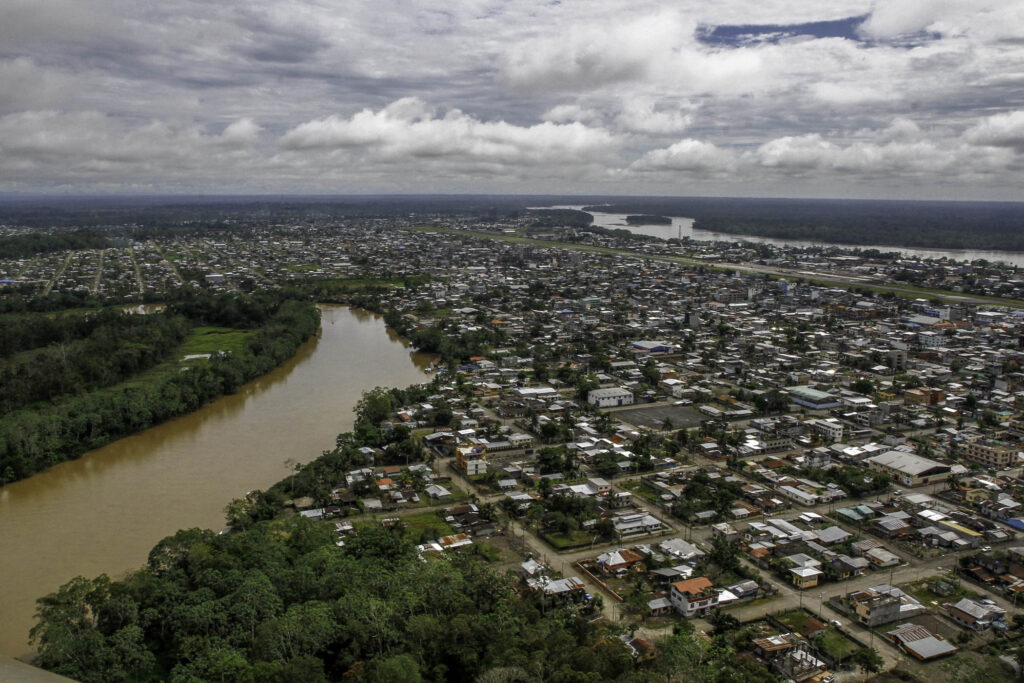
As a journey to this remote corner of Ecuador is planned, it is worth remembering that while the heart of Yasuní is accessed by water, the surrounding areas offer unique opportunities for those who arrive with a bike. Puerto Francisco de Orellana, known locally as Coca, serves as the primary base of operations for the region.
Within a 20-kilometre radius of the city, the Vía a Loreto provides a paved, undulating road that cuts through the tropical landscape, offering a chance for a morning ride before the midday heat settles in. For a shorter excursion, the Yasuní Land park on the outskirts of town features accessible trails and a viewpoint over the Napo.
For a local day trip, the Limoncocha Biological Reserve is roughly 60 kilometres away; while it requires a vehicle for the main transit, it is a fantastic location for independent exploration and bird watching on the periphery of the main park. Whatever path is chosen, Yasuní is a place that demands the traveller slow down and pay attention—the perfect destination for the independent explorer.
Frequently asked questions about the top attractions in Yasuní
The journey begins in the town of Puerto Francisco de Orellana (Coca). From there, you board a motorised boat for a two-hour journey down the Napo River. To reach the deeper lodges or the lagoon, you transition into a traditional paddle canoe, as motors are restricted in certain protected zones to preserve the silence and wildlife.
Known locally as saladeros, these exposed cliffs provide essential minerals that parrots and macaws need to neutralise the toxins found in their diet of tropical seeds and fruits. The birds usually gather in the early morning, creating a chaotic and colourful assembly that is best viewed from a distance to avoid startling the flock.
Maito is a traditional Kichwa dish consisting of river fish—often tilapia or bocachico—wrapped in bijao leaves and slow-cooked over an open fire. It is a staple of regional history and a must-try for any traveller seeking an authentic taste of the Amazon that avoids the standard tourist menu.
While the heart of the national park is impassable by bike, the area surrounding Coca is surprisingly accessible. The Vía a Loreto offers a paved route with rolling hills perfect for a morning ride. Additionally, the Yasuní Land park on the city’s edge features managed trails that provide a taste of the jungle landscape on two wheels.
Tiputini is primarily a research facility for the Universidad San Francisco de Quito, but they do accept a limited number of visitors. It is not a luxury lodge experience; rather, it is a stripped-back, educational immersion for those who value scientific insight and a chance to see the forest in its most pristine state.
Yes, though they are elusive. They are most commonly spotted in the Napo River and its smaller tributaries. Unlike their marine cousins, these dolphins are adapted to navigate through flooded forests, and seeing a flash of pink against the brown river water is one of the most iconic experiences of a Yasuní expedition.
Ecuador.
Pure wonder on the equator.