Exploring Guayaquil / A guide to the Pearl of the Pacific’s must-see sights
Guayaquil travel guide / The top attractions, iconic sights, and must-see landmarks
Discovering the vibrant history, lush parks, and riverside charm of Ecuador’s largest city
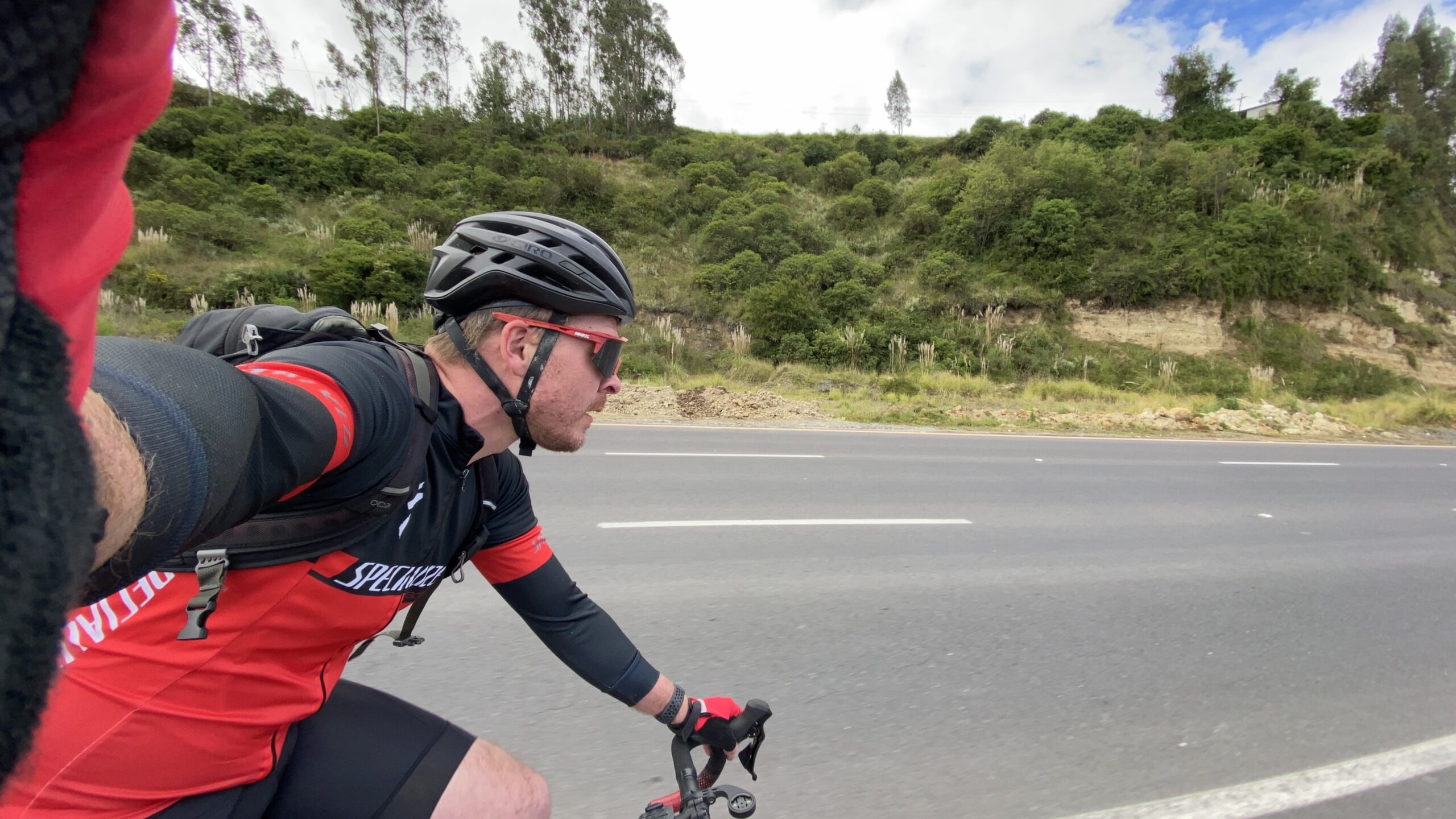
BEN FINCH
It is important to address the reality on the ground: at this time, Wheely Tyred does not recommend travelling to Guayaquil unless it is absolutely essential.
While the city’s culture and history are compelling, the current safety climate presents risks that shouldn’t be overlooked by the independent traveller.
For those whose travel is necessary, we have compiled a detailed Guayaquil Safety Guide: Everything You Need to Know Before You Go to ensure you are as informed and secure as possible during your stay.
Often unfairly dismissed as a mere transit point for those heading to the Galápagos Islands, Guayaquil is a city that rewards the patient, independent traveller with a rich tapestry of history, tropical nature, and urban renewal. Known as the Pearl of the Pacific, this bustling port city has undergone a remarkable transformation over the last two decades.
For the explorer who prefers to move at their own pace—shunning the rigid schedules of group tours and the view from a bus window—Guayaquil offers a surprisingly accessible and visually stunning landscape. From the humid breeze of the Guayas River to the vivid colours of its oldest neighbourhoods, here is a deep dive into the top attractions that define the spirit of this Ecuadorian metropolis.
The pulse of the Pacific
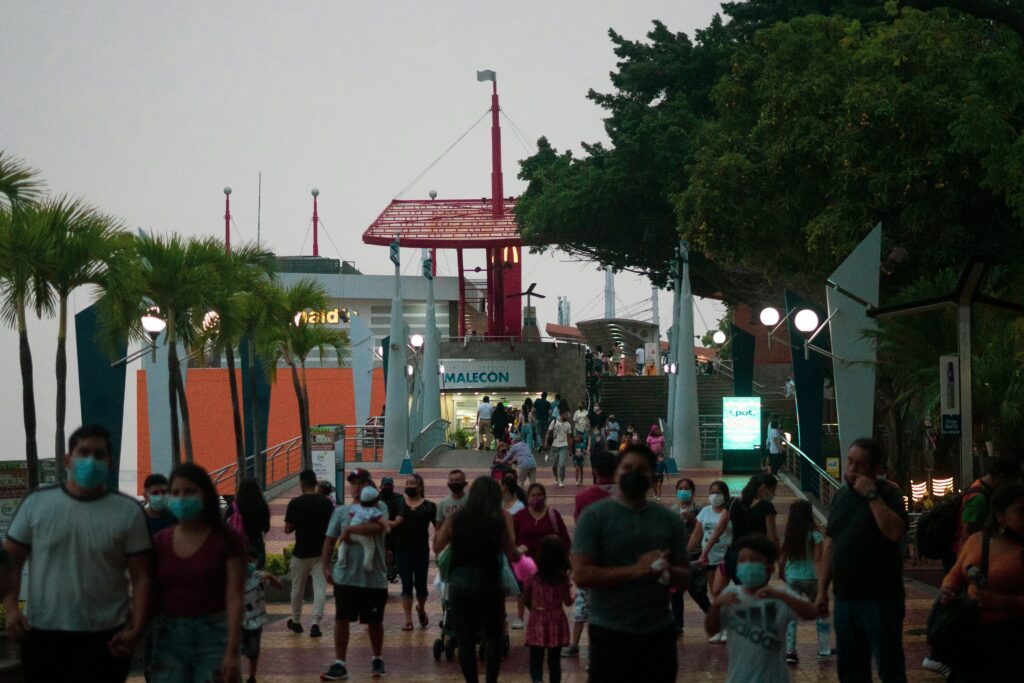
Guayaquil is a city of sharp contrasts, where centuries-old cobblestones meet modern riverside promenades and urban life intertwines with untamed nature. For the independent explorer, navigating its flat urban layout and vibrant neighbourhoods reveals a rich, unsung coastal culture best experienced at your own rhythm.
- Malecón 2000: A 2.5-kilometre pedestrian haven stretching along the Guayas River, seamlessly blending historical monuments with tranquil botanical gardens and sweeping waterfront views
- Las Peñas & Santa Ana Hill: The city’s oldest, brightly painted colonial neighbourhood, demanding a climb up 444 numbered steps to reach a historic lighthouse and unparalleled 360-degree panoramas
- Parque Seminario: A surreal and captivating urban square where dozens of prehistoric-looking land iguanas roam freely amidst the daily life of the city centre
- Parque Histórico: A sprawling, reconstructed sanctuary in Samborondón that preserves the region’s native coastal wildlife alongside the grand, salvaged architecture of the 20th-century cocoa boom
- Isla Santay: A pristine wetland ecosystem accessible by a striking 840-metre pedestrian and cycle bridge, perfect for swapping the city thrum for the quiet rustle of mangroves
- The MAAC: Guayaquil’s premier contemporary and anthropological museum, offering essential context on Ecuador’s pre-Columbian roots and modern artistic evolution right on the riverfront
- Accessible Cycling Routes: From the car-free corridor of the Isla Santay bridge to the sprawling green space of Parque Samanes, the city offers surprisingly welcoming terrain for those exploring on two wheels
Guayaquil.
The Pearl of the Pacific
The grandeur of the Malecón 2000
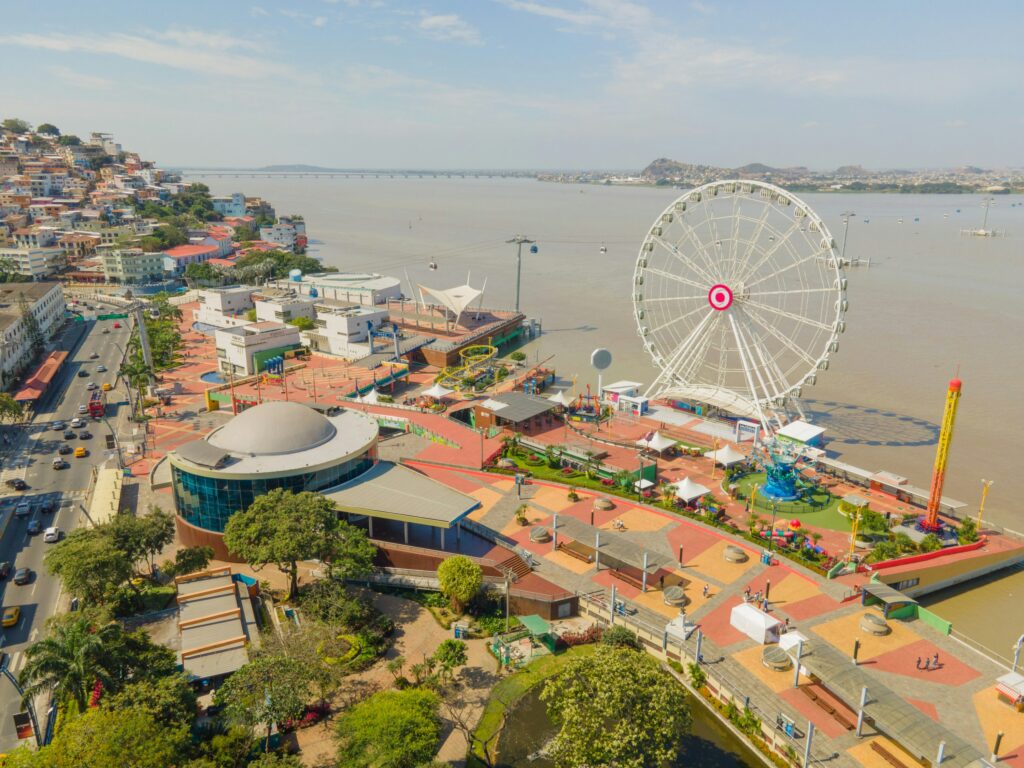
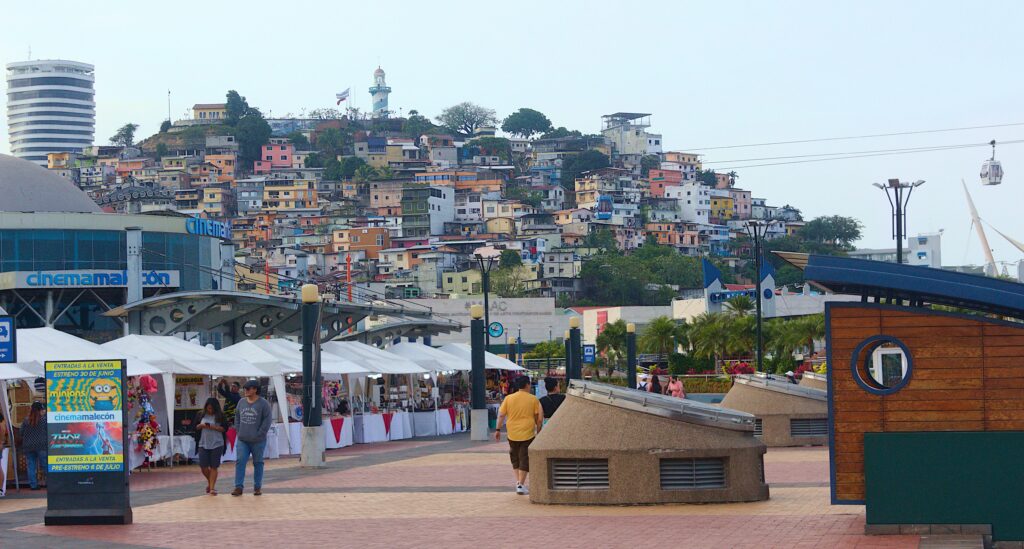
The Malecón 2000 is the undisputed heart of Guayaquil. Spanning 2.5 kilometres along the banks of the mighty Guayas River, this riverfront boardwalk is one of the most successful urban renewal projects in South America. It is not merely a path but a curated journey through the city’s identity. As you walk the length of the promenade, you transition from modern entertainment complexes to tranquil botanical gardens and significant historical monuments.
One cannot miss the Hemiciclo de la Rotonda, an imposing monument that commemorates the 1822 meeting between the two great liberators of South America, Simón Bolívar and José de San Martín. The weight of history here is palpable, marking the moment the continent’s future was debated and decided.
Further along, the Moorish Tower (Torre Morisca) stands as a testament to the city’s architectural diversity, its clock face having watched over the port since the mid-19th century. For those seeking a bird’s-eye view, La Perla—the largest Ferris wheel in South America—offers a spectacular panorama of the river and the urban sprawl, particularly striking when the city lights begin to shimmer at twilight.
The historic ascent of Las Peñas and Santa Ana Hill
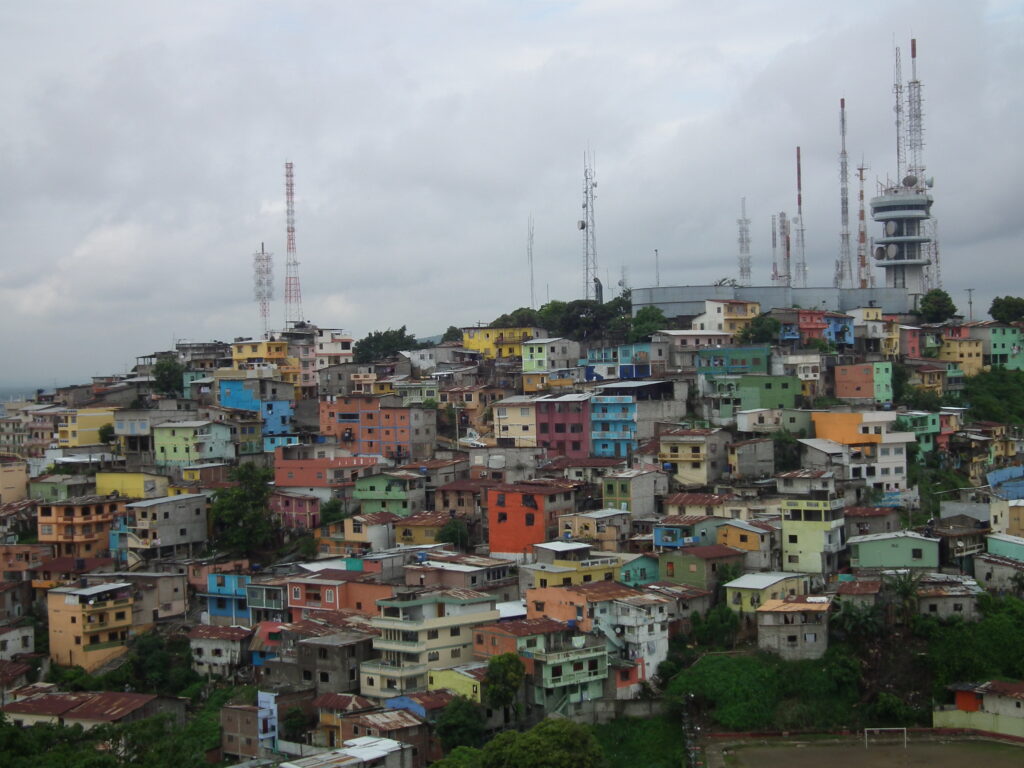
At the northern end of the Malecón lies Las Peñas, the city’s oldest and most picturesque neighbourhood. Walking through its narrow, cobblestone streets feels like stepping back 400 years into the colonial past. The wooden houses, painted in a vibrant palette of turquoise, ochre, and crimson, have been meticulously restored and now house art galleries, boutique cafés, and bohemian bars.
To truly see Guayaquil, one must tackle the 444 numbered steps of Santa Ana Hill (Cerro Santa Ana). This is a climb for the determined traveller, but the reward at the summit is unparalleled. As you ascend, the path zigs and zags past local homes where life spills out onto the porches. At the peak, you are greeted by a charming chapel and a functioning lighthouse (El Faro).
From the top of the lighthouse, the view is a full 360-degree sweep: the confluence of the Babahoyo and Daule rivers, the dense cluster of downtown skyscrapers, and the shimmering green of the mangroves in the distance. It is the perfect vantage point to appreciate the scale and ambition of this coastal giant.
The Ecuadorian Coast.
Where you’ll find the very best food
Wildlife in the urban jungle / Parque Seminario
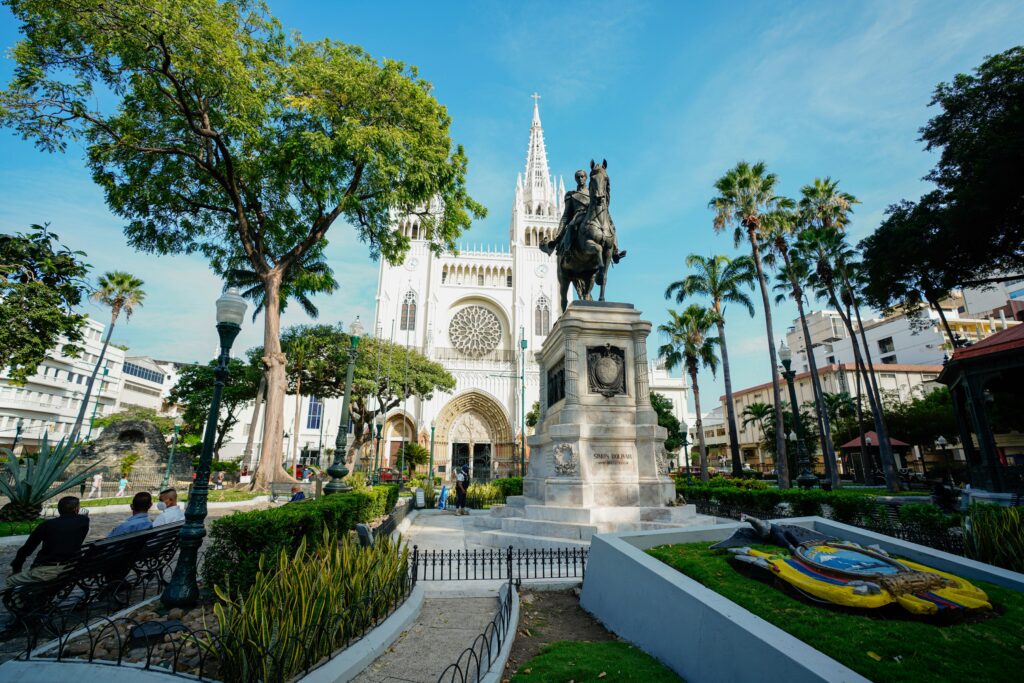
In the very centre of the city, flanked by the neo-Gothic towers of the Metropolitan Cathedral, lies one of the world’s most unusual urban spaces: Parque Seminario. While it may appear at first to be a standard city square, a quick glance into the trees or across the manicured lawns reveals the park’s primary residents: hundreds of land iguanas.
These prehistoric-looking reptiles, some reaching over a metre in length, roam freely among the benches and statues. Locals often call it the Iguana Park, and it provides a surreal contrast to the surrounding city traffic. For the independent visitor, it is a fascinating study of how nature and urban life can coexist. Watching these gentle giants bask in the equatorial sun, seemingly indifferent to the bustling business district just outside the park gates, is a quintessential Guayaquil experience that requires no guide and no ticket.
A step back in time at Parque Histórico Guayaquil
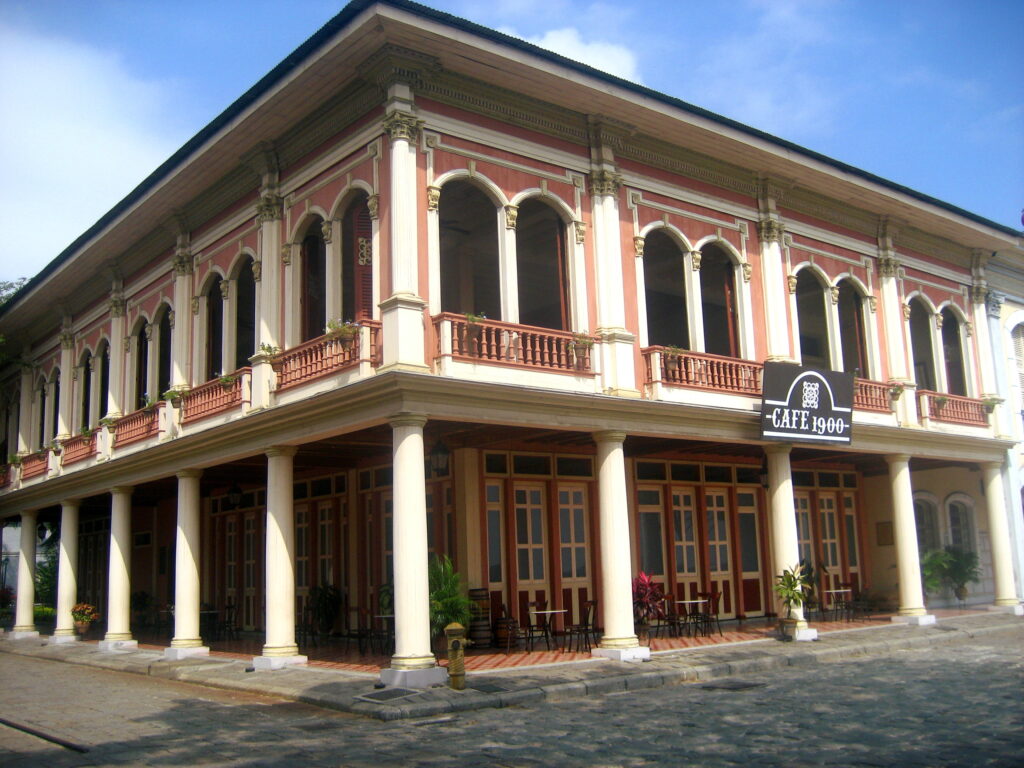
Located just across the river in the Samborondón district, the Parque Histórico is an essential stop for anyone wishing to understand the cultural and natural soul of the region. This expansive park is divided into three distinct zones: Wildlife, Traditions, and Urban Architecture.
The Wildlife Zone is a sanctuary for species native to the coastal region, including tapirs, monkeys, and spectacular tropical birds such as the scarlet macaw and the Harpy eagle. Unlike a traditional zoo, the enclosures are designed to mimic the natural mangrove and dry forest environments.
The Urban Architecture Zone is equally compelling; it features several grand buildings from the early 20th-century cocoa boom that were dismantled from the city centre and painstakingly reconstructed here to save them from demolition. It provides a window into a time when Guayaquil was the cocoa capital of the world, a period of immense wealth and European-influenced design.
The Galápagos.
Ecuador’s Enchanted Isles
The ecological corridor of Isla Santay
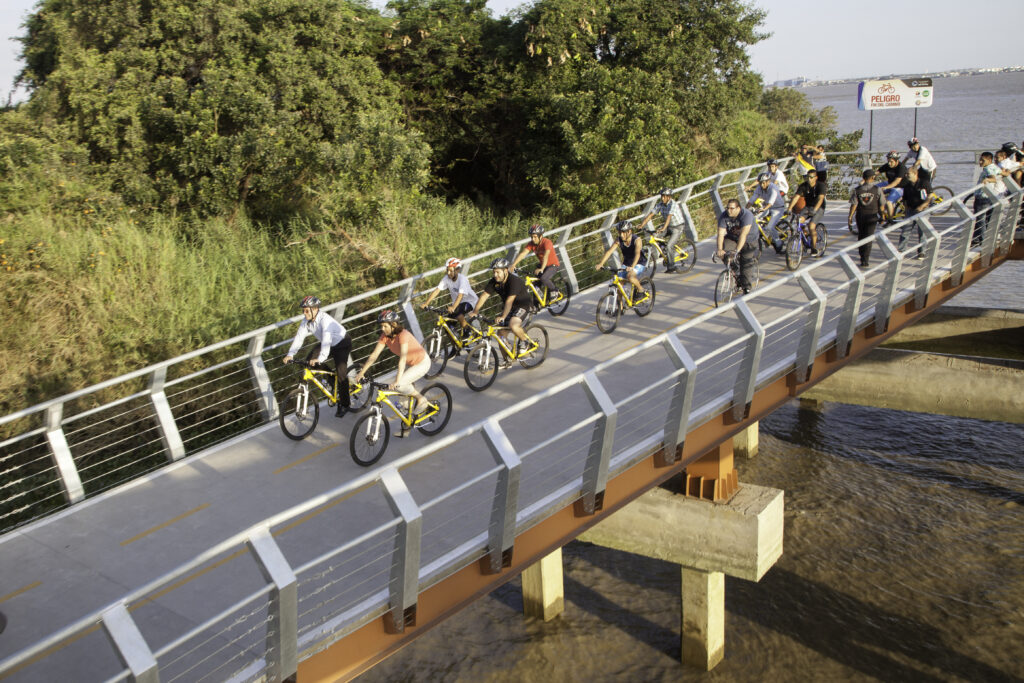
For those who crave open space and a breath of fresh air, Isla Santay is a protected RAMSAR site located in the middle of the Guayas River. It is accessed via an impressive 840-metre pedestrian and bicycle bridge that zips across the water from the southern end of the city.
The island is a labyrinth of mangroves and wetlands, home to a small eco-village of around 200 residents who live in stilted houses. A raised wooden boardwalk extends across the island, allowing visitors to explore the delicate ecosystem without disturbing the local flora and fauna. It is a haven for birdwatchers and those seeking a quiet escape from the urban thrum. The bridge itself is a modern engineering marvel, and crossing it on foot or by bike offers a unique perspective of the city’s skyline retreating behind you as you enter the silence of the mangroves.
Cultural depth at the MAAC
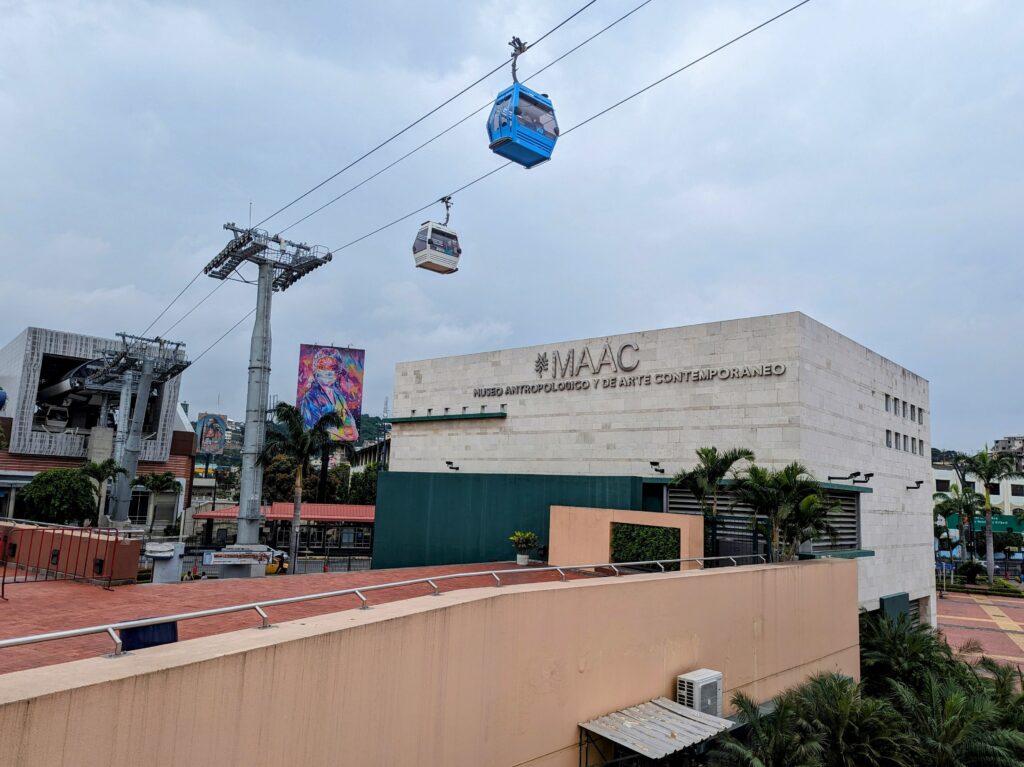
At the northern tip of the Malecón 2000 sits the Museo Antropológico y de Arte Contemporáneo (MAAC). This sleek, modern facility is the premier cultural institution in the city, housing an extensive collection of pre-Columbian art and contemporary Ecuadorian works.
The museum is designed to be a catalyst for local culture, and its exhibits provide deep insights into the indigenous cultures that thrived in the Guayas basin long before the Spanish arrived. For the traveller who wants to dig beneath the surface of the sights, the MAAC offers a sophisticated look at the artistic evolution of the nation. Its location, overlooking the river, makes it an ideal spot for a contemplative afternoon before heading into the nearby Las Peñas for a sundowner.
The Ecuadorian Sierra.
Get lost in the hills
Cycling beyond the city limits
Read this far?
While Guayaquil is a city best understood through its major landmarks, the independent traveller will find that its flat terrain and extensive riverside paths make it an intriguing place to navigate. For those looking to stretch their legs further, there are excellent routes within 20 kilometres of the city centre.
The bridge to Isla Santay is a firm favourite, providing a car-free corridor directly into nature. Additionally, the Samborondón district offers wide, well-paved avenues that are popular with local enthusiasts for early morning rides. For a more rugged experience, Parque Samanes in the north of the city features over 800 hectares of green space, including dedicated paths that are perfect for a few hours of exploration.
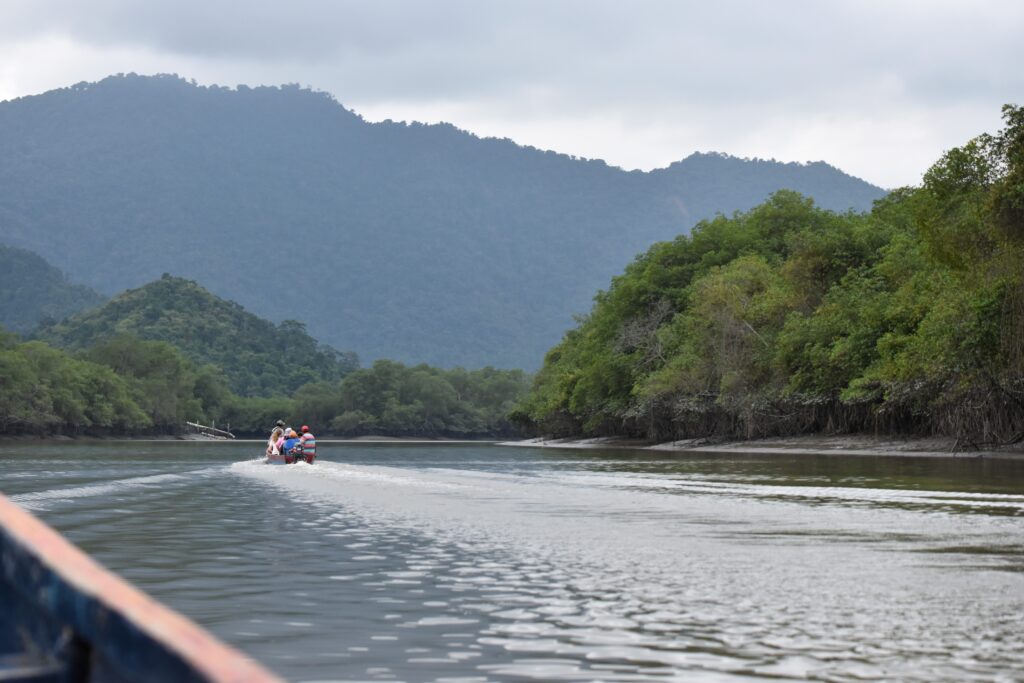
If you are looking to head further afield for a day trip, the town of Bucay, roughly two hours away, is a mecca for those who love downhill trails and cloud forest scenery, often combined with visits to hidden waterfalls. Alternatively, the Manglares Churute Ecological Reserve, located about 45 minutes south, offers a stunning landscape of mangroves and tropical dry forest, ideal for those who want to pair a morning of activity with the chance to see dolphins in the estuary or howler monkeys in the canopy.
Affiliate Disclaimer: Some of the links on Wheely Tyred are affiliate links. If you click through and make a booking or purchase, we may earn a small commission at no extra cost to you. We only recommend gear, tours, stays, and services we genuinely use, trust, and stand behind — our editorial independence always comes first. These commissions help keep our independent cycling guides and travel stories free to read. You can also buy me a coffee here — thanks for supporting the ride!
The Ecuadorian Amazon.
The most biodiverse place in the world
Frequently asked questions about the top attractions in Guayaquil
Surprisingly so. But the drivers are very dangerous. The city’s core is relatively flat, and areas like the expansive Parque Samanes, the broad avenues of Samborondón, and the dedicated, car-free bridge to Isla Santay offer excellent routes for independent cyclists looking to stretch their legs and escape the traffic.
Not at all. The 444 steps are clearly numbered, making it a straightforward and rewarding climb for the solo traveller. You can simply take your time, stop at the small bohemian cafés along the way, and enjoy the ascent entirely at your own pace.
Yes, the land iguanas are docile and completely accustomed to humans. They coexist peacefully with the park’s visitors. However, as a respectful observer, you should maintain a polite distance and refrain from feeding or touching them, allowing them to bask in the equatorial sun undisturbed.
The park is located in the Samborondón district, just across the river from the main city centre. It is easily reachable by a short, inexpensive taxi ride. For the more active traveller, it can also be accessed via the cycle-friendly avenues that connect the districts.
Late afternoon into the early evening is ideal. The intense coastal heat begins to dissipate, the river breeze picks up, and you can enjoy the sunset before the city lights—including the impressive La Perla Ferris wheel—illuminate the waterfront.
Absolutely. If you are willing to travel a bit further afield, the town of Bucay (roughly two hours away) offers excellent downhill trails through lush cloud forests. Alternatively, the Manglares Churute Ecological Reserve provides incredible wildlife viewing amidst tropical dry forests, perfect for an active day trip.
Ecuador.
Pure wonder on the equator.