Escaping the boardwalk / Guayaquil’s best-kept secrets
Discover Guayaquil’s hidden gems / The ultimate guide for independent travellers
The Pearl of the Pacific / Uncovering the soul of Guayaquil
BEN FINCH
It is important to address the reality on the ground: at this time, Wheely Tyred does not recommend travelling to Guayaquil unless it is absolutely essential.
While the city’s culture and history are compelling, the current safety climate presents risks that shouldn’t be overlooked by the independent traveller.
For those whose travel is necessary, we have compiled a detailed Guayaquil Safety Guide: Everything You Need to Know Before You Go to ensure you are as informed and secure as possible during your stay.
Guayaquil is often unfairly dismissed as a mere transit point, a humid urban sprawl where travellers wait for their connection to the Galápagos Islands or the Andean highlands. However, for those who prefer to travel on their own terms—without the constraints of a rigid tour schedule or a crowded bus—Guayaquil reveals itself as a city of profound character and unexpected tranquillity. As the largest city in Ecuador and its primary port, it possesses a gritty, industrious energy that is tempered by tropical parks, river breezes, and a history of resilience against fire and pirates.
To truly understand Guayaquil, one must step away from the polished, modern tiles of the Malecón 2000 and look for the seams where the old city meets the new. It is a place that rewards the patient observer, the walker, and the cyclist. From the scent of drying cacao beans in the city centre to the silent boardwalks of the mangrove swamps, these are the hidden gems that offer a deeper knowledge of the Pearl of the Pacific.
The unvarnished soul of the Guayas
Guayaquil is far more than a humid transit point; it is a city of resilient history and hidden greenery that rewards the slow-moving traveller. This guide sidesteps the frantic tourist pace to find the quiet boardwalks, marble avenues, and cacao-scented corners of the Pearl of the Pacific.
- Isla Santay: A tranquil wetland sanctuary reached by an 800-metre pedestrian bridge, featuring stilt-house communities and silent boardwalks through mangrove swamps
- Calle Panamá: The historic heart of the cacao trade, where the earthy aroma of drying beans still drifts past modern artisan cafes and street murals
- Parque Histórico: A preserved cultural oasis where 19th-century wooden mansions have been painstakingly reassembled to showcase the city’s Golden Age architecture
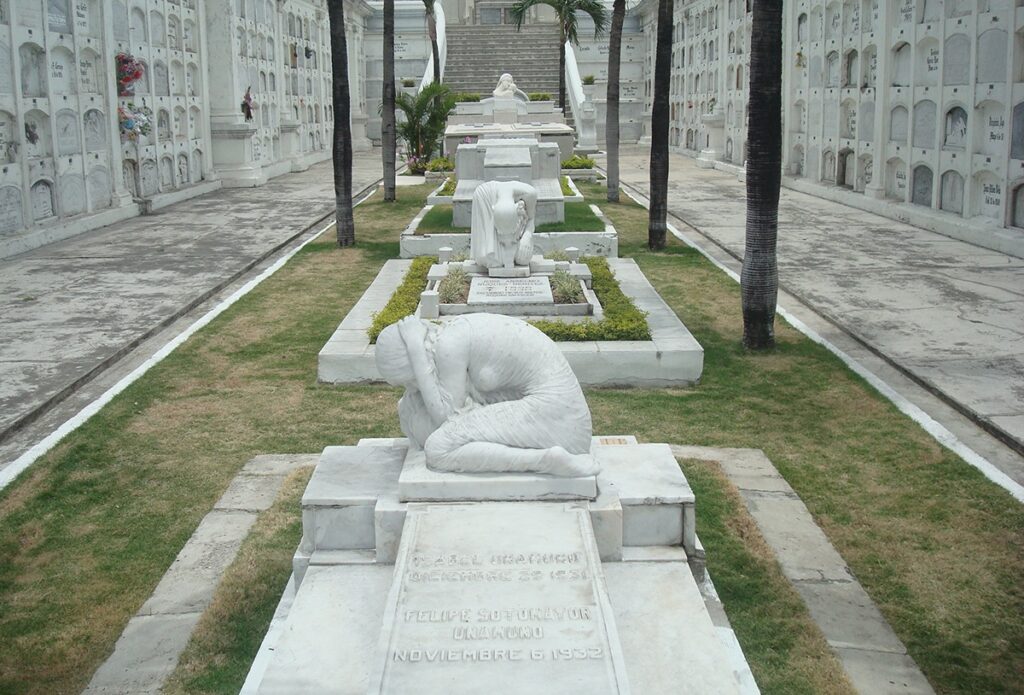
- Cementerio General: Known as the White City, this sprawling hillside necropolis is a masterclass in marble craftsmanship and offers some of the city’s finest urban vistas
- Palacio de Cristal: A striking iron-and-glass structure designed by associates of Gustave Eiffel, now serving as a light-filled venue for contemporary Ecuadorian art
- El Pantanal: A raw, conservation-focused rescue centre on the city’s outskirts, providing sanctuary for jaguars, pumas, and birds saved from illegal trafficking
- Cycling the Delta: From early-morning riverside spins to the rugged dry-forest trails of Cerro Blanco and the dramatic cloud forest descents in nearby Bucay
Guayaquil.
The Pearl of the Pacific
1. The floating world of Isla Santay
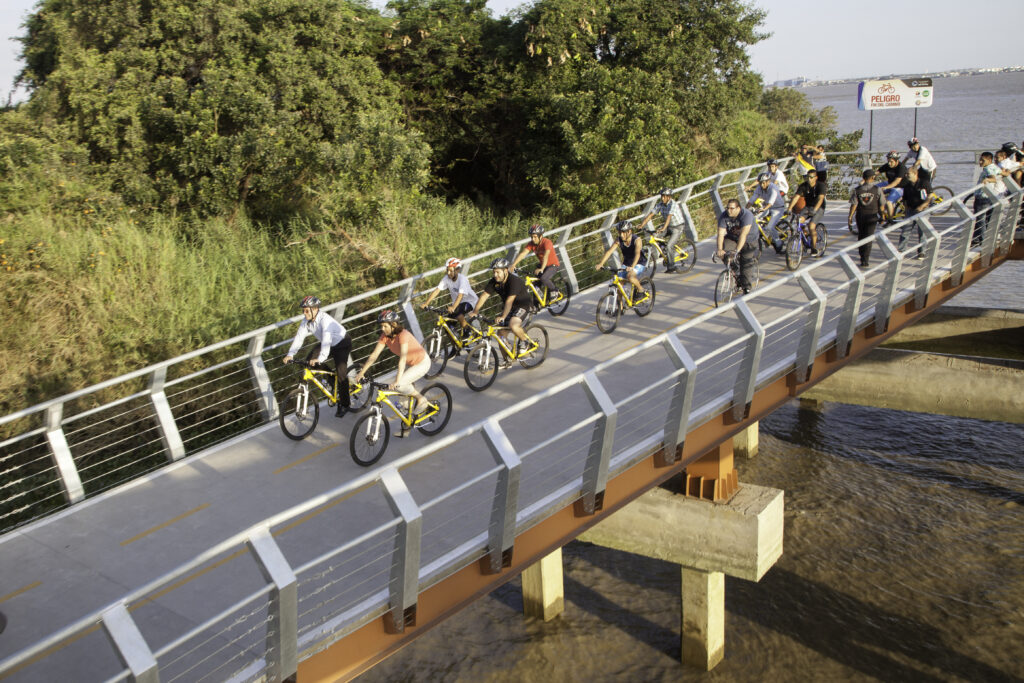
While the Guayas River is the lifeblood of the city, most visitors only ever see it from the concrete embankments of the Malecón. Isla Santay, located directly across the water from the southern end of the city, offers a completely different perspective. This protected wetland, a RAMSAR site of international importance, is accessible via an 800-metre bridge designed specifically for pedestrians and cyclists.
Crossing the bridge is a sensory transition; the roar of Guayaquil’s traffic fades, replaced by the rustle of mangroves and the call of tropical birds. The island is home to a small, self-sustaining community known as the Ecoaldea, where residents live in traditional stilt houses powered by solar energy. A wooden boardwalk extends for over five kilometres across the island, snaking through lush vegetation where one can spot various species of herons, kingfishers, and even the occasional boa constrictor.
For the independent traveller, the highlight is the crocodile sanctuary, which houses rescued Cocodrilo de la Costa. The experience of standing on a silent boardwalk over a swamp, watching a prehistoric reptile bask in the sun just kilometres from a metropolis of three million people, is one of the great surprises of the region. It is a place that feels suspended in time, showing how the delta looked before the arrival of modern industry.
2. Calle Panamá / The scent of the golden bean
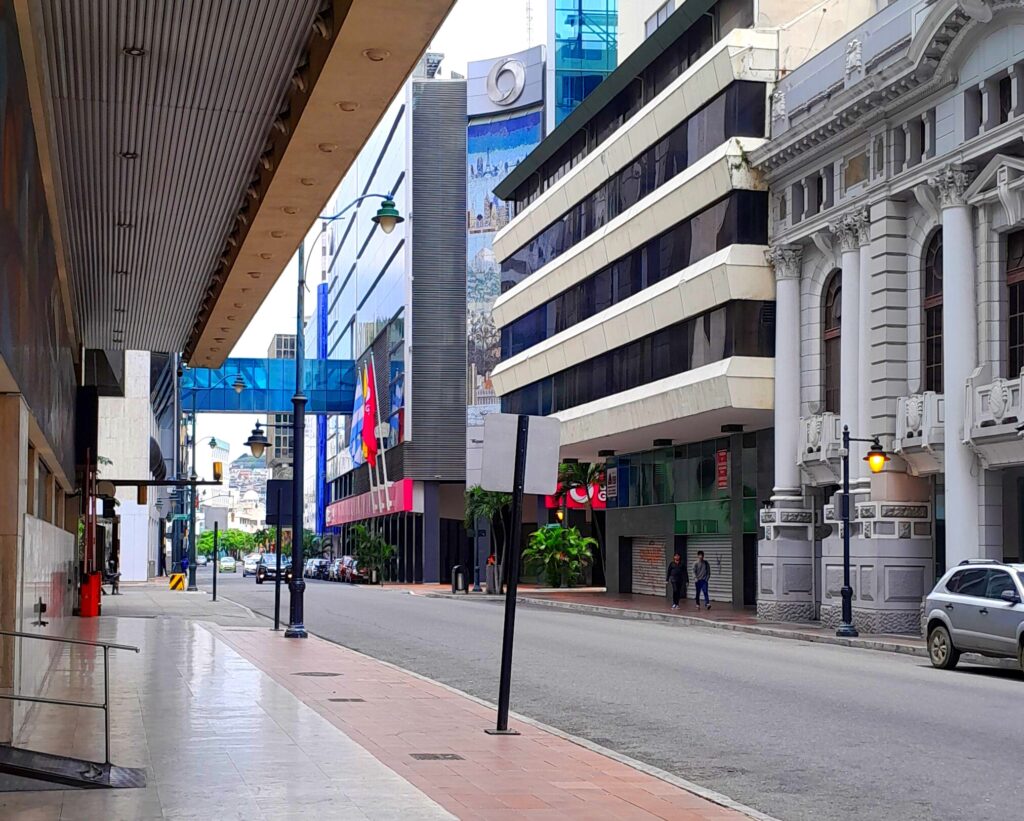
A few decades ago, Calle Panamá was a neglected street tucked behind the grand buildings of the riverfront. Today, it has become a symbol of Guayaquil’s cultural revival. This street was historically the heart of the world’s cacao trade, where the famous Arriba cacao beans were brought from the plantations of the interior to be dried and prepared for export.
Even today, as you wander past the restored buildings and modern cafes, you can still find pockets where the earthy, rich aroma of roasting cacao hangs in the heavy tropical air. The street serves as an open-air museum of Guayaquil’s most prosperous era. One should look for the Museo del Cacao, which provides a detailed look at how the cacao boom shaped the city’s social and political landscape in the 19th century.
Rather than a curated, sterile experience, Calle Panamá feels like a living neighbourhood. Street performers, muralists, and local coffee roasters have reclaimed the space, making it the perfect spot for an independent traveller to sit with a book and a cup of local brew, observing the city’s social fabric without the pressure of a tour group.
The Ecuadorian Coast.
Where you’ll find the very best food
3. Parque Histórico / A monument to a vanished era
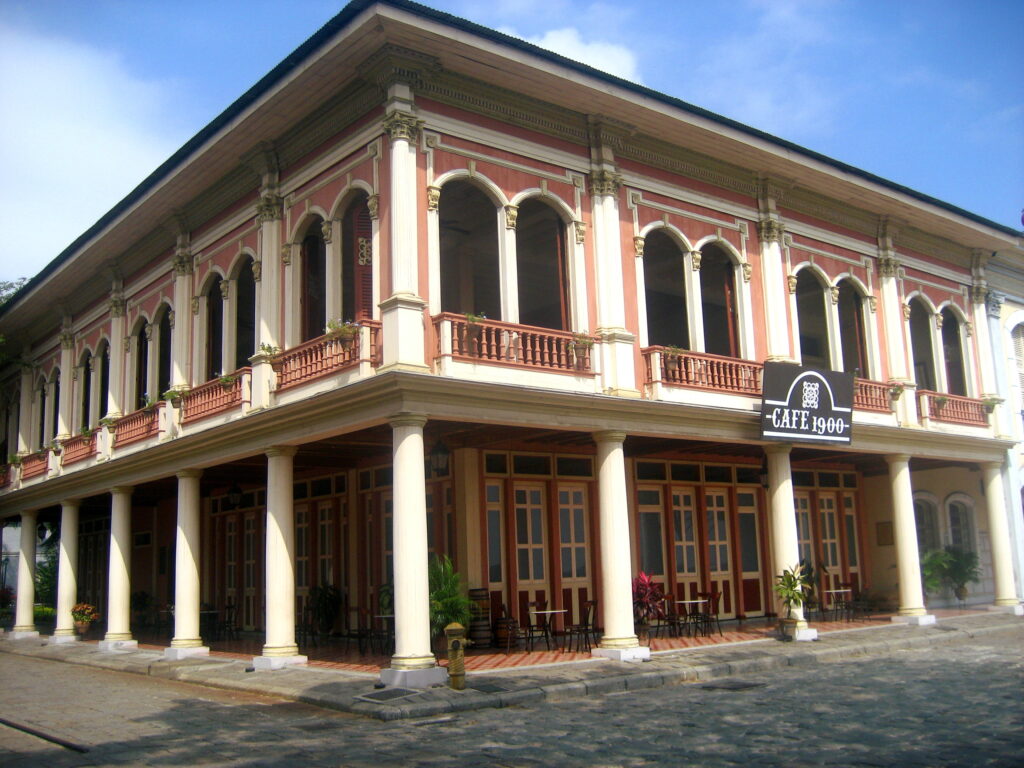
Located in the Entre Ríos district, Parque Histórico is often missed by those who stay strictly within the downtown corridor. This is not merely a park; it is a meticulously preserved eight-hectare sanctuary dedicated to the history and ecology of the Ecuadorian coast. It is divided into three distinct zones: the Wildlife Zone, the Urban Architecture Zone, and the Traditions Zone.
The Urban Architecture Zone is perhaps the most fascinating for the independent explorer. Following a series of devastating fires in the early 20th century, much of Guayaquil’s original wooden architecture was lost. The park’s creators rescued several landmark buildings, such as the Casa Julián Coronel and the Banco Territorial, dismantling them piece by piece and reassembling them here.
Walking through this section is like stepping into a postcard from 1900. The buildings, with their high ceilings, intricate latticework, and wide verandas, were designed to capture the coastal breeze in the days before air conditioning. In the Traditions Zone, one can explore a working cocoa and coffee plantation, gaining a deep understanding of the rural life that supported the city’s growth. It is a quiet, shaded retreat where history feels tangible and unhurried.
4. The Cementerio General / The White City of marble
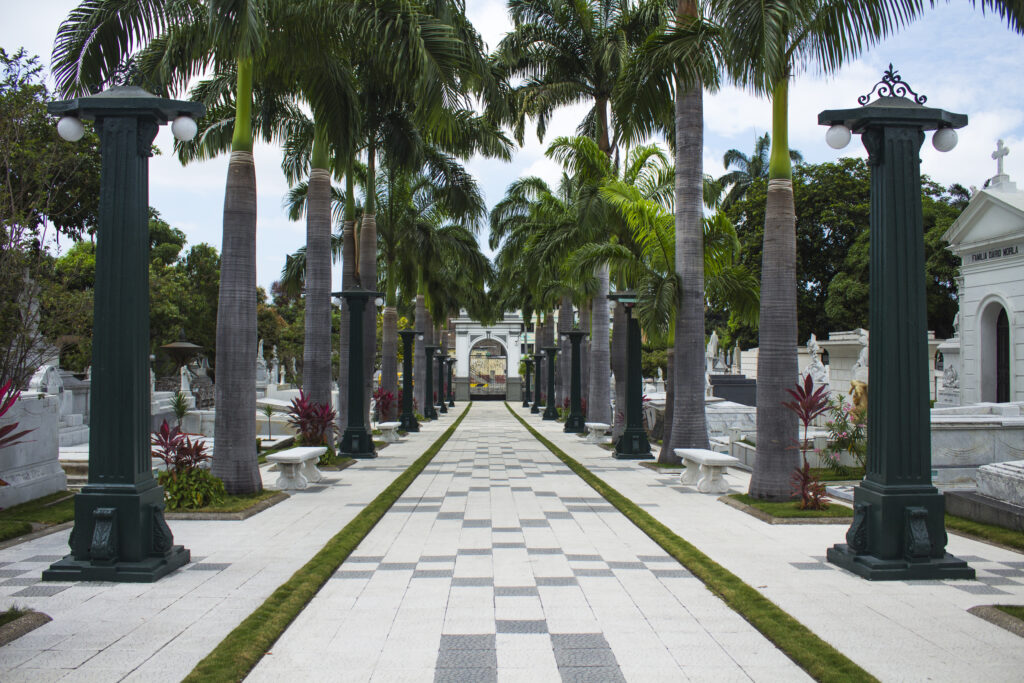
Many visitors overlook the General Cemetery of Guayaquil, yet it is one of the most culturally significant and architecturally stunning sites in South America. Established in 1823 at the base of Cerro del Carmen, it is known as the Ciudad Blanca (White City) due to the sheer volume of neoclassical and baroque mausoleums carved from imported Italian marble.
The cemetery is a masterclass in social history. Near the entrance, the grandest monuments house presidents, poets, and the elite of the cacao era, featuring intricate sculptures of angels and grieving widows. As you follow the winding paths up the hillside, the tombs become more modest, and the views of the city below become more expansive.
For the traveller who values quiet contemplation, a walk through these marble avenues offers a unique insight into the Ecuadorian psyche and the nation’s history. It is an open-air gallery of art and genealogy, far removed from the commercial noise of the city centre. The contrast between the brilliant white stone, the emerald green palms, and the blue sky is a photographer’s dream.
The Galápagos.
Ecuador’s Enchanted Isles
5. The Palacio de Cristal / Eiffel’s legacy in the tropics
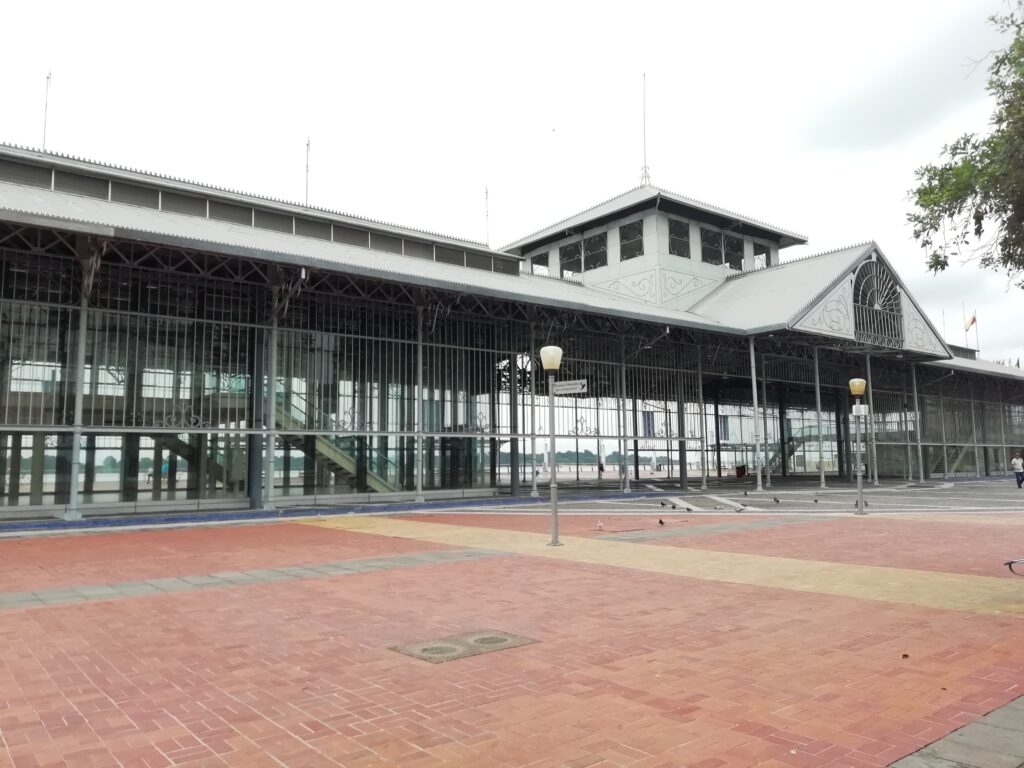
At the southern end of the Malecón stands the Palacio de Cristal, a structure of glass and iron that seems almost ethereal in the afternoon sun. Originally the Mercado Sur, this building was designed by Francisco Manrique and Carlos van Ischot, with its iron components manufactured in Belgium by associates of Gustave Eiffel. It was shipped across the Atlantic and reassembled in Guayaquil in 1907.
While it no longer functions as a bustling food market, the building has been reimagined as a premier cultural space. The transparency of the walls allows the interior to be flooded with natural light, while the river views provide a stunning backdrop for art exhibitions and high-profile events.
Independent travellers should check the local schedule for exhibitions, as the space frequently hosts contemporary Ecuadorian artists. Even when no event is taking place, the building remains a marvel of industrial design and a reminder of Guayaquil’s historical connections to European architectural trends. It is a place where the city’s past and its modern cultural aspirations meet.
6. El Pantanal / A sanctuary for the wild
For those willing to venture to the northern outskirts of the city, El Pantanal offers a raw and honest look at Ecuador’s biodiversity. This is not a commercial zoo designed for entertainment; it is a rescue and rehabilitation centre for animals that have been victims of illegal trafficking or habitat loss.
Covering over 30 hectares, the centre provides a home for jaguars, pumas, Andean bears, and a vast array of tropical birds and monkeys. Because it is off the main tourist trail, the experience is intimate and educational. Visitors are often guided by staff who are deeply passionate about conservation, offering insights into the challenges facing Ecuador’s diverse ecosystems.
Reaching El Pantanal requires a bit of independent navigation—often involving a local bus or a short taxi ride—but the reward is a genuine connection with the natural world. It is a gritty, authentic look at the flora and fauna of the region, emphasising the city’s relationship with the wild landscapes that surround it.
The Ecuadorian Sierra.
Get lost in the hills
Exploring Guayas in the saddle
Read this far?
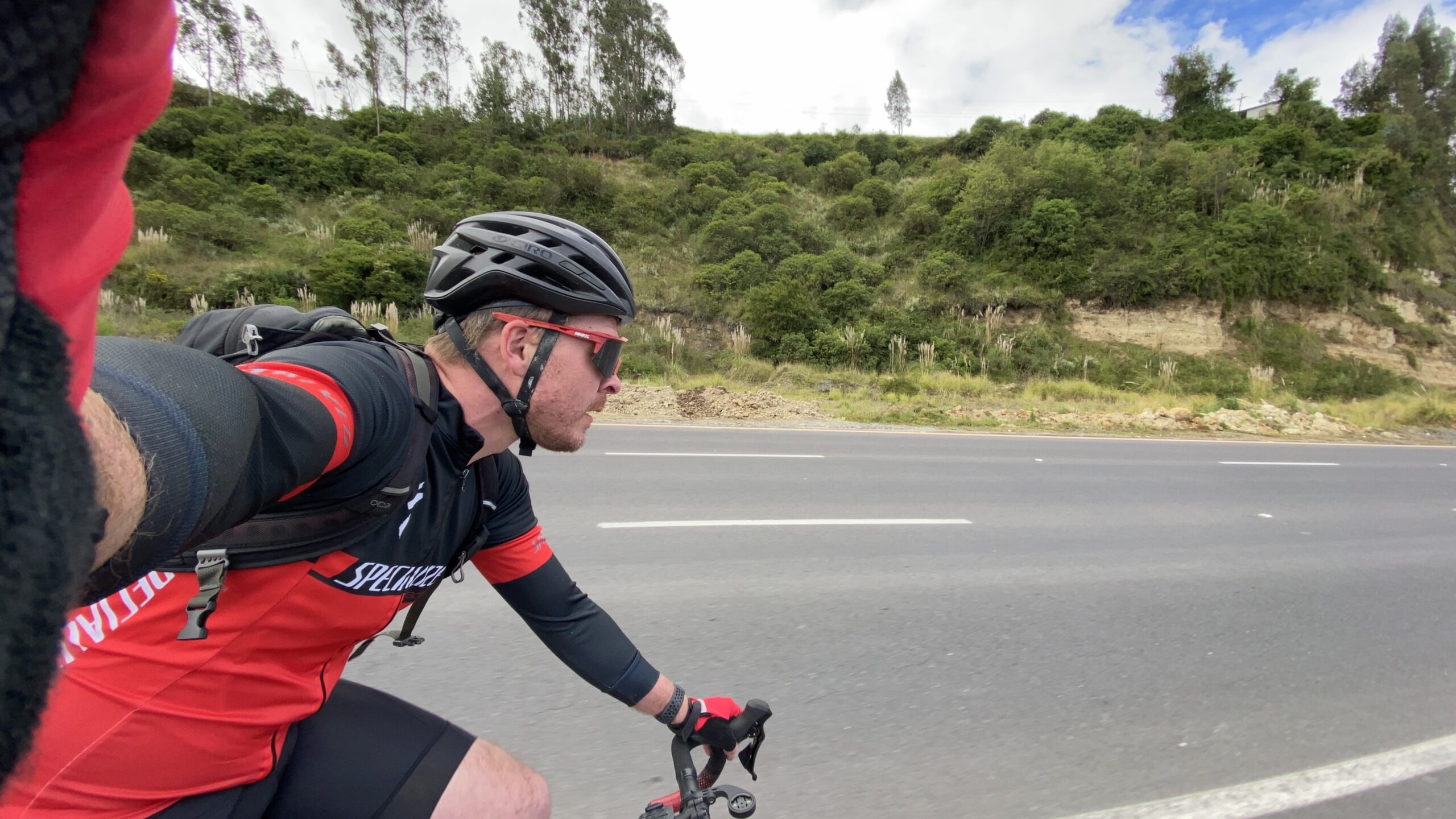
Guayaquil is a city that reveals its best secrets when approached at a slower pace. The flat, low-lying terrain of the Guayas basin makes it an ideal location for cycling, provided one starts early to beat the equatorial sun. Wheely Tyred recommends a dawn ride along the Malecón before the crowds arrive, continuing through the revitalised streets of the city centre.
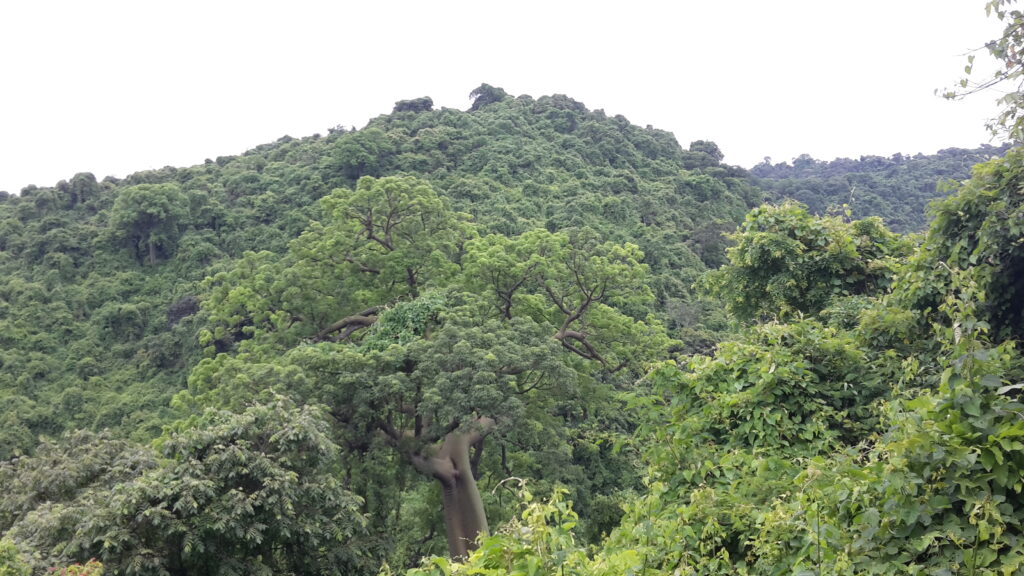
For those looking to venture further, there are excellent routes within a 20-kilometre radius. A ride to the Cerro Blanco Forest National Park offers a challenging change of pace; it is one of the few remaining fragments of tropical dry forest in the region, providing steep climbs and the chance to see howler monkeys and the endangered Great Green Macaw. Alternatively, the road north towards Daule leads through a landscape of rice paddies and fruit orchards, offering a glimpse into the agricultural life of the coast.
If you have a full day at your disposal, a trip to Bucay is highly recommended. Located at the foot of the Andes, approximately 90 kilometres away (and easily accessible by bus), it serves as a gateway to the mountains. From here, one can enjoy spectacular descents through cloud forests and past dozens of hidden waterfalls. It is the perfect antidote to the city’s humidity and a highlight for any independent traveller seeking the true diversity of the Ecuadorian landscape.
Affiliate Disclaimer: Some of the links on Wheely Tyred are affiliate links. If you click through and make a booking or purchase, we may earn a small commission at no extra cost to you. We only recommend gear, tours, stays, and services we genuinely use, trust, and stand behind — our editorial independence always comes first. These commissions help keep our independent cycling guides and travel stories free to read. You can also buy me a coffee here — thanks for supporting the ride!
The Ecuadorian Amazon.
The most biodiverse place in the world
Frequently asked questions about Guayaquil’s hidden gems
The island is easily reached via a dedicated pedestrian and cyclist bridge located at the intersection of Calle El Oro and the riverfront. It is an 800-metre span that leads directly to the island’s five-kilometre boardwalk network, making it perfect for those on foot or by bike.
To avoid the intense equatorial heat and humidity, start your exploration at dawn. This is particularly important for cycling; the Malecón is quiet, the air is fresher, and you can complete your outdoor activities before the midday sun peaks. It is also much safer.
Yes, it is a recognised National Heritage site. However, it remains a place of rest and reflection. Visitors should remain respectful, stick to the paths, and appreciate the neoclassical architecture and history without disturbing those who may be visiting gravesites.
Beyond the modern cafes, look for the Museo del Cacao and notice the areas where beans are still handled. The street is a sensory tribute to the Golden Bean (cacao) that built the city, so take the time to sample local chocolate and observe the historic architecture.
While the city centre is walkable, reaching El Pantanal or Cerro Blanco requires a bit of independent navigation. You can take a local bus or a short taxi ride to the northern outskirts. These spots are less serviced by tourist shuttles, which preserves their authentic, quiet atmosphere.
For those wanting a change of scenery, Bucay is the premier choice. Located roughly 90 kilometres away at the base of the Andes, it is accessible by bus. From there, you can hire local gear or use your own to descend through cloud forests and visit various hidden waterfalls.
Ecuador.
Pure wonder on the equator.