White City wonders / The essential guide to the top sights in Ibarra
Top 6 attractions in Ibarra, Ecuador / A comprehensive guide to the White City’s essential sights and landmarks
Pedals, plazas, and the perfect sorbet
BEN FINCH
Nestled in the shadow of the Imbabura Volcano, Ibarra is known affectionately as the Ciudad Blanca, or the White City. For the independent traveller, particularly those who prefer the freedom of two wheels over the confines of a tour bus, this Andean gem offers a refreshing alternative to the more frantic pace of Quito. Ibarra is a place of wide avenues, whitewashed colonial facades, and a climate that feels like a perpetual spring. It is a city that invites you to linger, to explore its cobblestone corners, and to understand the deep history of the northern Ecuadorian highlands without the pressure of a ticking clock.
While Wheely Tyred focuses on the path less travelled, any true understanding of this region must begin with its most iconic landmarks. These are the places that define Ibarra’s identity, providing the cultural and historical scaffolding upon which your adventure is built. Here are the top attractions that make Ibarra a must-visit destination.
The Andean pulse of the White City
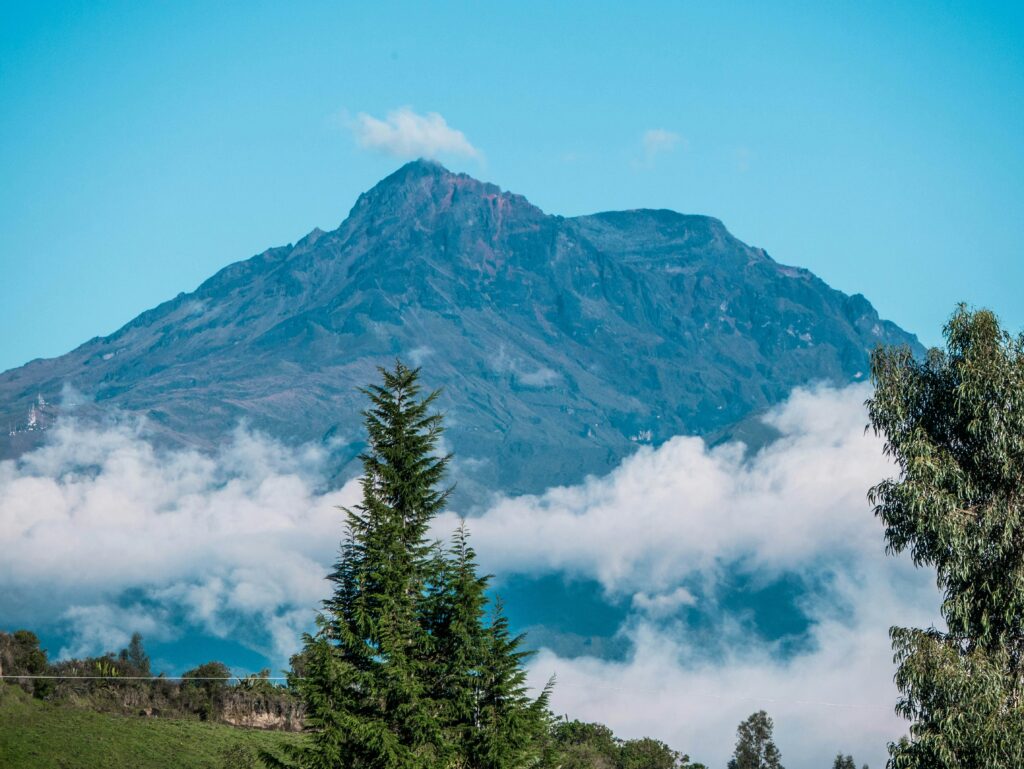
Beyond the whitewashed facades lies a city defined by volcanic backdrops and a remarkably resilient spirit. It is a destination where the pace of life invites you to lean in and look closer at the craftsmanship of both nature and man.
- Laguna Yahuarcocha: A serene alpine lake with a storied past, offering a flat perimeter road perfect for a slow-paced circumnavigation followed by a local tilapia lunch
- Colonial Architecture: The resilient heart of the city, centred around Parque Pedro Moncayo, where elegant 19th-century stonework rose from the ruins of a devastating earthquake
- San Antonio’s Artistry: A neighbouring parish where the rhythmic sound of chisels reveals a world of master woodcarvers keeping centuries-old Andean traditions alive
- Incan Heritage: The quiet district of Caranqui, steeped in legend as the birthplace of Atahualpa, provides a grounded look at the region’s pre-colonial roots
- Helados de Paila: A singular culinary experience involving hand-churned fruit juices in copper bowls, a refreshing reward for any traveller navigating the city’s sunny avenues
- El Cuartel: A former military stronghold reimagined as a sprawling cultural centre, showcasing the best of contemporary Ecuadorian art within its thick stone walls
- Cycling Horizons: A strategic base for those on two wheels, offering manageable routes to the pastoral embroidery workshops of Zuleta or the subtropical warmth of the Chota Valley
The Ecuadorian Sierra.
Get lost in the hills
The mirror of history / Laguna Yahuarcocha
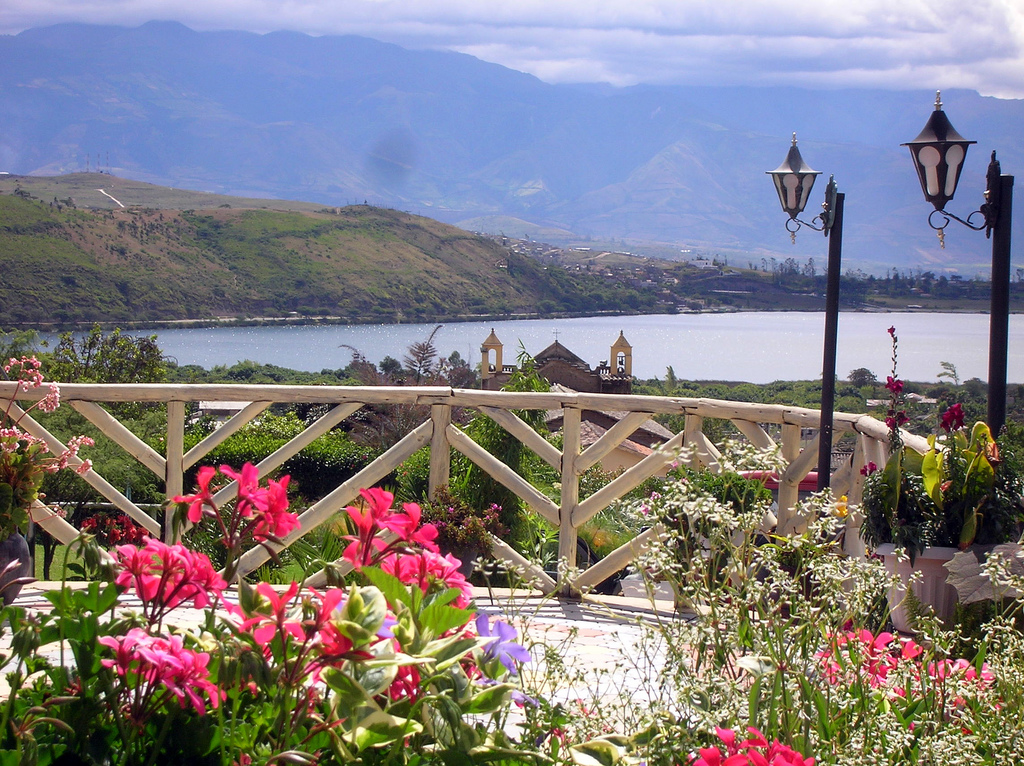
Located just a few kilometres north of the city centre, Laguna Yahuarcocha is perhaps the most famous landmark in the province. Its name translates to Lake of Blood in Kichwa, a sombre reference to a pre-Columbian battle between the Incas and the local Caranqui people. Today, however, the atmosphere is anything but violent. The lake is a serene basin of deep blue water surrounded by rolling green hills.
For the visitor who values independence, the perimeter road around the lake is a highlight. While it is famous for hosting motor racing events, it is equally popular for those who enjoy moving at a human pace. You can circumnavigate the entire body of water, taking in views of the surrounding mountains and watching local fishermen at work. On the shores, you will find numerous stalls serving tilapia, often freshly caught from the lake and fried to perfection. It is a location that rewards the slow traveller with changing light and a genuine sense of space.
The colonial heart / Parque Pedro Moncayo and the Cathedral
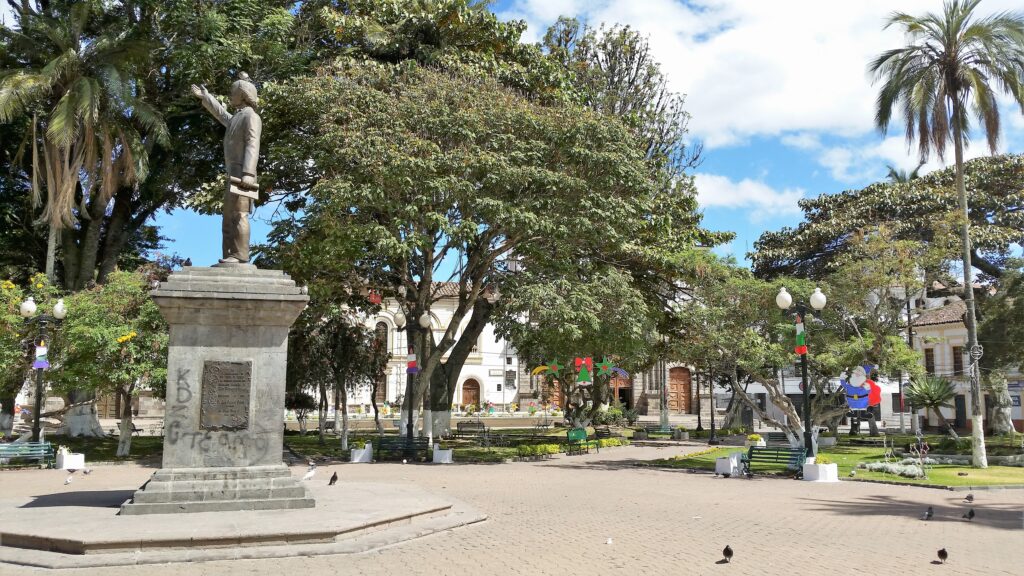
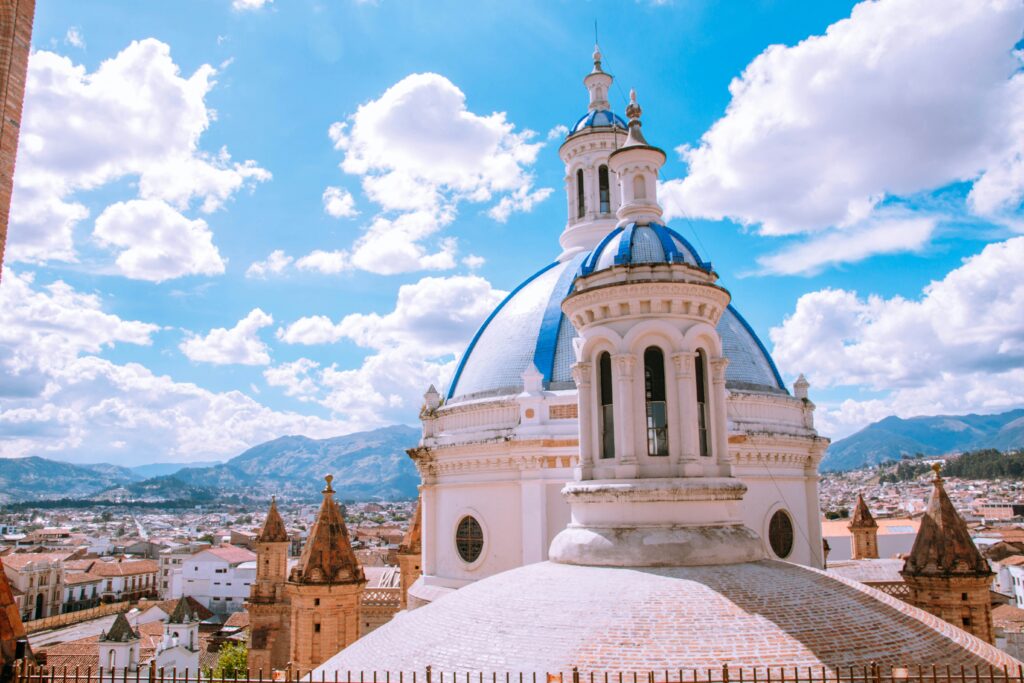
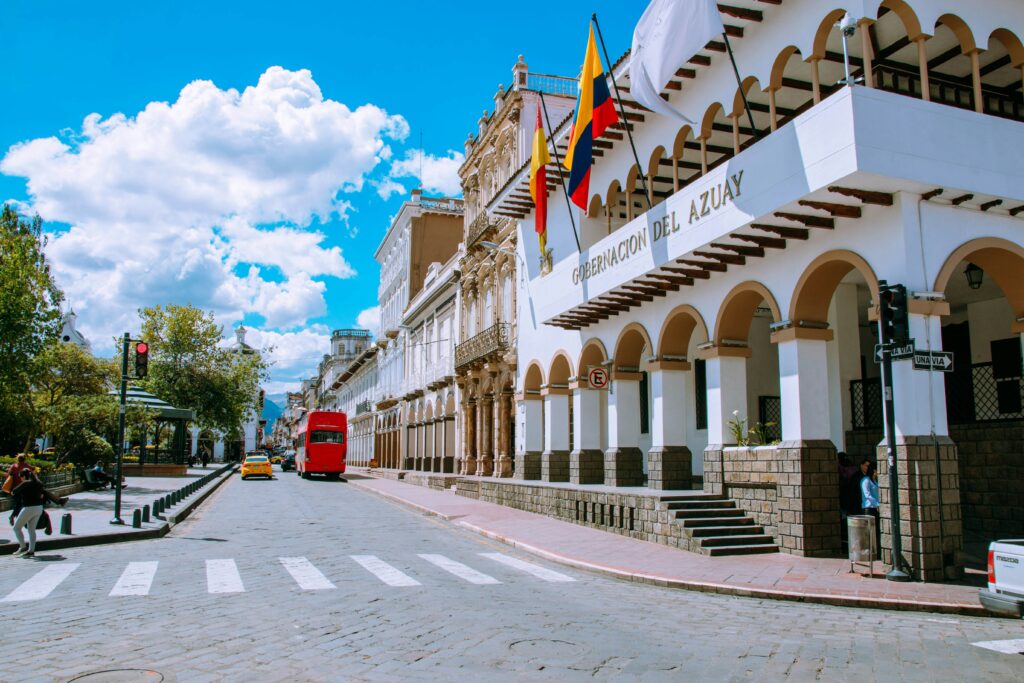
To understand why Ibarra is called the White City, one only needs to stand in the centre of Parque Pedro Moncayo. This manicured plaza is the civic heart of the city, flanked by the Municipal Palace and the Roman-style Cathedral. The architecture here is a testament to the city’s resilience; much of Ibarra was rebuilt after a devastating earthquake in 1868, resulting in a cohesive, elegant colonial aesthetic that remains largely intact.
The Cathedral, with its impressive stone facade and intricate interior, is a focal point for local life. Just a short walk away, the Iglesia de la Merced offers another architectural marvel, featuring a stunning carved wooden altar and a sense of quietude that is hard to find in larger cities. Exploring these plazas and churches on foot or by bike allows you to appreciate the fine details of the masonry and the rhythmic pulse of the city’s daily routines.
The Galápagos.
Ecuador’s Enchanted Isles
The art of wood / San Antonio de Ibarra
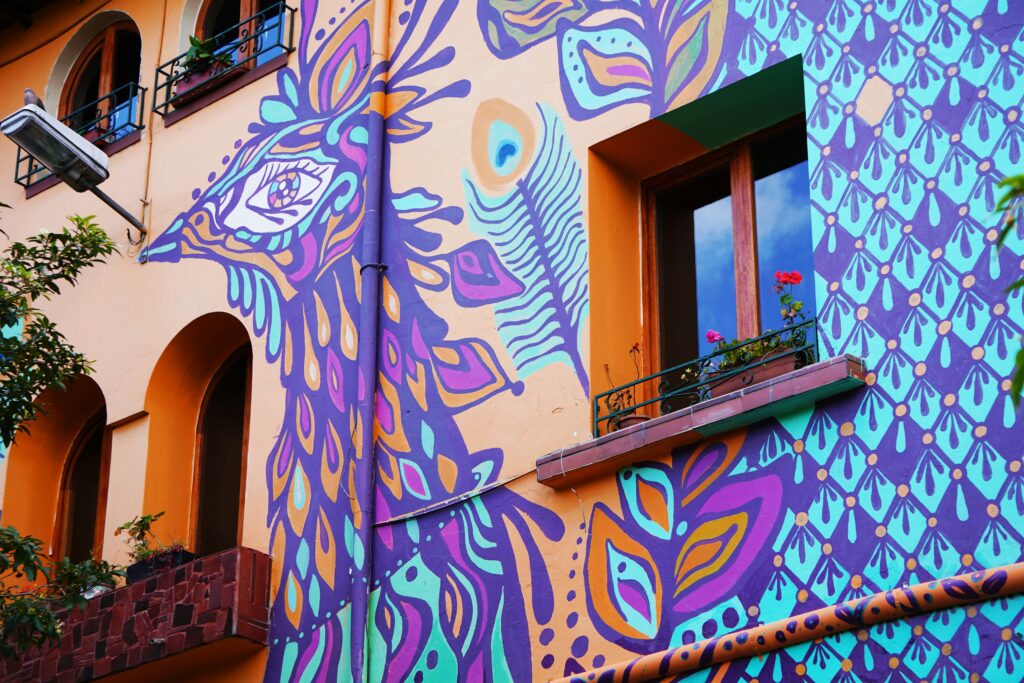
Just five kilometres south of Ibarra lies the parish of San Antonio de Ibarra, a destination that has earned the title of Pueblo Mágico for its incredible artisanal heritage. This is the wood-carving capital of Ecuador. The tradition here dates back to the colonial era, influenced by the famous Quito School of art.
Walking through the streets of San Antonio is like wandering through an open-air gallery. Almost every doorway leads to a workshop where master carvers transform blocks of cedar and walnut into intricate religious icons, modern sculptures, and delicate furniture. The Asociación de Artesanos is a great place to start, offering a curated look at the best work from local guilds. For the traveller who appreciates craftsmanship, seeing these artists at work provides a profound connection to the region’s cultural history that no museum could replicate.
The birthplace of kings / Caranqui
South of the city centre is the historic neighbourhood of Caranqui, a place of immense archaeological and historical significance. Local tradition holds that this was the birthplace of Atahualpa, the last great Inca emperor. While the physical ruins are modest compared to sites like Ingapirca, the sense of history is palpable.
The Temple of the Sun and the nearby archaeological museum house artefacts that tell the story of the Caranqui culture before the Inca conquest. It is a quiet, residential area that feels worlds away from the commercial centre. Visiting Caranqui offers a chance to see a more authentic, domestic side of Ibarra, where the ancient past still informs the identity of the modern community.
The Ecuadorian Amazon.
The most biodiverse place in the world
A taste of tradition / Helados de Paila
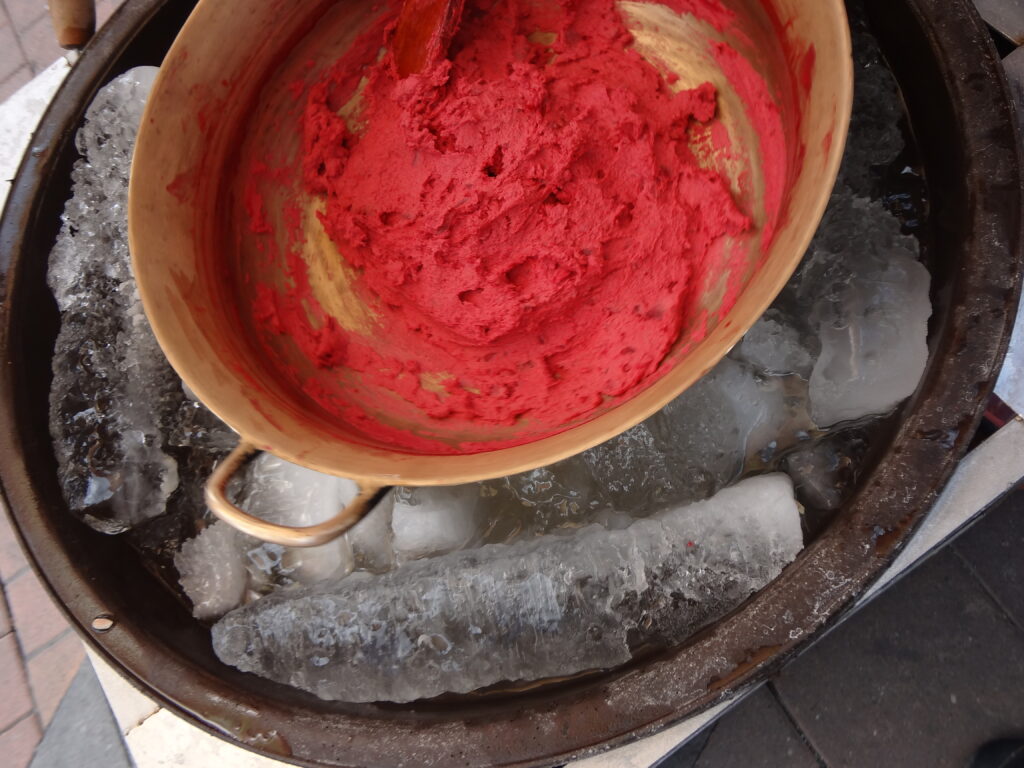
No visit to Ibarra is complete without experiencing its most famous culinary tradition: Helados de Paila. Unlike modern ice cream, this local delicacy is made by hand in large copper bowls (pailas) placed over beds of straw and ice. The fruit juice is spun rapidly in the copper bowl until it freezes into a smooth, intensely flavoured sorbet.
The tradition was supposedly started in the mid-19th century by Rosalía Suárez, and her descendants still operate several shops in the city. Watching the ice cream being made is a spectacle in itself, requiring physical strength and a deft touch. It is a quintessential Ibarra experience, a sweet reward after a day of exploring the city’s sun-drenched streets.
The cultural hub of El Cuartel
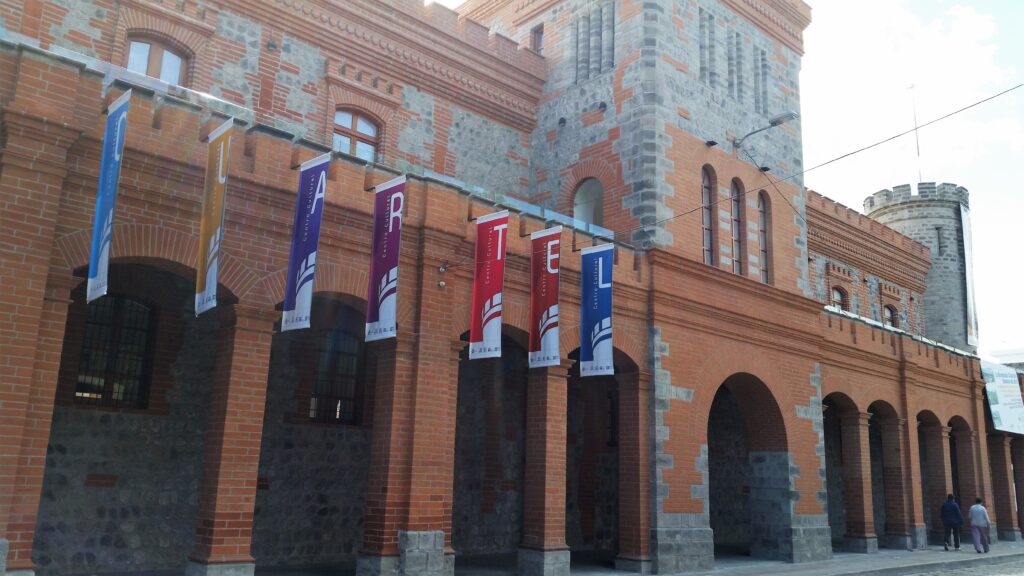
Originally built as military barracks, the Centro Cultural El Cuartel has been transformed into one of the most significant cultural spaces in northern Ecuador. This massive, block-long building with its striking stone walls and inner courtyards now hosts rotating art exhibitions, historical displays, and community events.
For the independent traveller, El Cuartel serves as an excellent compass for the region’s contemporary art scene. It is a place where you can see how young Ecuadorian artists are reinterpreting their heritage. The sheer scale of the building is impressive, and its corridors offer a cool, quiet respite from the midday sun. It represents Ibarra’s transition from a colonial outpost to a modern centre of Andean culture.
The Ecuadorian Coast.
Where you’ll find the very best food
Exploring the perimeter on two wheels
For those who have arrived with their own transport or have hired a sturdy set of wheels, Ibarra serves as the perfect base for exploring the wider Imbabura province. Within a twenty-kilometre radius, you can reach the village of Zuleta, world-renowned for its hand-embroidered textiles and its commitment to conservation. The ride to Zuleta takes you through some of the most beautiful pastoral landscapes in the Andes, with the towering Taita Imbabura mountain always in sight.
Another excellent local excursion is a trip into the Chota Valley. This subtropical rift is home to one of Ecuador’s Afro-Ecuadorian communities and offers a starkly different climate and culture just a short distance from the city.
For longer day trips, the famous market town of Otavalo and the leather-working centre of Cotacachi are easily accessible, allowing you to build a comprehensive picture of life in the northern highlands.
Whether you are navigating the cobblestones of the colonial core or the dirt tracks of the surrounding valleys, Ibarra rewards the traveller who chooses to move at their own pace.
Frequently asked questions about the top sights in Ibarra
The moniker Ciudad Blanca stems from its beautifully preserved colonial centre. After a catastrophic earthquake in 1868, the city was rebuilt with a cohesive aesthetic featuring whitewashed facades and wide, orderly streets that remain its signature today.
Yes, the lake is encircled by a road that is frequently used for both motor racing and cycling. For the independent traveller, it provides a largely flat, scenic route of approximately 10 kilometres, offering excellent views of the surrounding highlands.
San Antonio de Ibarra is the artistic soul of the province. The craft is a legacy of the Quito School of art, and today, visitors can walk directly into open workshops to see artisans transforming cedar and walnut into everything from religious icons to modern sculpture.
The lakeside stalls at Yahuarcocha are famous for fried tilapia. It is typically served with patacones (fried green plantains), salad, and popcorn—a staple Andean accompaniment. It is a simple, authentic meal favoured by locals and travellers alike.
Unlike commercially churned dairy, these are water-based sorbets made by hand. A copper bowl (paila) is spun on a bed of ice and straw; as the fruit juice hits the cold metal, it freezes instantly, resulting in a smooth, intense flavour that is unique to the region.
Absolutely. Within a 20-kilometre radius, you can reach the embroidery-rich village of Zuleta or descend into the Chota Valley. For those looking for a slightly longer journey, the famous markets of Otavalo and the leather-working shops of Cotacachi are easily accessible via local transport or by bike.
Ecuador.
Pure wonder on the equator.