Unveiling the Galápagos Islands / A guide to the archipelago’s greatest wonders
Top attractions, wildlife sights, and unmissable landmarks in the Galápagos
Discover the untamed beauty of Ecuador’s most famous islands on your own terms
BEN FINCH
The Galápagos Islands are not just a destination; they are a living, breathing testament to the wonders of the natural world. Situated in the vast expanse of the Pacific Ocean off the coast of Ecuador, this volcanic archipelago is famed for its fearless wildlife and otherworldly landscapes. For the independent traveller who prefers to eschew crowded buses and the rigid schedules of group tours, the Galápagos offers a profound sense of discovery. Here, you have the rare opportunity to observe nature exactly as it is, untamed and spectacular.
While the islands are heavily protected, those who appreciate travelling on their own time will find plenty of opportunities to gain a deep knowledge of the environment. Whether you are marvelling at prehistoric creatures or hiking across ancient lava fields, the key to truly experiencing the Galápagos is to take it slow. Below are the top attractions that define this remarkable corner of the globe.
The volcanic pulse of the archipelago
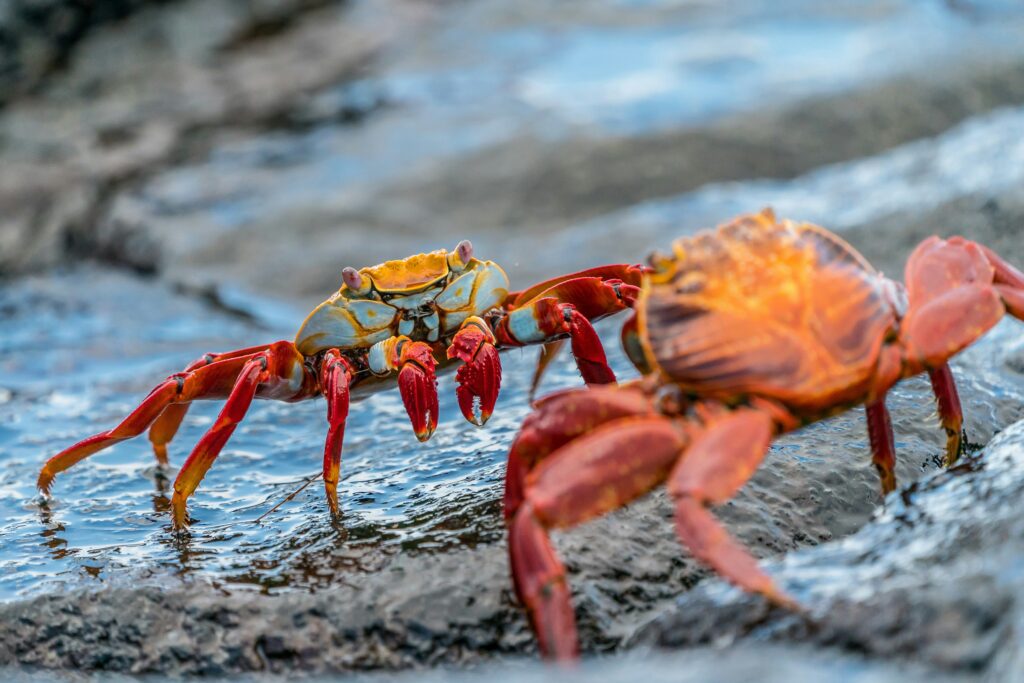
Experience the Galápagos as the naturalists intended—slowly, deliberately, and without the rigid itinerary of a group tour. From the raw power of active calderas to the quiet sanctuary of mangrove lagoons, these islands reward those who prefer to explore at their own rhythm.
- Scientific Roots: The Charles Darwin Research Station offers a grounding look at vital conservation efforts and the chance to observe giant tortoises before you encounter them in the wild
- Coastal Solitude: Tortuga Bay provides a stunning, white-sand retreat where marine iguanas bask and reef sharks frequent the calm, turquoise waters of the hidden lagoon
- Geological Labyrinths: Los Túneles on Isabela Island is a surreal network of lava arches, creating a prehistoric aquarium that is best appreciated through a quiet, immersive snorkel
- The Crater’s Edge: A trek to the Sierra Negra Volcano reveals one of the world’s largest calderas, offering a stark, lunar landscape that showcases the archipelago’s tectonic origins
- Avian Sanctuaries: Kicker Rock stands as a dramatic volcanic spire, acting as both a cathedral for nesting seabirds and a magnet for hammerhead sharks in the depths below
- Iconic Panoramas: The summit of Bartolomé Island provides the definitive view of the Galápagos, looking out over Pinnacle Rock and the jet-black lava flows of the surrounding islets
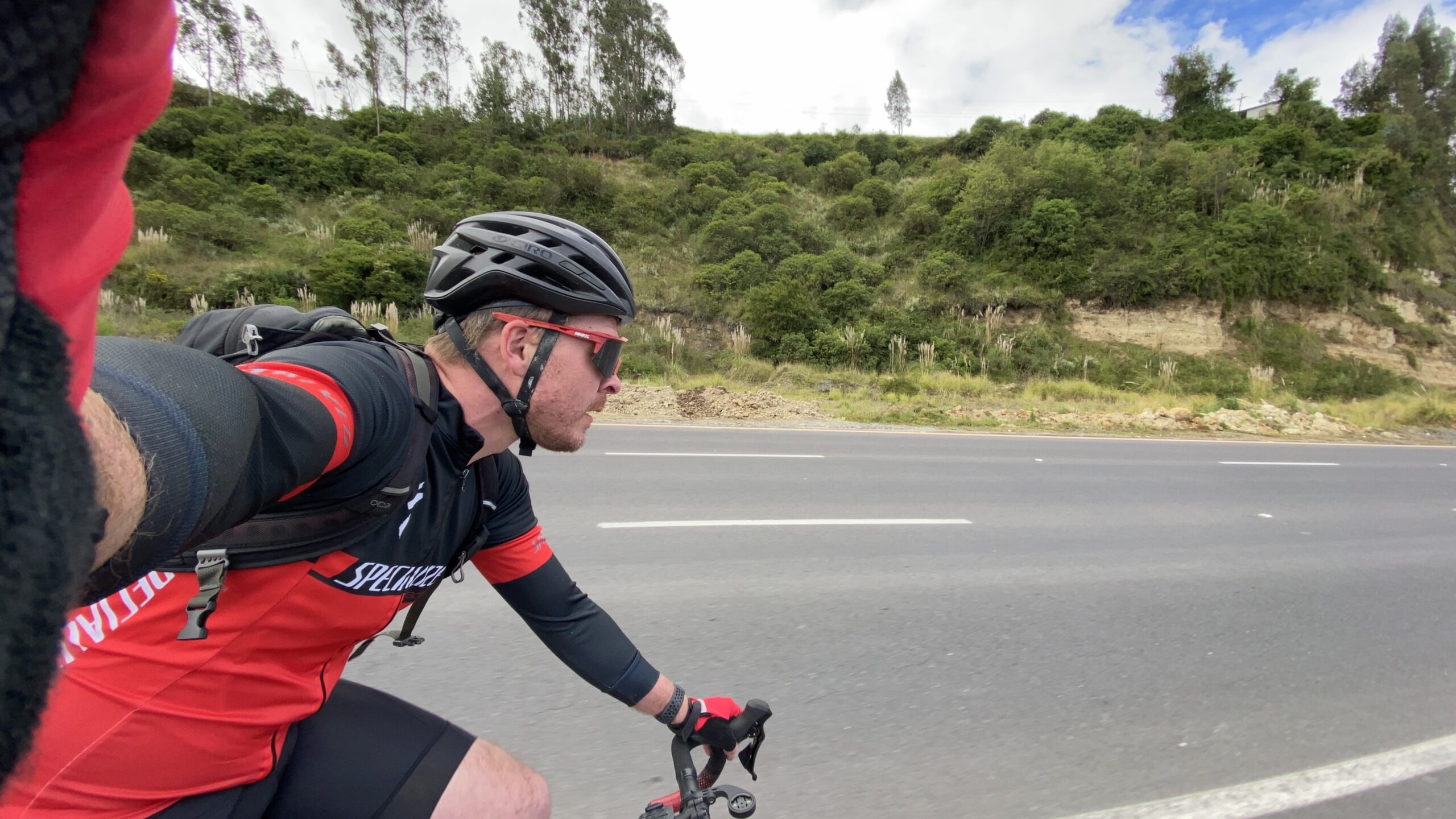
- Freedom on Two Wheels: Bypassing the standard shuttle buses for a bicycle allows for a deeper connection to the islands, whether climbing into the Santa Cruz highlands or pedalling to Isabela’s historic sites
The Galápagos.
Ecuador’s Enchanted Isles
1. Charles Darwin Research Station / Santa Cruz Island
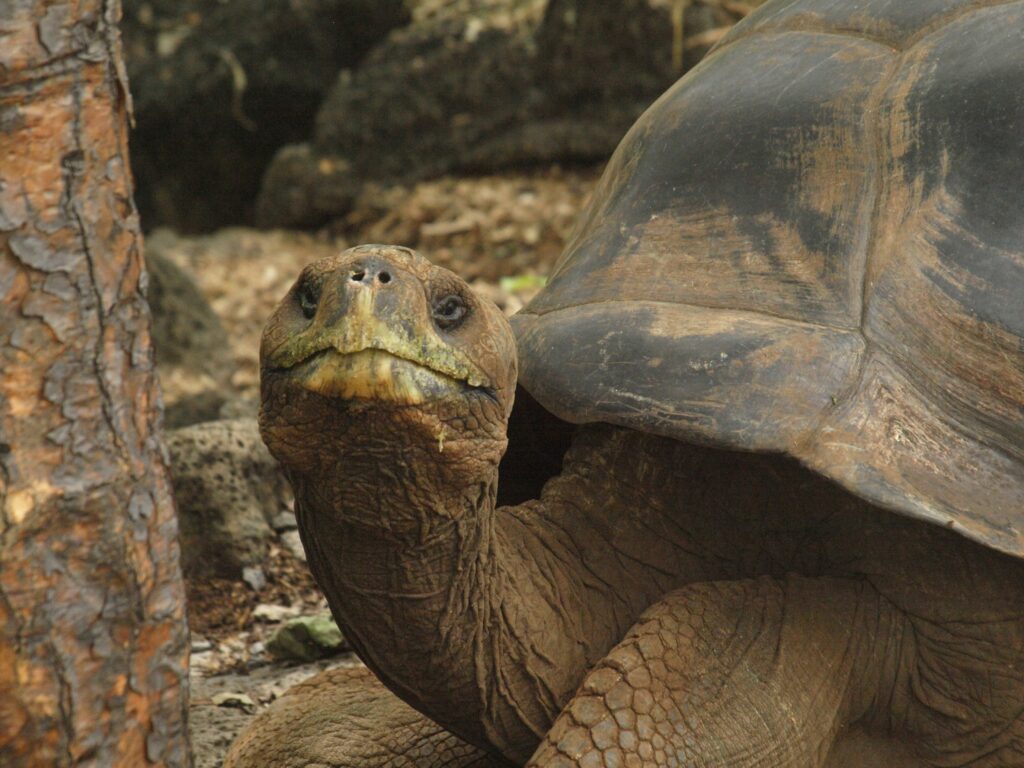
No visit to the archipelago is complete without understanding the delicate conservation efforts that keep it pristine. Located on the outskirts of Puerto Ayora on Santa Cruz Island, the Charles Darwin Research Station serves as the scientific heart of the Galápagos. Founded in 1964, the station is dedicated to preserving the unique ecosystems of the islands and offers an unparalleled educational experience.
As you wander through the arid landscape of the research station, you will encounter various species of Galápagos giant tortoises at different stages of their development. The breeding centre is a cornerstone of the island’s conservation, carefully nurturing hatchlings until they are robust enough to be repatriated to their native islands. Taking your time here allows you to observe the subtle differences in shell shapes—from dome-shaped to saddle-backed—that famously helped Charles Darwin formulate his theory of evolution. You will also see land iguanas basking in the equatorial sun and learn about the ongoing battles against invasive species. It is a grounding, enlightening stop that sets the context for everything else you will see in the archipelago.
2. Tortuga Bay / Santa Cruz Island
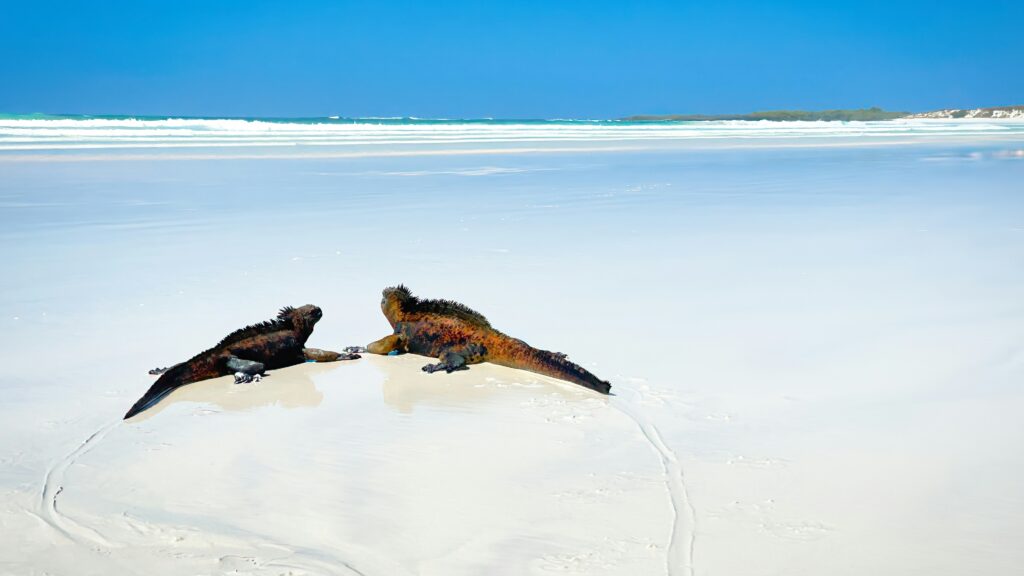
Just a short distance from the bustling harbour of Puerto Ayora lies Tortuga Bay, widely considered one of the most stunning stretches of coastline in the Galápagos. Getting there requires a leisurely walk along a paved path that winds through a dense forest of prickly pear cacti and palo santo trees. This approach perfectly suits the traveller who enjoys a steady, unhurried pace, with plenty of opportunities to spot Darwin finches and mockingbirds along the way.
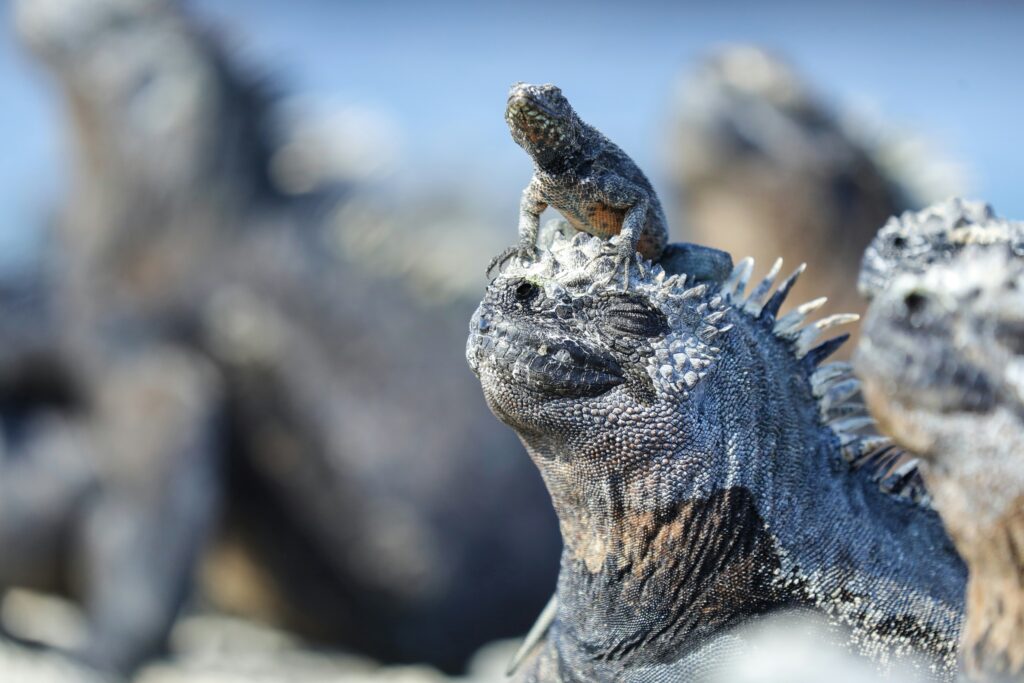
Upon arriving, you are greeted by an expanse of blindingly white coral sand and the roaring surf of the Pacific. The main beach is a favourite haunt for marine iguanas, which you will often see piled together to conserve heat or sneezing out excess salt after a foraging dive. While the currents on the main beach are too strong for swimming, a short stroll to the end of the bay reveals a tranquil, mangrove-lined lagoon. The calm, turquoise waters here are ideal for snorkelling or simply wading. It is not uncommon to spot whitetip reef sharks resting on the sandy bottom, alongside graceful green sea turtles and the occasional brown pelican diving for its lunch.
The Ecuadorian Amazon.
The most biodiverse place in the world
3. Los Túneles / Isabela Island
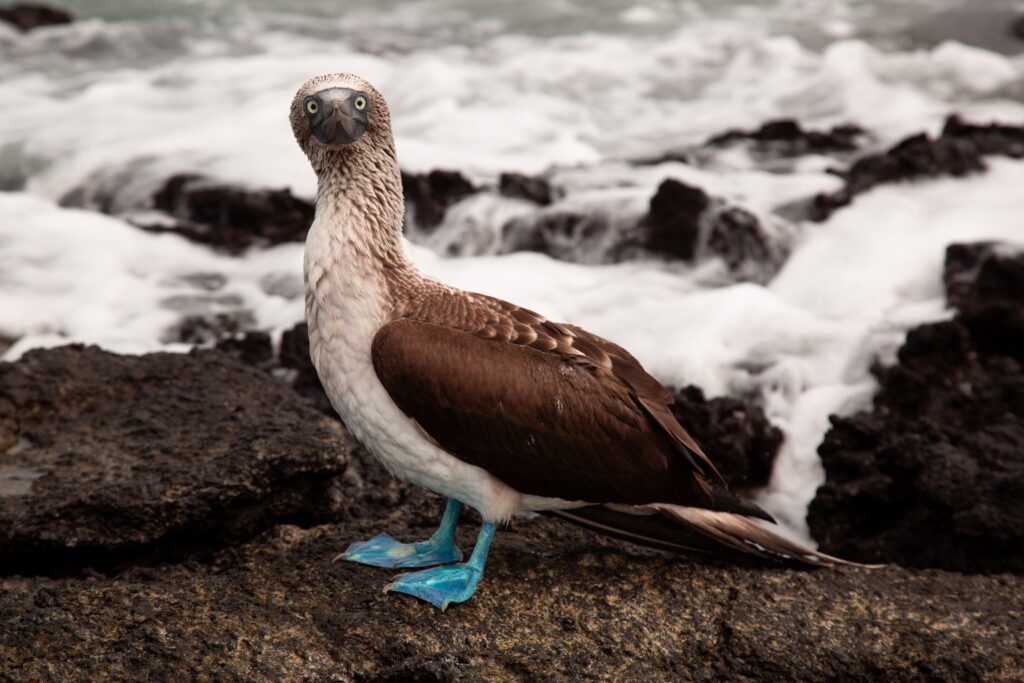
Isabela is the largest island in the Galápagos and boasts some of the most dramatic volcanic scenery. Among its greatest treasures is Los Túneles, a labyrinthine network of lava arches and tunnels located off the southern coast. Created by molten lava flows that met the cold ocean waters, these intricate formations have collapsed over time, leaving behind a series of calm, crystal-clear pools.
Visiting Los Túneles feels like entering a private, prehistoric aquarium. The isolation of the site means you are far removed from the hustle of the main port towns. Snorkelling through the calm arches, you are almost guaranteed to encounter an astonishing density of marine life. Sea horses cling to the submerged mangrove roots, whilst large schools of golden rays glide effortlessly beneath you. The rocky outcrops above the water are equally fascinating, serving as a popular resting spot for blue-footed boobies and Galápagos penguins. It is a surreal, magical environment that rewards those who take the time to look closely at every crevice and coral head.
4. Sierra Negra Volcano / Isabela Island
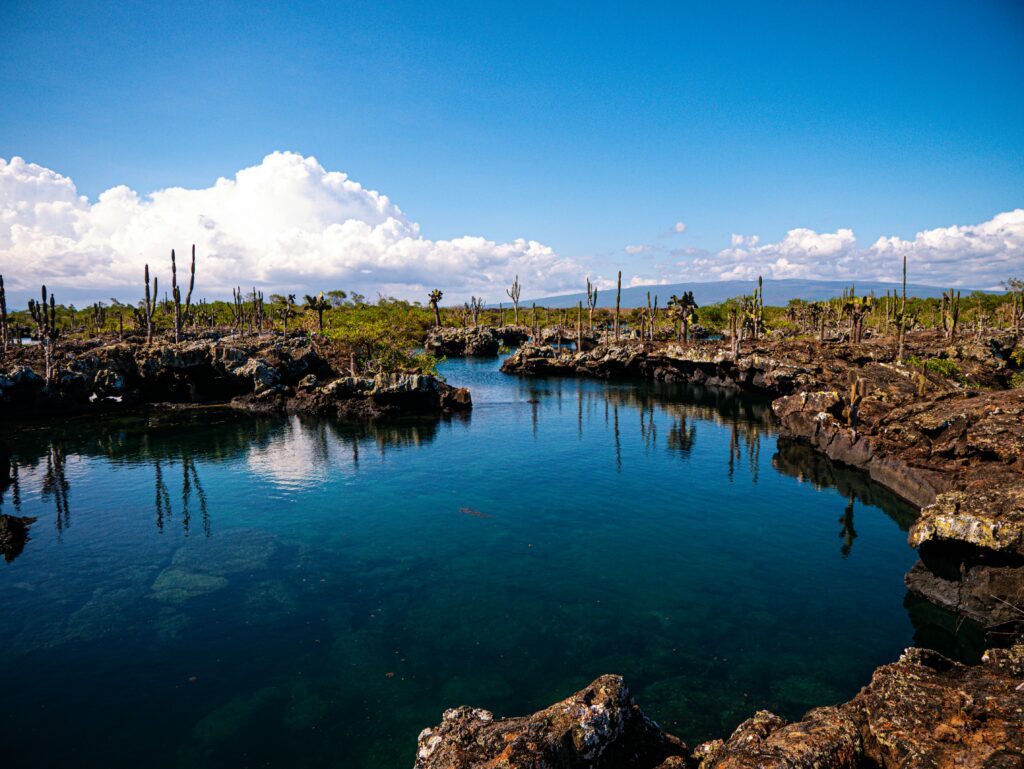
For those who crave sweeping vistas and the raw power of geology, the Sierra Negra Volcano is an absolute must. Standing as one of the most active volcanoes in the archipelago, Sierra Negra features the second-largest volcanic caldera in the world, measuring an impressive ten kilometres across.
The hike to the crater rim is an ascent through varying microclimates, transitioning from the lush, humid highlands of Isabela to a stark, lunar-like landscape near the summit. Standing at the edge of the caldera, the sheer scale of the crater is humbling. The black lava fields stretch out below, contrasting sharply with the deep blue of the sky and the distant ocean. Continuing past the main crater, the trail leads to Volcán Chico, a parasitic cone featuring striking shades of red, yellow, and black rock, alongside active fumaroles releasing thermal steam. The vastness of the landscape here provides a profound sense of isolation and freedom, far away from the rigid timelines of standard excursions.
The Ecuadorian Sierra.
Get lost in the hills
5. Kicker Rock (León Dormido) / San Cristóbal Island
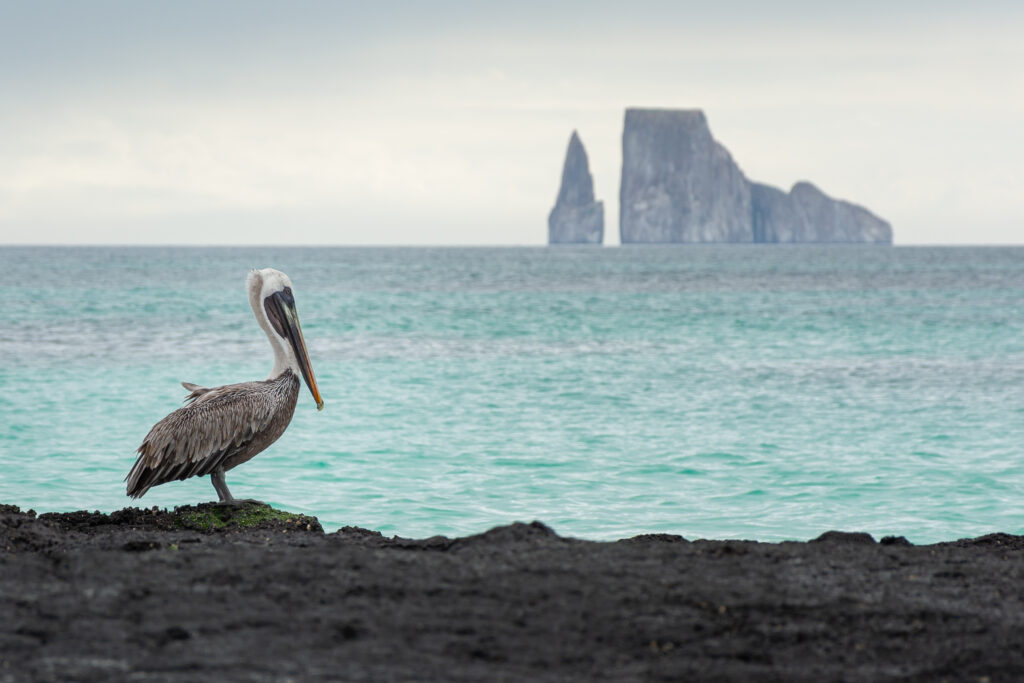
Rising majestically from the ocean just off the coast of San Cristóbal Island, Kicker Rock—or León Dormido as it is known locally—is a striking tuff cone that has been split in two by centuries of erosion. Towering over 140 metres above the sea, the sheer rock faces are home to nesting colonies of blue-footed boobies, Nazca boobies, and magnificent frigatebirds.
However, the true magic of Kicker Rock lies beneath the surface. The narrow channel between the two massive rocks creates a funnel for ocean currents, attracting an extraordinary array of pelagic life. Snorkelling or diving through the channel is an exhilarating experience. The nutrient-rich waters draw impressive schools of Salema fish, sea turtles, and most notably, an abundance of sharks. It is common to see Galápagos sharks and whitetip reef sharks patrolling the depths, and if you are fortunate, you might catch a glimpse of a scalloped hammerhead cruising through the blue. It is an awe-inspiring spectacle that highlights the untamed, dynamic nature of the Galápagos Marine Reserve.
6. Bartolomé Island and Pinnacle Rock
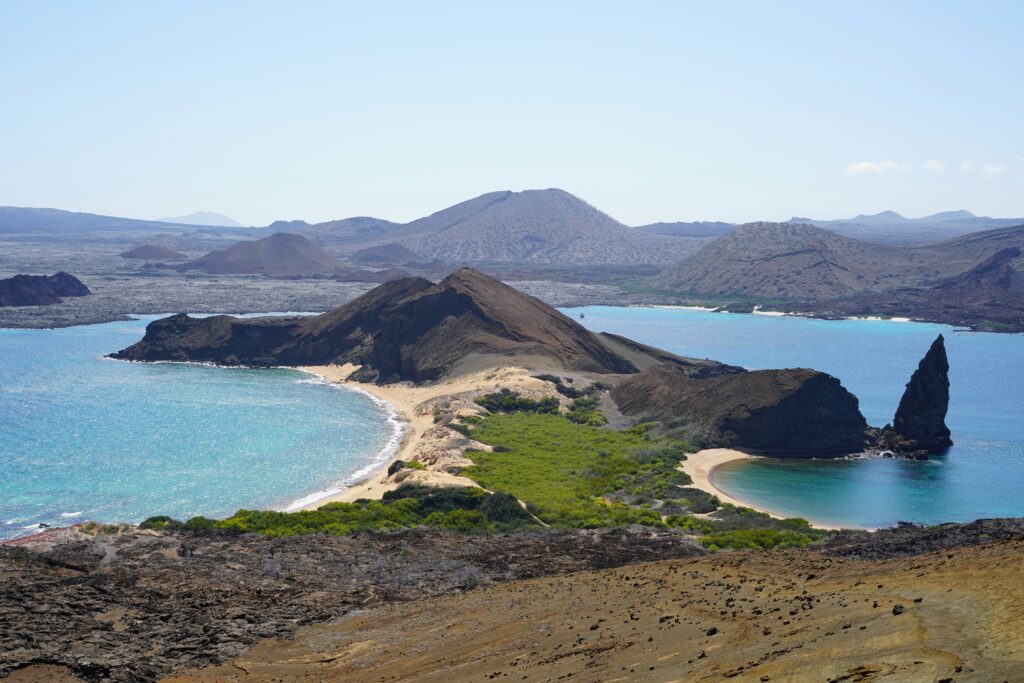
If there is one iconic image that defines the visual drama of the Galápagos, it is the view from the summit of Bartolomé Island. This relatively small, barren islet is famous for its striking volcanic landscapes and the towering spear of Pinnacle Rock.
A wooden staircase winds its way to the highest point of the island, allowing visitors to ascend without damaging the fragile terrain. The climb is rewarded with a panoramic vista that encompasses the sweeping bays of Sullivan Bay on neighbouring Santiago Island, the jet-black lava flows, and the striking silhouette of Pinnacle Rock itself. After taking in the views at your own pace, the beaches below offer excellent snorkelling. The waters around Pinnacle Rock are one of the best places in the archipelago to swim alongside the endangered Galápagos penguin. These agile birds dart through the water with astonishing speed, offering a delightful contrast to the stark, slow-moving geological forces that shaped their home.
The Ecuadorian Coast.
Where you’ll find the very best food
Exploring the Galápagos on two wheels
While the top sights of the Galápagos often require boats or hiking boots, the islands also offer brilliant opportunities for cyclists looking to explore the coastal towns and highlands at their own pace. Bringing a bike or hiring one locally unlocks a completely different rhythm of travel, allowing you to bypass the crowds and stop exactly when and where you please.
On Santa Cruz Island, you can cycle from the centre of Puerto Ayora up into the lush highlands. A challenging but immensely rewarding ride of roughly 20 kilometres will take you to the El Chato Tortoise Reserve, where you can cycle quietly alongside giant tortoises grazing in their natural habitat. Alternatively, an eastern route out of town leads towards El Garrapatero beach, a beautiful and lesser-visited spot perfect for a quiet afternoon.
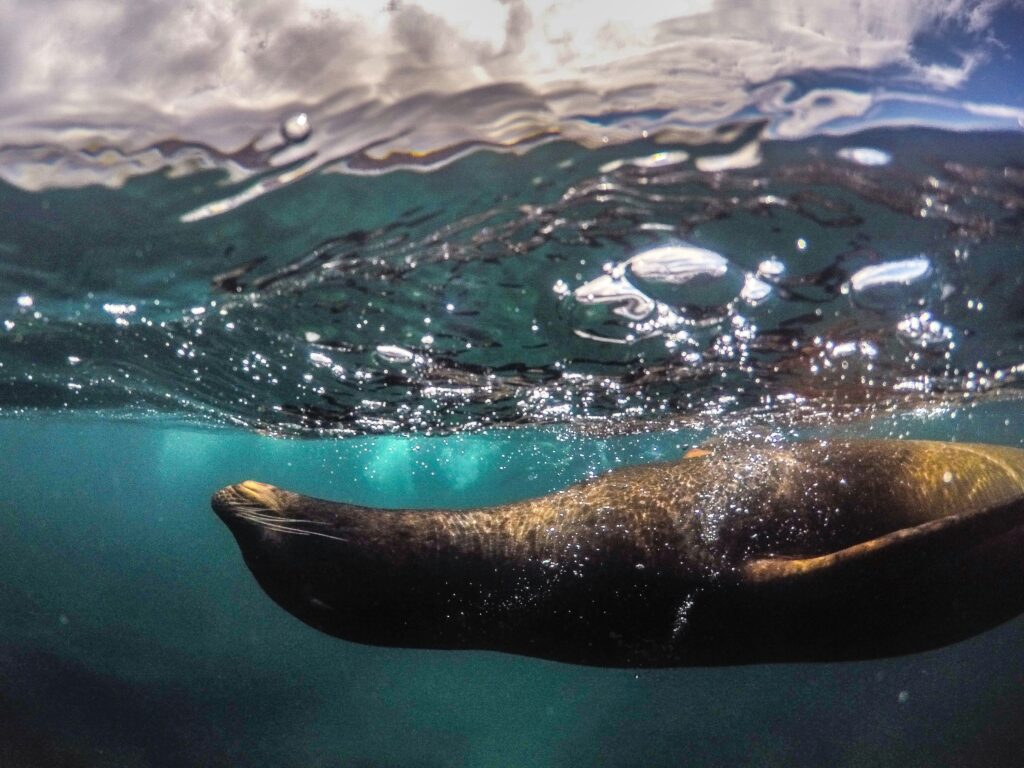
Over on San Cristóbal, cycling provides the perfect way to traverse the island’s changing elevations. A popular coastal route from Puerto Baquerizo Moreno leads you to La Loberia, a stunning beach teeming with sea lions, just a few kilometres away. For those seeking a more rigorous day trip, the winding road up to El Junco—a freshwater crater lake situated roughly 18 kilometres from the port—offers a steady climb through endemic flora and sweeping views of the Pacific.
Isabela Island, with its sandy streets and laid-back atmosphere, is arguably the most cycling-friendly of them all. From Puerto Villamil, you can pedal along the coastal paths to the historic Wall of Tears (El Muro de las Lágrimas). This ride takes you through wetlands dotted with pink flamingos and isolated beaches where marine iguanas cross your path. By travelling by bike, you set your own itinerary, ensuring that your connection to these extraordinary islands is as deep and uninterrupted as the landscapes themselves.
Frequently asked questions about the top attractions in the Galápagos Islands
Absolutely. You can visit the Charles Darwin Research Station on foot from Puerto Ayora, or hire a bicycle to ride up to the El Chato Tortoise Reserve in the Santa Cruz highlands. Both allow you to observe these ancient giants at your own pace without the pressure of a ticking clock.
For the independent traveller, it is the ideal choice. Santa Cruz, San Cristóbal, and Isabela all have well-maintained paths and roads leading to major attractions. It allows you to move between town centres and remote beaches or highland lookouts with total autonomy.
No permit is required, but you must sign in at the park entrance gate. The path is a well-paved 2.5-kilometre walk (or a very short ride to the entrance) through a cactus forest. It is a self-guided route, so you can spend as much or as little time at the beach as you wish.
You can cycle from the coast of Isabela up into the highlands to the park entrance, which is a steady and rewarding climb. However, the final trek to the volcano’s rim is on foot to protect the fragile volcanic soil. Combining a morning ride with the hike is a brilliant way to see the island’s changing microclimates.
The terrain is as varied as the wildlife. Coastal paths are often flat and sandy, particularly on Isabela, while inland routes on Santa Cruz and San Cristóbal involve significant elevation gains as you move from the arid coast to the lush, humid highlands. Sturdy tyres are a must for the occasional gravel track.
Yes, several local shops in the main ports hire out high-quality masks, snorkels, and fins. This is perfect for exploring the lagoons at Tortuga Bay or the rocky coves of La Loberia on San Cristóbal without needing to book a formal boat excursion.
Ecuador.
Pure wonder on the equator.