Uncovering the history of Puyo / The gateway to the Ecuadorian Amazon
A complete history of Puyo, Ecuador, from indigenous origins to modern-day conservation
Where ancient rainforest trails meet the modern spirit of the Canelos Quichua
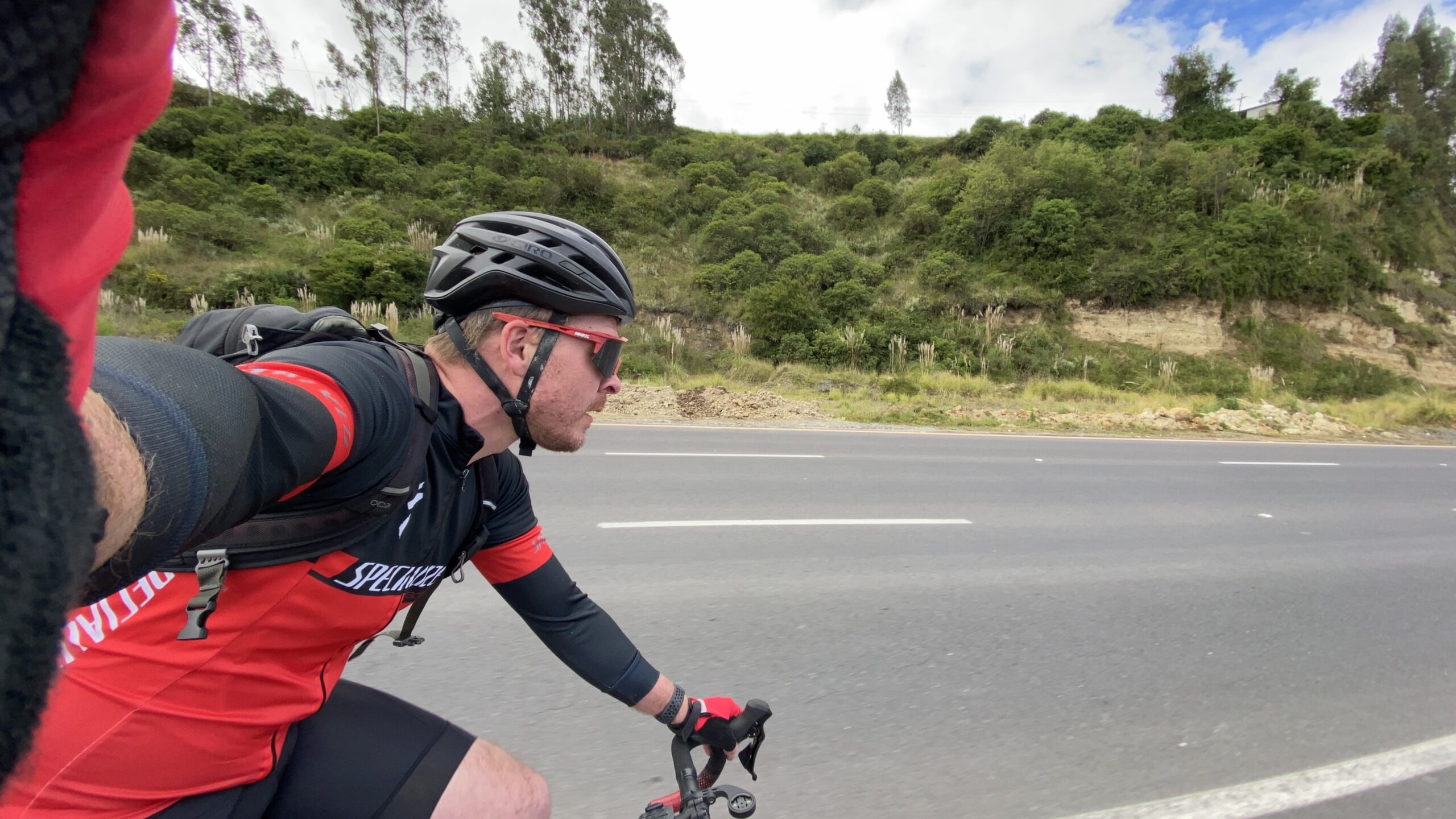
BEN FINCH
Nestled on the lush eastern slopes of the Andes, where the dramatic and unforgiving mountainous terrain finally surrenders to the vast expanse of the Amazon basin, lies the city of Puyo. For the independent cyclist, this bustling urban centre is often viewed as the ultimate destination at the end of the legendary descent from Baños. However, for those willing to look closer, Puyo offers a historical narrative that is as dense, complex, and captivating as the jungle canopy that surrounds it.
We at Wheely Tyred believe that to truly experience a destination, you must understand the deep historical currents that shaped it. Puyo is not just a geographical waypoint or a place to rest your legs on a South American cycling tour; it is a profound cultural crossroads with a story that demands to be heard.
The humid gateway to the Oriente
Where the Andean foothills dissolve into the vastness of the Amazon basin, Puyo stands as a testament to indigenous resilience and missionary ambition. It is a city defined not just by the rain, but by its role as a vital historical crossroads for the people of the Pastaza.
- Indigenous foundations: The area is the ancestral home of the Puyo Runa (Canelos Kichua), a group formed through centuries of cultural exchange between the Achuar, Shiwiar, and Zapara peoples
- Missionary origins: Founded officially in 1899 by the Dominican friar Álvaro Valladares, the settlement was established alongside nine indigenous leaders to serve as a crucial rest stop on the trade route to the deep jungle
- The rubber legacy: Contrary to the myth of isolation, Puyo was an active participant in the global rubber boom, serving as a strategic trading hub for forest resources and agricultural products
- Environmental activism: Modern Puyo is a global centre for indigenous rights, where local communities have successfully fought for territorial sovereignty and protected the rainforest from industrial extraction
- The descent from Baños: For cyclists, the city is the reward at the end of the Ruta de las Cascadas, a 60km journey that traces ancient paths through dramatic Andean gorges
- Authentic commerce: The local markets offer a unique glimpse into the city’s dual identity, where ancient pottery techniques are sold alongside the gear needed for modern trans-Amazonian expeditions
Puyo.
The gateway to the Amazon
The etymology and indigenous origins of the Pastaza region
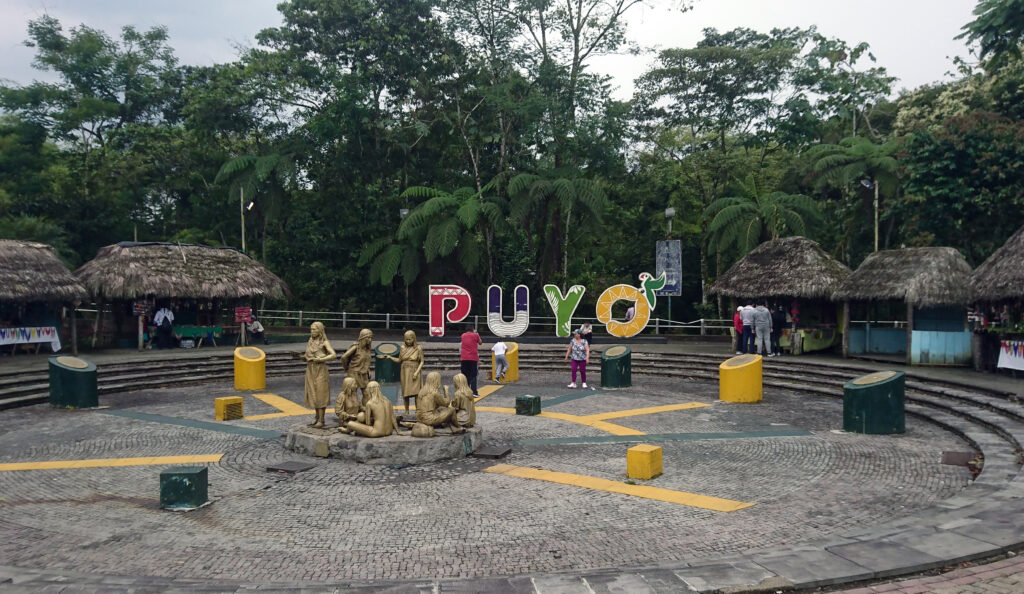
The name of the city itself perfectly sets the scene for arriving cyclists. In the local Kichwa language, the word puyo translates directly to cloudy or rainy. It is a highly apt descriptor for a settlement completely enveloped in a tropical rainforest climate, where heavy humidity and sudden, dramatic precipitation are constants of daily life. Long before paved highways or mountain bike trails existed, this challenging land was expertly navigated by thriving indigenous communities. The area surrounding modern Puyo is the traditional home of the Canelos Quichua people, often referred to in modern anthropological literature as the Puyo Runa.
Rather than being a static or isolated tribe, the Puyo Runa represent a dynamic and fascinating cultural convergence. For centuries, the Pastaza region served as an active melting pot for various linguistic and cultural groups, including the Achuar, Shiwiar, and Zapara peoples. These groups engaged in extensive regional trade, shared complex cosmological beliefs, and continuously adapted to the challenging jungle environment.
The deep history of these indigenous communities directly challenges the lingering, romanticised colonial myth that the Amazon was simply an untouched wilderness waiting to be discovered by outsiders. Instead, it has always been a deeply human landscape, shaped by constant interaction, agricultural innovation, resilience, and movement. For the modern cyclist tracing these old routes, understanding this indigenous foundation is the first step in appreciating the true spirit of the Oriente.
The Ecuadorian Amazon.
The most biodiverse place in the world
The arrival of missionaries and the 1899 foundation
The formal municipal history of Puyo began towards the end of the 19th century. During this era, the Ecuadorian government was driven by a strong desire to consolidate its national territory and extract valuable natural resources. To achieve this, the state heavily encouraged Catholic missionary work in the Oriente, the eastern lowland jungle region. On 12 May 1899, a Dominican missionary named Álvaro Valladares officially founded the settlement that would become the city of Puyo.
Crucially, historical records demonstrate that Valladares did not establish Puyo alone. The foundation was a collaborative, albeit politically complex, effort involving nine indigenous Canelos leaders. Key figures such as Captain Palate, Ignacio Vargas, and Toribio Santi were instrumental in this process. They were actively searching for a suitable resting place on the incredibly arduous trading route between the highland town of Baños and the deeper, more remote jungle settlements of Canelos.
This foundational moment highlights a recurring theme in the history of the Pastaza region: the inevitable intersection of external religious and economic ambitions with deep-rooted indigenous knowledge and territorial control. The very location of Puyo was chosen because it made geographical and logistical sense to the indigenous people who already understood the terrain.
The Ecuadorian Sierra.
Get lost in the hills
Rubber, resources, and the myth of Amazonian isolation
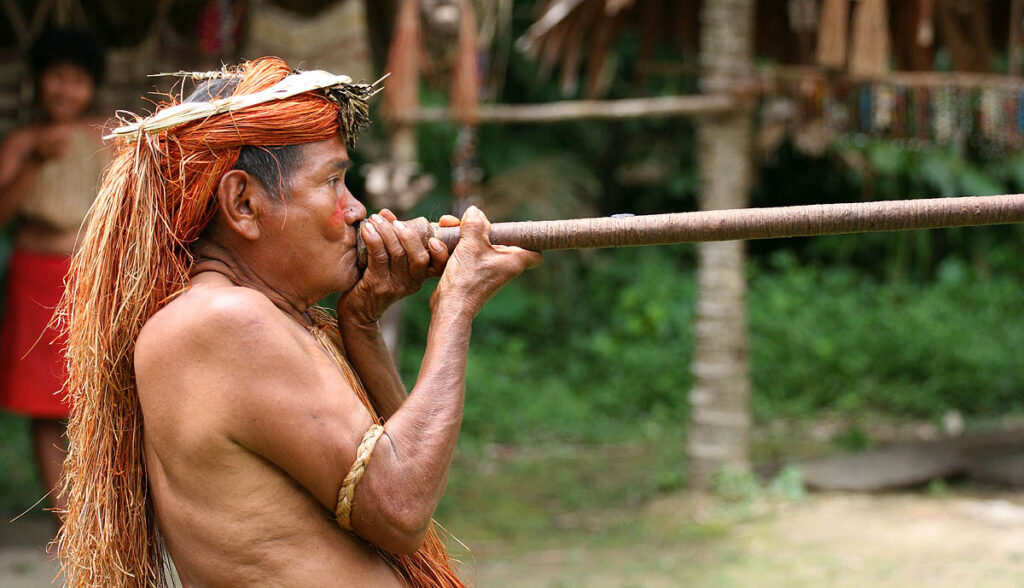
As the 20th century dawned, Puyo found itself increasingly drawn into an expanding global economic web. The international demand for rubber brought a sudden wave of prospectors, merchants, and traders flooding into the Ecuadorian Amazon. While Puyo was not the absolute epicentre of the South American rubber boom, its highly strategic location made it a vital and bustling trading hub. The local economy rapidly shifted to accommodate the extraction and transport of sugarcane, cassava, timber, and eventually, petroleum.
During this tumultuous time, foreign travel writers and explorers often painted the Oriente as a savage, primitive frontier. They published highly dramatised accounts that described the jungle as a dangerous green hell where civilising missions went to die. These heavily romanticised and often racist accounts served the agendas of early adventure tourists and philanthropic missions, but they effectively erased the lived reality of the indigenous population.
In truth, the people of Puyo were actively engaging with global markets, adapting to intense new economic pressures, and fighting fiercely to maintain their autonomy. The pervasive idea that Puyo only emerged from historical isolation with the discovery of oil in the 1960s is a profound historical inaccuracy. The city has always been a vital nexus of trade, cultural exchange, and political negotiation.
The modern era and the ongoing fight for the forest
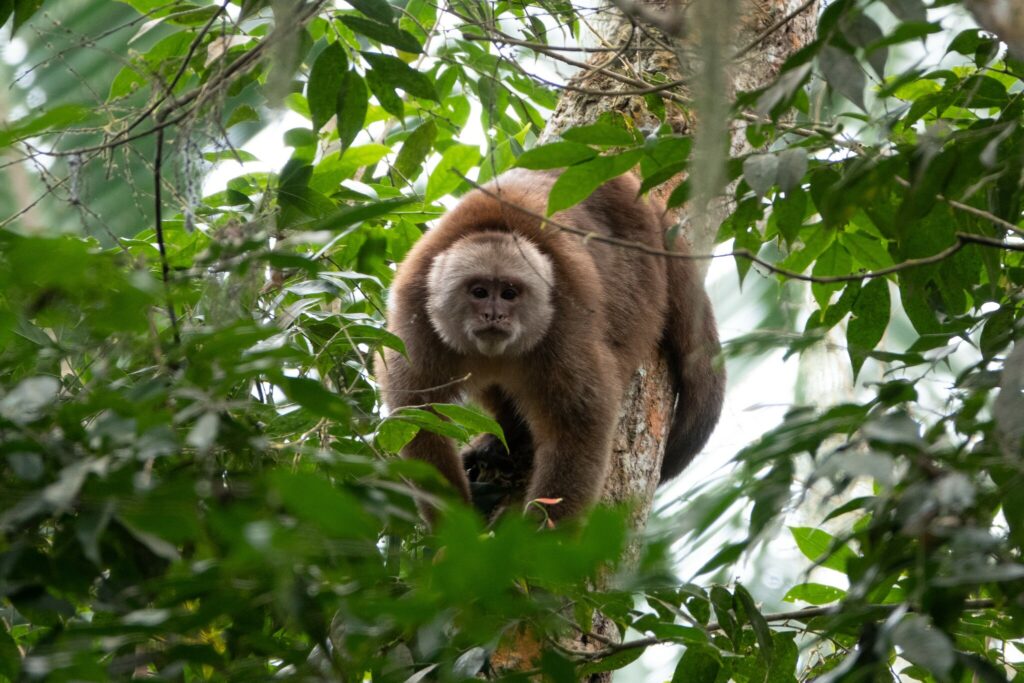
Today, Puyo serves as the energetic capital of the Pastaza province. It has grown significantly from its modest origins as a missionary resting stop, now boasting a diverse population of tens of thousands of residents. The city is a vibrant commercial centre where the traditional and the modern exist side by side in fascinating ways. In the bustling central markets, you can easily find local indigenous artisans selling traditional, hand-coiled ceramics alongside modern, fully equipped bicycle repair shops servicing international bikepackers.
Perhaps the most defining feature of modern Puyo is the powerful political mobilisation of its indigenous population. Since the landmark indigenous uprisings across Ecuador in 1990, the communities surrounding Puyo have fought tirelessly for, and successfully gained, substantial legal territorial rights. They have evolved into global leaders in environmental activism, consistently pushing back against aggressive oil exploration and widespread deforestation.
When you cycle through the Pastaza province today, you are travelling through land that has been vigorously and successfully defended by its original inhabitants. This vital context adds a layer of deep respect and understanding to any cycling journey through the region. It transforms the landscape from a mere backdrop into a fiercely protected home.
The Galápagos.
Ecuador’s Enchanted Isles
Cycling through history on the descent to Puyo
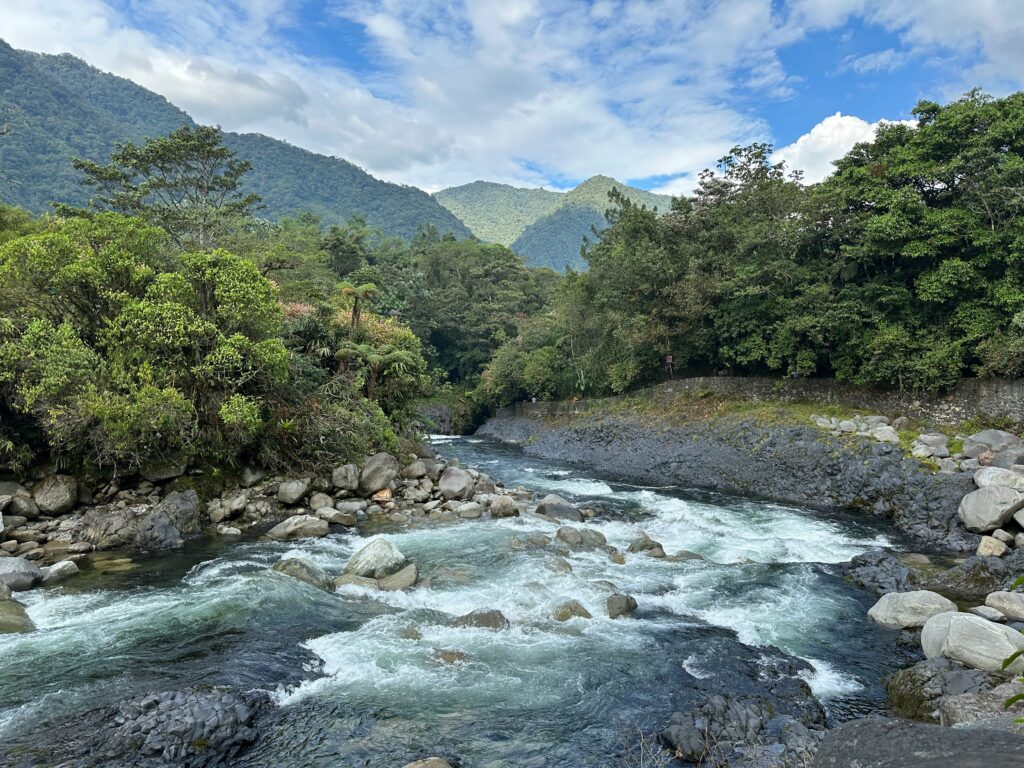
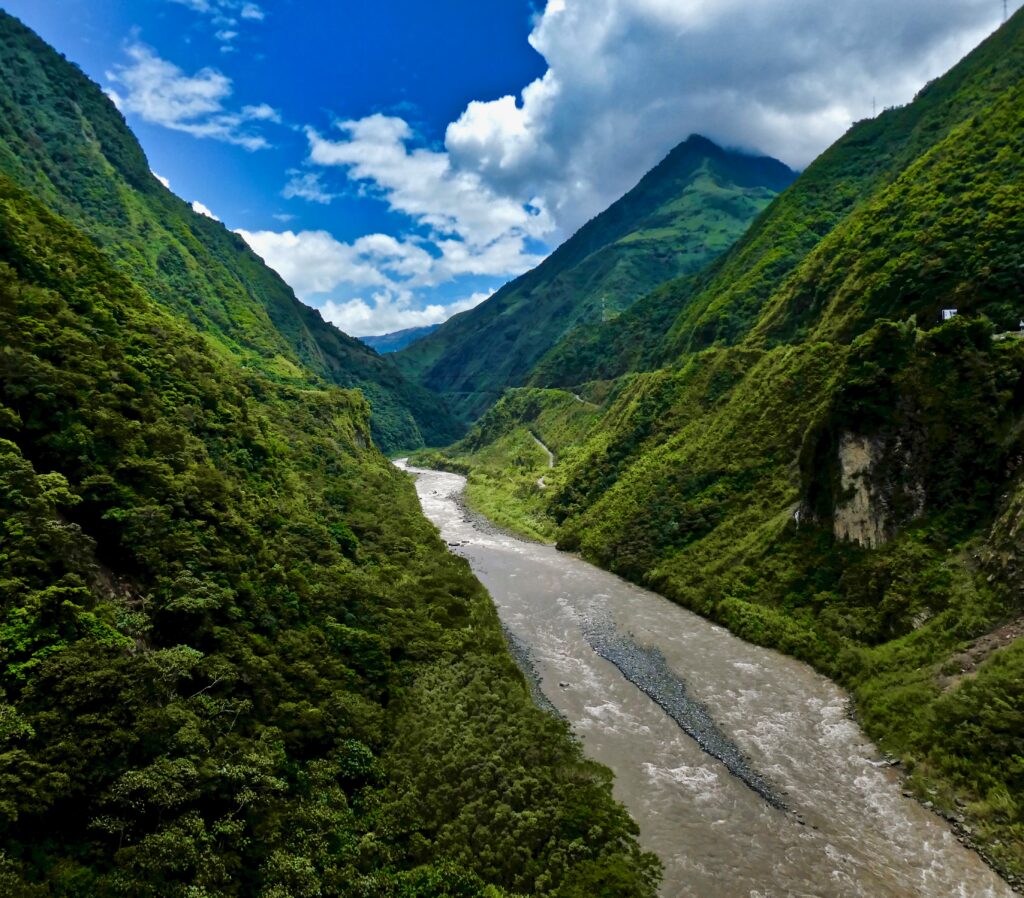
For the international cycling community, the history of Puyo is inextricably linked to the Ruta de las Cascadas, widely known as the Route of the Waterfalls. This breathtaking 60-kilometre journey from the cold Andean highlands of Baños down into the sweltering Amazon basin is widely considered one of the most spectacular road cycling routes in South America. As you navigate the winding, cliffside roads, pass through dimly lit mountain tunnels, and ride alongside the dramatic, plunging gorge of the Pastaza River, you are quite literally tracing the historical trade routes used by the Canelos Quichua and the early Dominican missionaries.
The descent is a profound physical journey through vastly different ecological and historical zones. Riders leave behind the cold, volcanic slopes of the Andes and plunge rapidly into the humid, life-dense air of the Oriente. Along the way, cyclists pass the awe-inspiring Pailón del Diablo, an immense waterfall that serves as a visceral reminder of the raw, untamed natural power that has shaped the history and geography of this landscape for millennia. The transition in temperature, flora, and atmosphere is immediate and striking.
Upon arriving in Puyo, the nature of the cycling experience fundamentally changes. The steep, paved mountain descents give way to rolling, muddy jungle tracks. Local mountain bikers heavily favour demanding routes like the Dique de Fatima loop, an arduous 85-kilometre trail that pushes riders deep into the verdant, sweating rainforest. These challenging trails offer an immersive, tactile way to experience the exact environment that the Puyo Runa have successfully navigated and managed for countless generations.
Travelling through time in Puyo
Read this far?
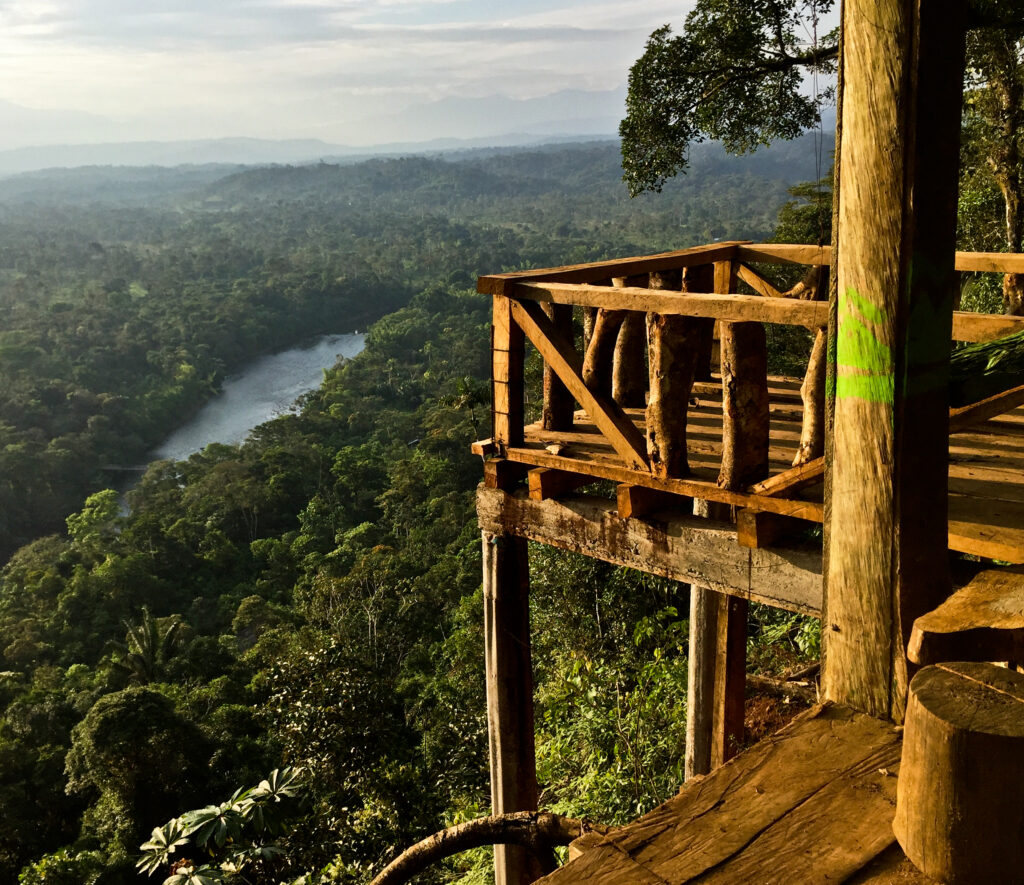
Understanding the rich, multifaceted history of Puyo transforms a simple bike ride into a deeply meaningful travel experience. It allows independent travellers to appreciate the city not just as the humid end of a famous trail, but as a living, breathing community with a complex past and a vital, globally important future. The enduring story of Puyo is a powerful testament to the survival of indigenous culture in the face of colonial expansion, intense economic exploitation, and modern environmental threats.
When you finally strap your panniers to your bike, check your tyre pressure, and set off towards the Amazon, remember that you are riding through a landscape saturated with human history. We at Wheely Tyred actively encourage you to engage with this history during your travels. Take the time to stop in the local cantinas, speak respectfully with the artisans in the market, and ride with a profound sense of reverence for the land and the people who protect it. Puyo is waiting to share its incredible story with those willing to listen.
Affiliate Disclaimer: Some of the links on Wheely Tyred are affiliate links. If you click through and make a booking or purchase, we may earn a small commission at no extra cost to you. We only recommend gear, tours, stays, and services we genuinely use, trust, and stand behind — our editorial independence always comes first. These commissions help keep our independent cycling guides and travel stories free to read. You can also buy me a coffee here — thanks for supporting the ride!
The Ecuadorian Coast.
Where you’ll find the very best food
Frequently asked questions about the history of Puyo
The name is derived from the Kichwa word for cloudy or misty. Given its location in the tropical rainforest, the city is frequently enveloped in a low-hanging mist, reflecting the high humidity and high rainfall that define the local climate.
While many use it as a gateway to deeper jungle excursions, Puyo offers significant cultural depth. It is a hub for learning about indigenous land rights and traditional Kichwa culture, making it essential for travellers who value sociopolitical context over mere sightseeing.
The most iconic arrival is by bicycle from Baños via the Ruta de las Cascadas. This route is largely downhill and paved, though you will share the road with vehicles. For those on foot or using public transport, regular buses run the same dramatic route through the Pastaza canyon.
The indigenous Puyo Runa are not historical relics but active political leaders. Their successful mobilisation in the late 20th century secured legal rights to vast tracts of the surrounding rainforest, ensuring that the wild areas cyclists enjoy remain under local stewardship rather than industrial control.
Once you leave the paved descent from the Andes, the terrain turns to rolling jungle tracks. Local favourites like the Dique de Fatima loop offer a more technical, muddy, and immersive rainforest riding experience compared to the highland roads.
Preparation is key; it is one of the wettest regions in Ecuador. Rain can be sudden and torrential. Independent travellers should ensure they have high-quality waterproof gear and breathable fabrics, as the humidity remains high even when the sun is out.
Ecuador.
Pure wonder on the equator.