A history of Quito / High-altitude drama in the Andes
Comprehensive guide to Quito’s history, UNESCO heritage sites, and the evolution of Ecuador’s capital
From Inca resistance to Spanish gold, the story of a city among the clouds
BEN FINCH
Quito is a city that demands a certain level of physical and mental resilience. Perched at 2,850 metres above sea level, it is the highest constitutional capital in the world, and its history is as steep as its cobbled streets.
To understand Quito today, one must look past the modern skyline of the north and dive into the dense, often turbulent layers of its past. This is not just a story of Spanish conquest; it is a narrative of indigenous persistence, religious fervour, and a revolutionary spirit that eventually earned the city the title of Light of America.
The high-altitude heart of the Andes
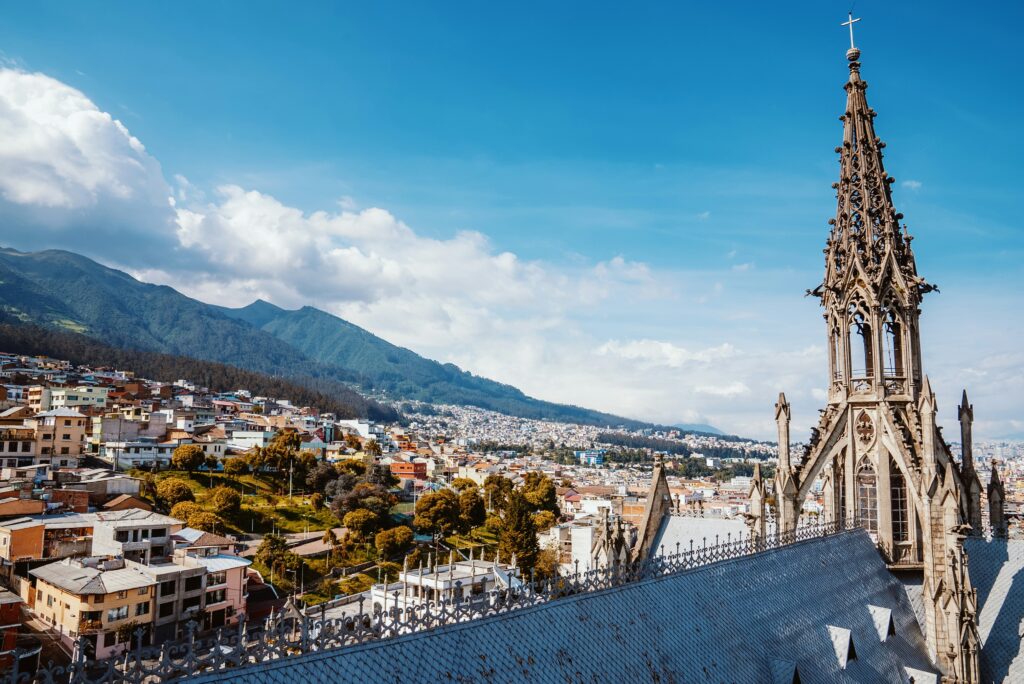
Quito is a city defined by its verticality and its defiance, where ancient Inca foundations lie beneath the most pristine colonial architecture in South America. To visit is to navigate a living timeline that stretches from prehistoric obsidian hunters to the revolutionary spark that transformed a continent.
- Inca resistance: Before the Spanish could claim the city, the Inca general Rumiñahui burned it to the ground, ensuring that the conquistadors inherited only ashes rather than the empire’s gold
- The Andean Baroque: The Escuela Quiteña represents a masterful fusion of styles, where indigenous artisans subtly integrated local symbols and flora into the golden interiors of Spanish cathedrals
- UNESCO pioneer: In 1978, Quito’s historic centre was the first in the world to be designated a World Heritage site, cementing its reputation as a masterclass in architectural preservation
- Revolutionary spark: Known as the Luz de América, or Light of America, the city was the first in Latin America to declare independence, setting a precedent for the entire region
- Volcanic backdrop: The city’s identity is inseparable from the Pichincha volcano, the site of the decisive 1822 battle that finally secured freedom from Spanish rule
- Sunday Ciclopaseo: Every week, the city transforms into a cyclist’s paradise, closing 30 kilometres of main roads to motorised traffic and allowing the community to reclaim the urban landscape
The Ecuadorian Sierra.
Get lost in the hills
The early foundations and the Inga legacy
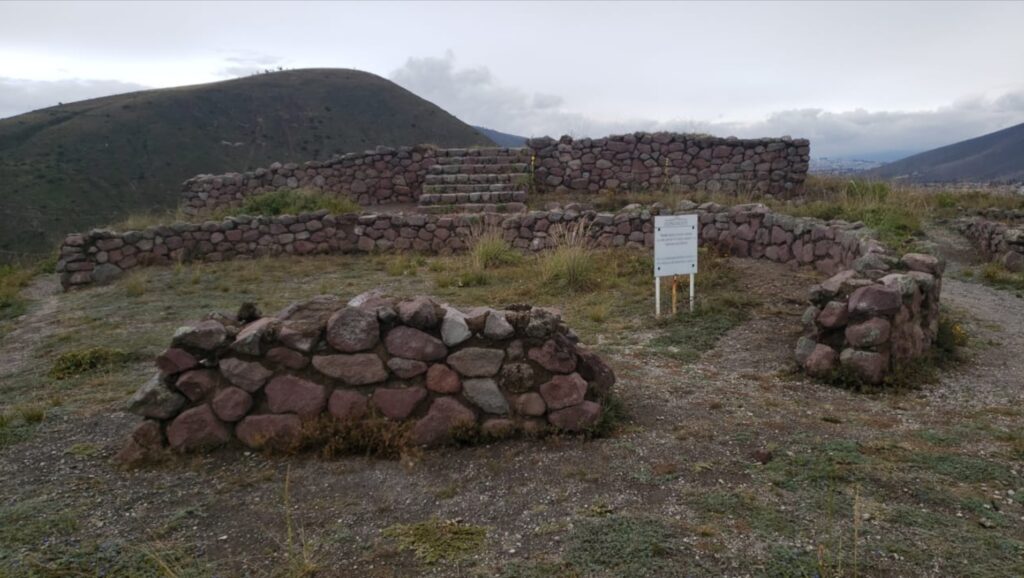
The human story of Quito begins thousands of years before the first stone of a cathedral was laid. Archaeological evidence from the slopes of the Ilaló volcano suggests that hunter-gatherers were using obsidian tools here as far back as 8000 BC. These early inhabitants, known as the Inga, were part of a wider network of nomadic groups that traversed the Andean corridor.
By 1500 BC, the Cotocollao culture had established more permanent settlements in what is now the northern part of the city. They were skilled farmers and potters, and their presence indicates a long-standing tradition of sedentary life in the valley. Later, the Quitu people became the dominant force.
While the existence of a formal Kingdom of Quito is a point of debate among modern historians, the archaeological finds at La Florida—featuring tombs nearly 20 metres deep—demonstrate that the Quitu possessed a highly sophisticated social structure and a deep connection to the celestial cycles of the equator.
The Inca northern capital
The arrival of the Inca Empire in the late 15th century fundamentally reshaped the region. Under the expansionist rule of Huayna Capac, the Inca moved north from Peru, eventually defeating the Quitu and integrating the territory into the Tahuantinsuyo. Quito was not merely another conquest; it became a strategic seat of power.
Huayna Capac spent much of his later life in the northern reaches of the empire, and it is widely believed that his son Atahualpa—the final Inca emperor—was born in Quito. This royal connection elevated the city’s status, making it a rival to Cusco.
The Inca built palaces, administrative centres, and sun temples, many of which were strategically aligned with the mountains of Pichincha. However, the Inca era in Quito was short-lived, ending in a spectacular act of defiance that would define the city’s entry into the modern age.
The Galápagos.
Ecuador’s Enchanted Isles
Ashes and foundations / The Spanish arrival
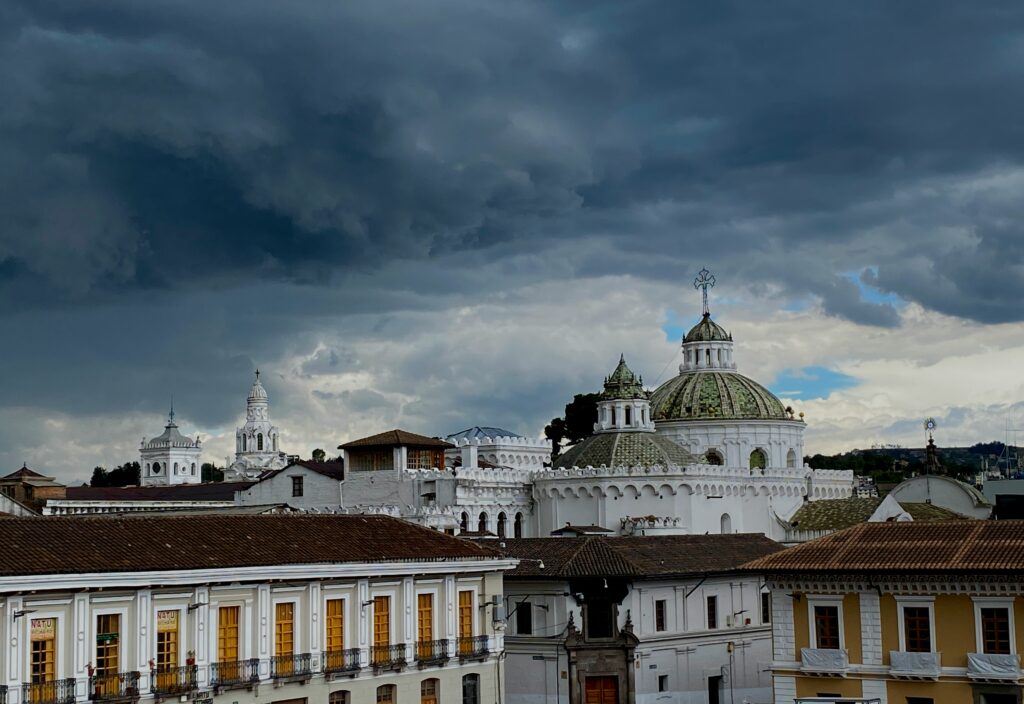
When the Spanish conquistadors, led by Sebastián de Belalcázar, approached Quito in 1534, they were searching for the fabled gold of Atahualpa. They found nothing but smoke. The Inca general Rumiñahui, realising that the city could not be held, ordered it to be burned to the ground. Every temple, palace, and storehouse was razed, and the treasures were hidden in the surrounding mountains, never to be recovered.
Undeterred, the Spanish officially founded San Francisco de Quito on 6 December 1534, building directly on top of the Inca ruins. The layout followed the traditional Spanish grid system, but the topography of the Andes meant the streets had to climb and dip in ways that challenged European urban planning.
This period saw the rapid construction of the churches and monasteries that would eventually make the city famous. The wealth generated from the textile industry and the surrounding agricultural estates allowed the colonial elite to fund an architectural boom that was unparalleled in the New World.
The Quito School and the Andean Baroque
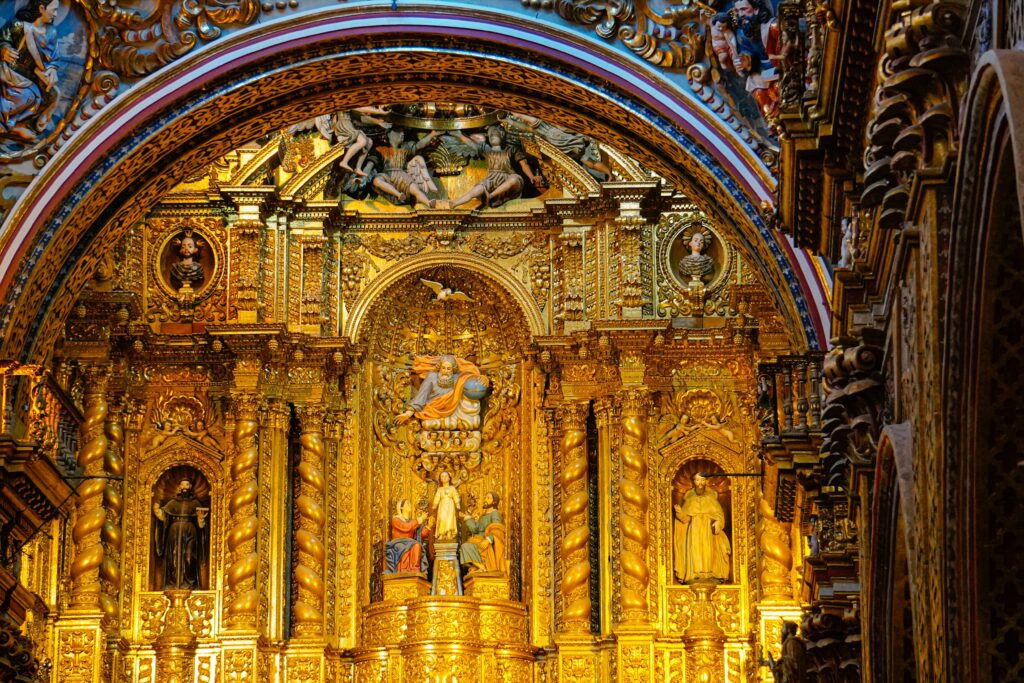
The 17th and 18th centuries were the golden age of the Escuela Quiteña, or the Quito School of Art. This was a unique artistic movement where indigenous and mestizo artisans were trained in European techniques but infused them with local symbolism. It resulted in some of the most breathtaking religious art in history.
The Church of La Compañía de Jesús is perhaps the pinnacle of this movement. Its interior is a riot of gold leaf, featuring intricate carvings that blend Mudéjar influences with local flora and fauna. The indigenous influence is visible in the details: sun symbols integrated into the altars and angels with features that mirrored the local population.
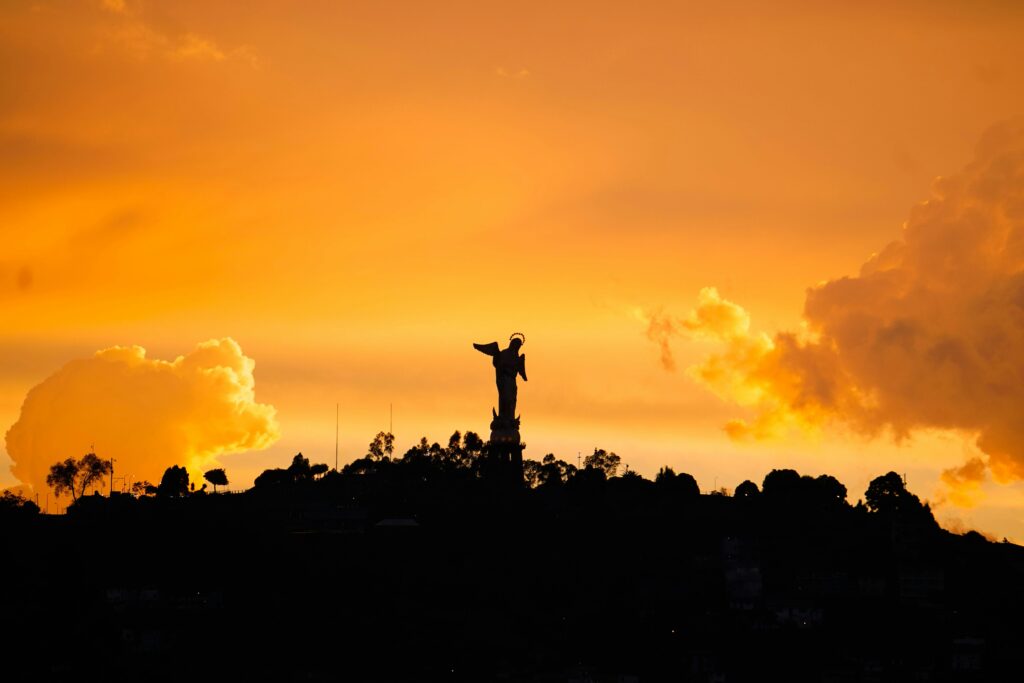
Another masterpiece is the Church and Convent of San Francisco, where the winged Virgin of Quito stands as a symbol of the city. This sculpture, created by the mestizo artist Bernardo de Legarda, depicts the Madonna with wings, a radical departure from traditional European iconography and a testament to the creative independence of the Quito School.
The Ecuadorian Amazon.
The most biodiverse place in the world
Luz de América and the path to independence
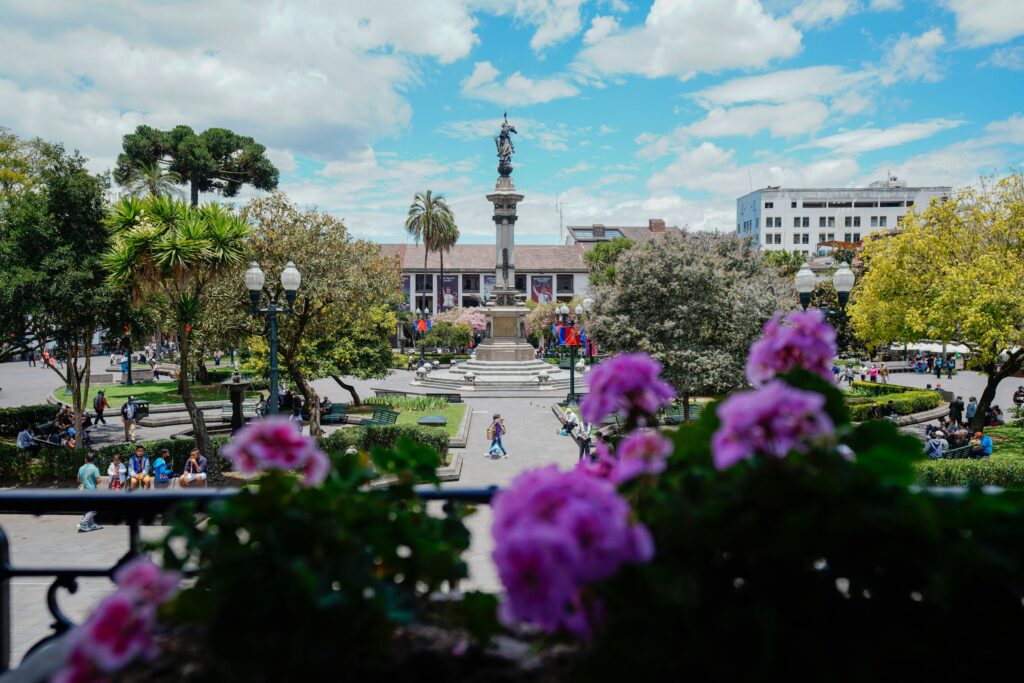
Quito has always been a city of rebellion. On 10 August 1809, it became the first city in Latin America to declare its independence from Spanish rule. Although this initial movement was suppressed and its leaders executed, it lit a fire across the continent, earning Quito the nickname Luz de América.
The final break from Spain came on 24 May 1822, at the Battle of Pichincha. General Antonio José de Sucre, a close ally of Simón Bolívar, led his troops up the slopes of the volcano that looms over the city. Fighting at over 3,000 metres, the patriot forces defeated the royalist army, securing the independence of the Presidency of Quito and clearing the way for the creation of Gran Colombia.
Ecuador eventually emerged as a sovereign nation in 1830, with Quito as its capital. The Plaza de la Independencia, or Plaza Grande, remains the heart of the city’s political life, surrounded by the Presidential Palace, the Cathedral, and the Archbishop’s Palace.
The first UNESCO heritage city
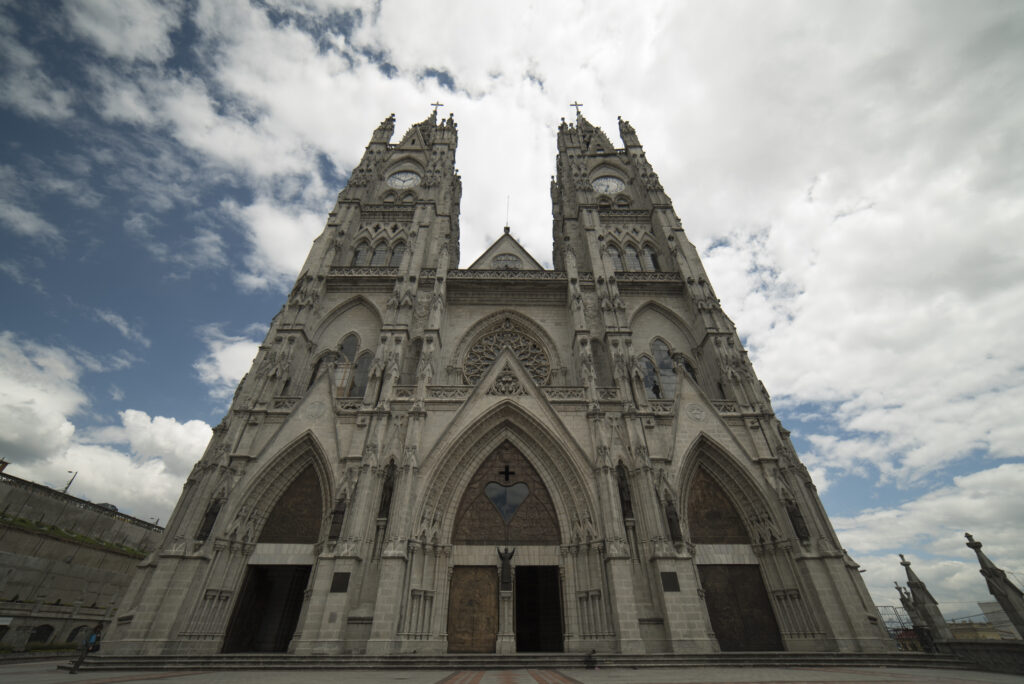
In 1978, UNESCO made a historic decision. It selected Quito as the first-ever World Heritage site (alongside Kraków). The citation described it as the best-preserved, least-altered historic centre in Latin America. This recognition was a turning point for the city, sparking decades of conservation efforts that have restored the colonial core to its former glory.
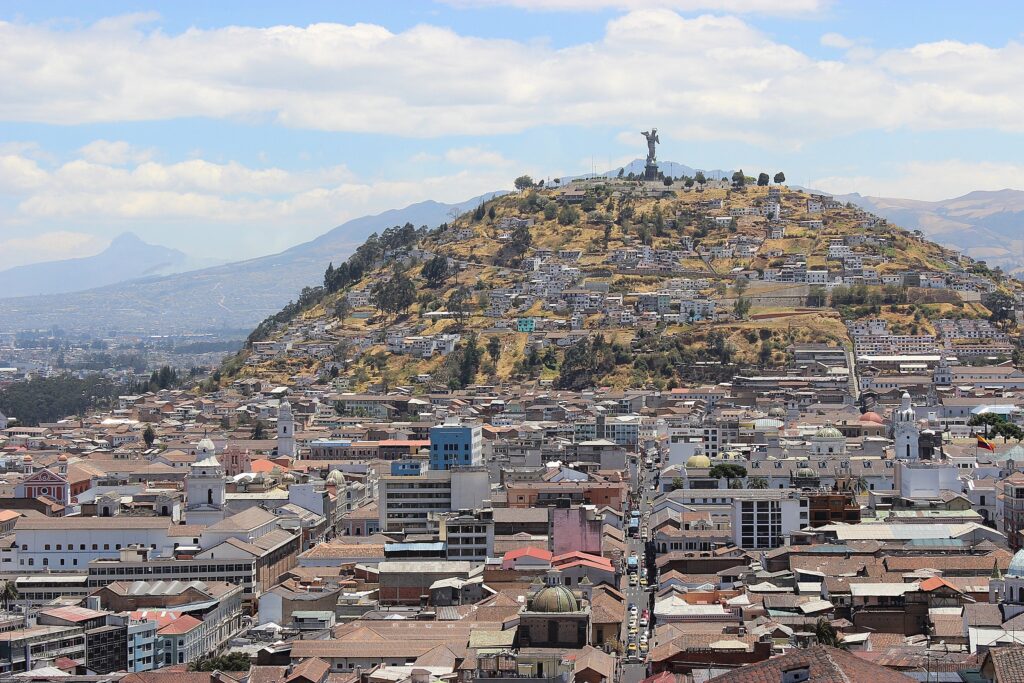
Walking through the Old Town today is like moving through a living museum. The Calle de La Ronda, once a bohemian haunt for poets and musicians, has been revitalised, and the white-washed walls of the colonial mansions serve as a backdrop for a thriving modern culture.
The city has managed to balance its historical weight with a forward-looking energy, expanding into the modern northern districts while keeping its soul firmly rooted in the cobblestones of the south.
The Ecuadorian Coast.
Where you’ll find the very best food
Quito is a revelation
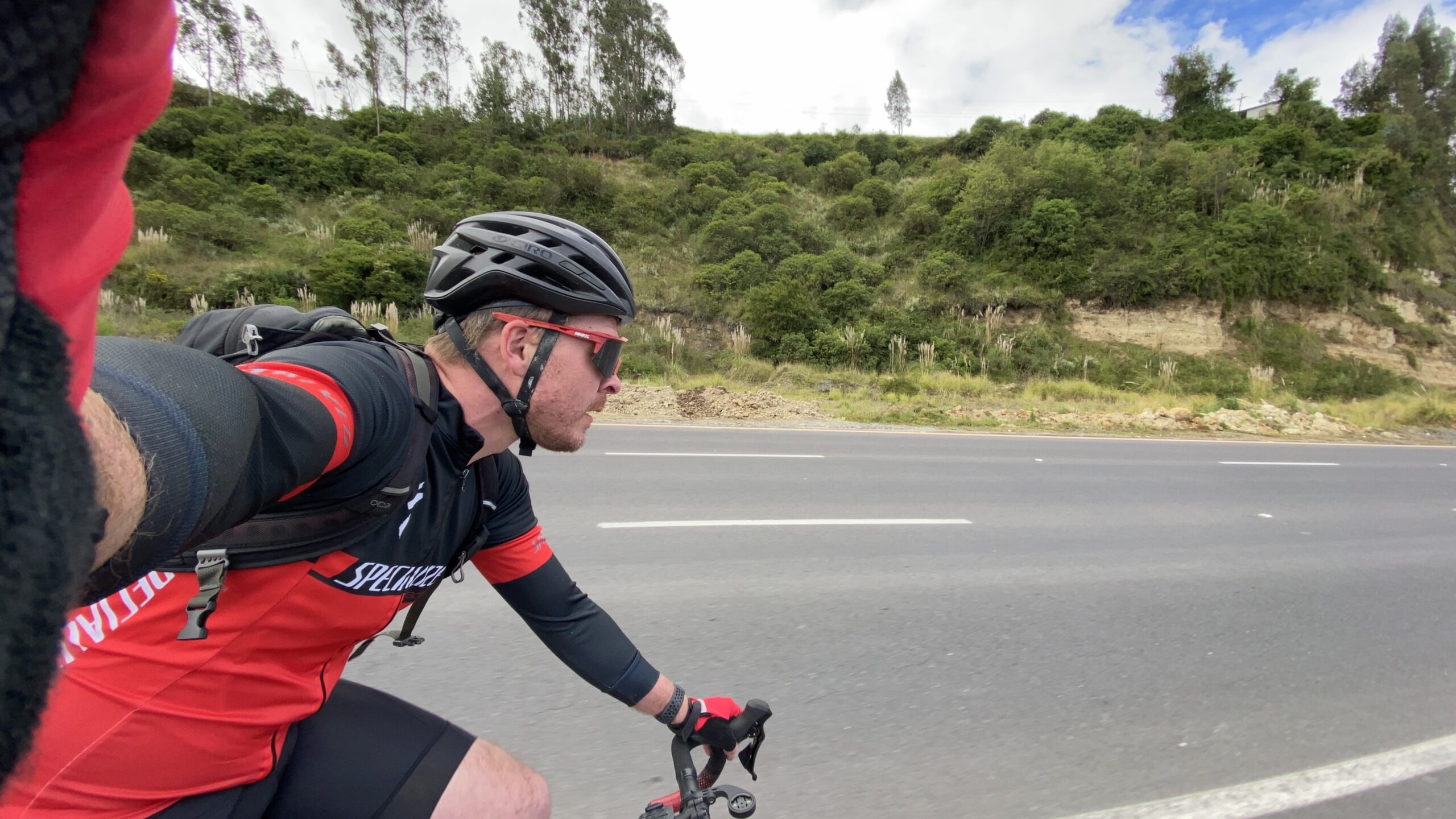
For those of us who prefer to experience a city through the grit of its streets and the burn in our legs, Quito is a revelation. The topography that once dictated Inca sun temples now provides some of the most challenging and rewarding urban cycling and walking in South America. Every climb is a lesson in history; every descent reveals a new vista of the surrounding volcanoes.
The city’s Sunday Ciclopaseo is a modern continuation of its historical spirit. By closing 30 kilometres of roads to cars, Quito invites its residents and visitors to reclaim the streets, moving through the historical layers of the city at a pace that allows for genuine observation. From the ancient paths of the Quitu to the golden interiors of the colonial churches, Quito remains a place where the past is not just remembered—it is lived.
Frequently asked questions about the history of Quito
Quito sits at 2,850 metres above sea level, which can be a shock to the system. It is best to spend your first 24 hours taking it easy—avoid strenuous activity, stay hydrated, and try the local coca tea, which many find helps with acclimatisation.
The Old Town is a dense maze of narrow, steep, and often crowded cobbled streets, making it far more suitable for walking. However, if you are visiting on a Sunday, the Ciclopaseo event offers a fantastic opportunity to cycle through the heart of the city on wide, car-free avenues.
While Quito is relatively relaxed, the churches are active places of worship and significant historical monuments. It is respectful to dress modestly, ensuring shoulders and knees are covered. Please note that many of the more famous sites, such as La Compañía, strictly prohibit photography inside to protect the delicate gold leaf.
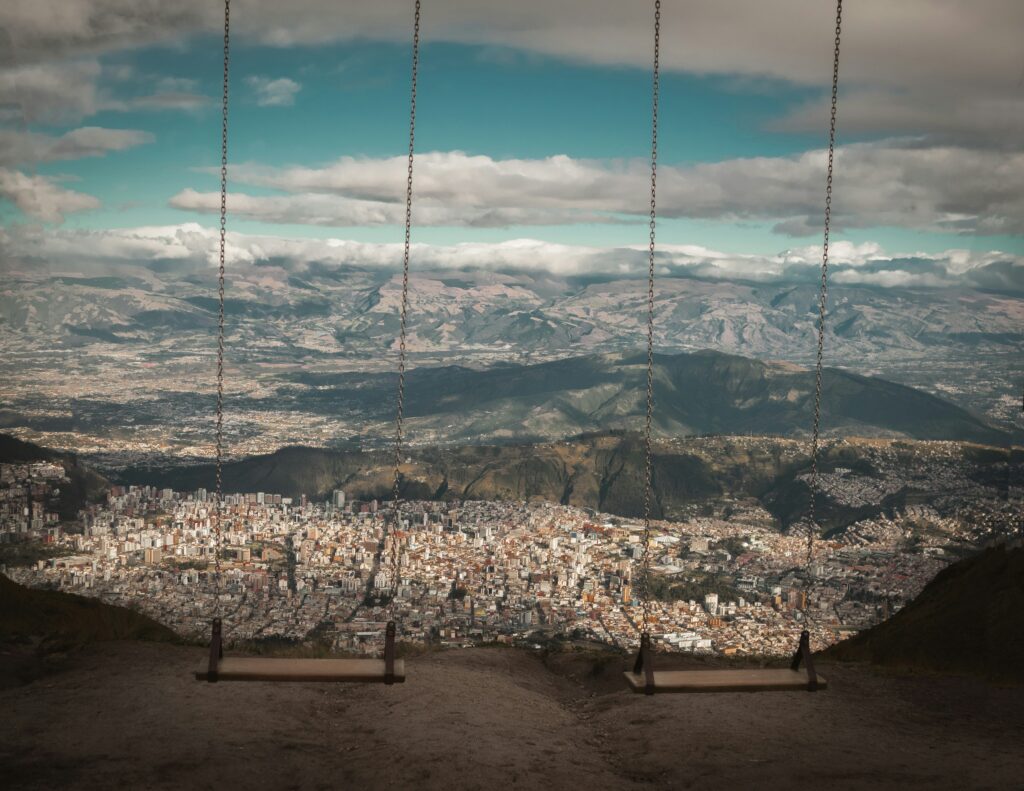
For a panoramic view that explains the city’s layout, take the Telefériqo up the slopes of Pichincha. Alternatively, a walk or ride up to El Panecillo offers a 360-degree view of the colonial south and the modern north, punctuated by the winged Virgin statue.
The city is well-connected by a series of dedicated bus lanes (the Trolebús, Ecovía, and Metrobús) and a modern underground metro system. For those on two wheels outside of the Sunday event, stick to the dedicated cycle lanes in the northern districts, as traffic in the centre can be quite intense.
The main plazas and well-lit tourist streets are generally safe in the early evening, but the Old Town can become very quiet after dark. It is sensible to take a registered taxi or use a ride-hailing app if you are moving between districts late at night, rather than walking through less-populated areas.
Ecuador.
Pure wonder on the equator.