Top attractions in Quito / Discover Ecuador’s high-altitude capital
Best things to do and see in Quito, Ecuador
Uncover the cultural heart of the Andes at your own pace
BEN FINCH
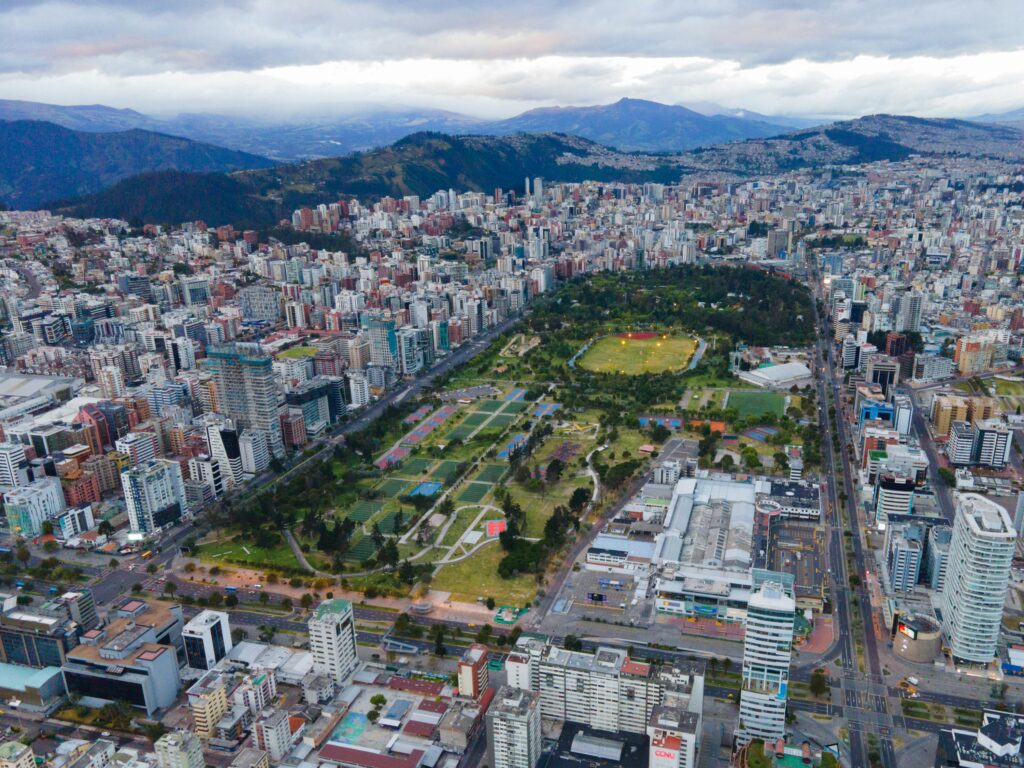
For the independent traveller, there is nothing quite like arriving in a city that demands your full attention. Perched high in the Andes, sitting at an elevation of 2,850 metres, Quito is a sprawling, spectacular metropolis that weaves centuries of complex history into a dramatic volcanic landscape. As the first city to be declared a UNESCO World Heritage site, Ecuador’s capital is a treasure trove of colonial architecture, striking Gothic basilicas, and indigenous heritage.
At Wheely Tyred, we believe the true joy of exploration comes from setting your own schedule. You want the freedom to linger in a sunlit plaza, tackle a high-altitude climb when the mood strikes, and dive deep into local history without the constant pressure of a tour group itinerary. Below, we explore the essential sights that make Quito an unforgettable destination.
Quito’s main sights at a glance
- Ciudad Mitad del Mundo: Stand squarely on the equator and experience the unique thrill of straddling two hemispheres
- TelefériQo: Ascend the slopes of the Pichincha volcano in a cable car for unparalleled, sweeping views of the city and surrounding peaks
- Basílica del Voto Nacional: Explore the largest neo-Gothic basilica in the Americas, famous for its steep towers and distinctly Ecuadorian gargoyles
- Compañía de Jesús: Marvel at the dazzling, gold-leaf-covered interior of this magnificent baroque masterpiece
- Plaza Grande and the Historic Centre: Wander through the political and cultural soul of the city, framed by colonial splendour and vibrant local life
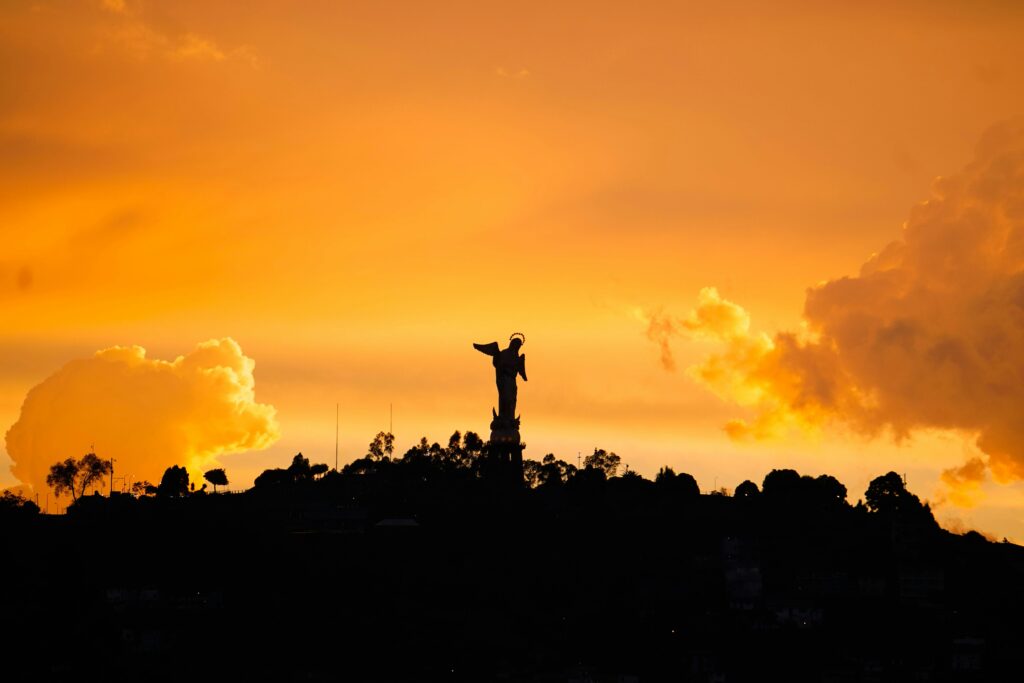
- El Panecillo: Look up to the winged Virgin of Quito, a monumental aluminium statue that watches over the sprawling capital
Quito.
Explore the Middle of the World
Ciudad Mitad del Mundo
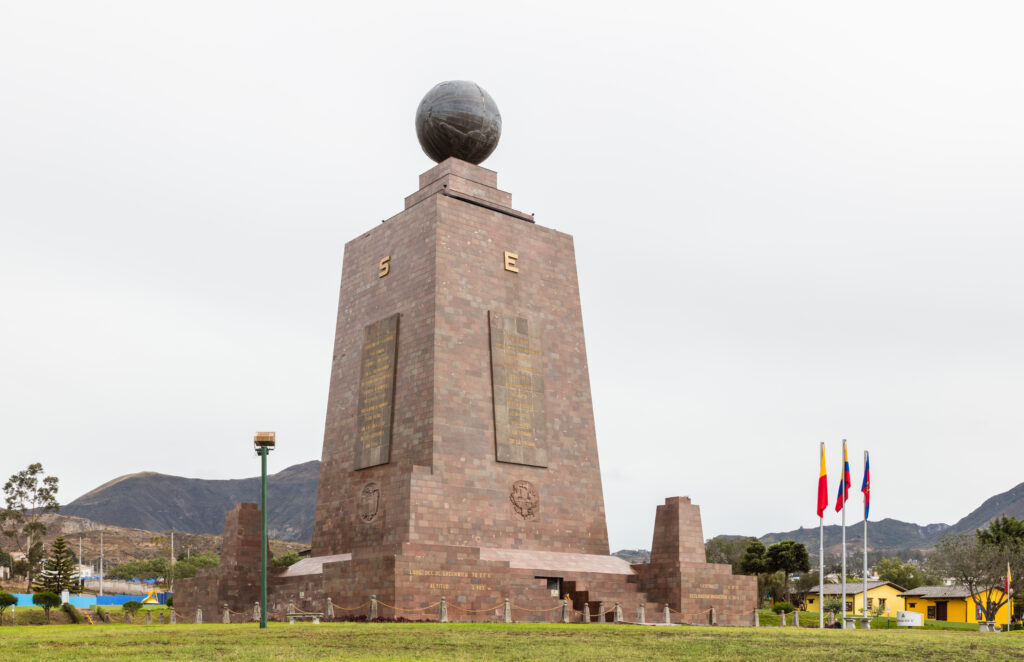
A visit to the Middle of the World is an absolute necessity for anyone travelling to the region. Located just north of the city centre, this monument marks the exact location of the equator, allowing visitors to place one foot in the Northern Hemisphere and the other in the Southern Hemisphere.
While the imposing stone monument offers an excellent photo opportunity and a museum detailing the indigenous cultures of Ecuador, independent explorers will also appreciate the nearby Intiñán Solar Museum.
This interactive site dives into the fascinating physics and local folklore surrounding the equatorial line. Because you are setting your own pace, you can take all the time you need to explore the surrounding artisanal shops or enjoy a local coffee without a guide hurrying you back to a crowded bus.
TelefériQo
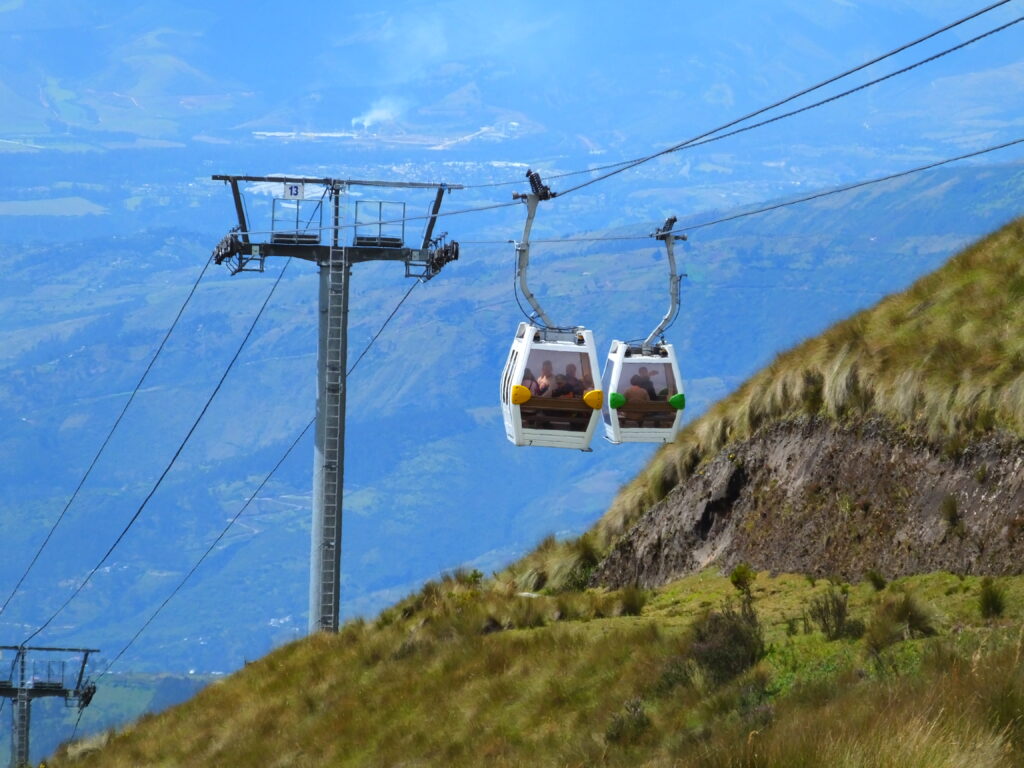
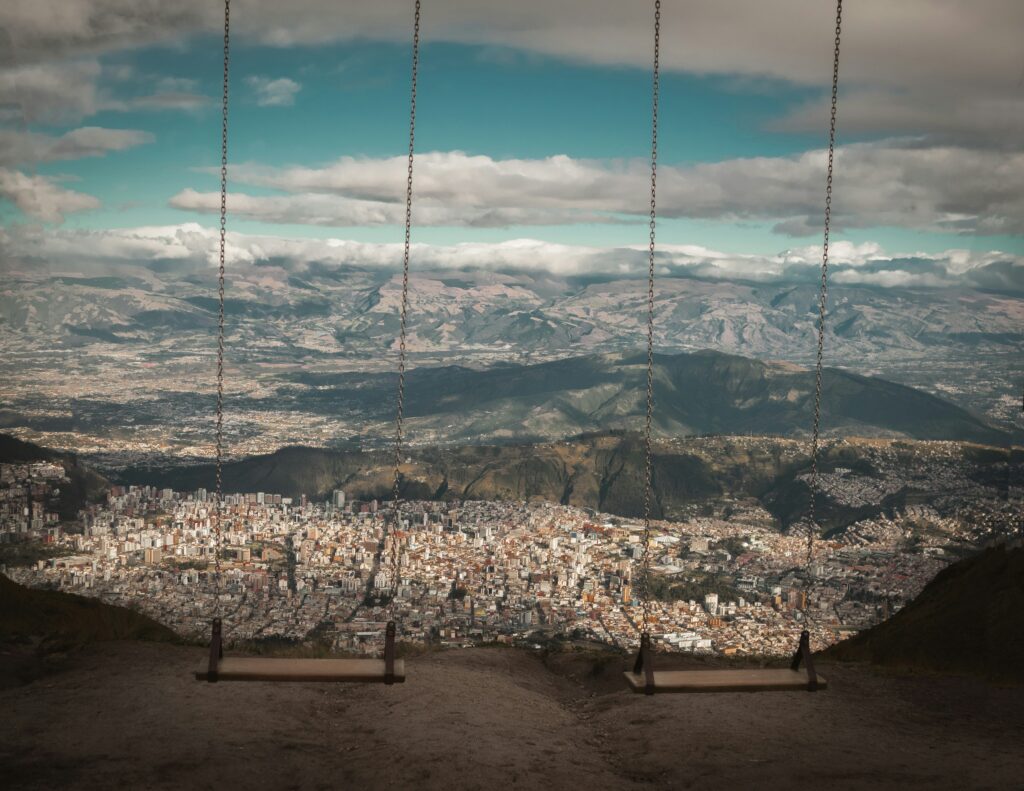
To truly grasp the sheer scale and dramatic geography of Quito, you must see it from above. The TelefériQo is one of the highest cable car rides in the world, whisking you from the city edges up the eastern flanks of the Pichincha volcano to an altitude of nearly 4,000 metres.
The ascent takes about twenty minutes, during which the sprawling urban valley falls away, replaced by the breathtaking Avenue of the Volcanoes. Once at the top, the air is thin and crisp.
Without a restrictive schedule, you are free to hike the rugged trails towards the Rucu Pichincha summit, take a horseback ride along the ridges, or simply sit with a warm drink and watch the clouds roll over the Andean peaks. This is the kind of high-altitude solitude that independent travellers crave.
The Ecuadorian Sierra.
Get lost in the hills
Basílica del Voto Nacional
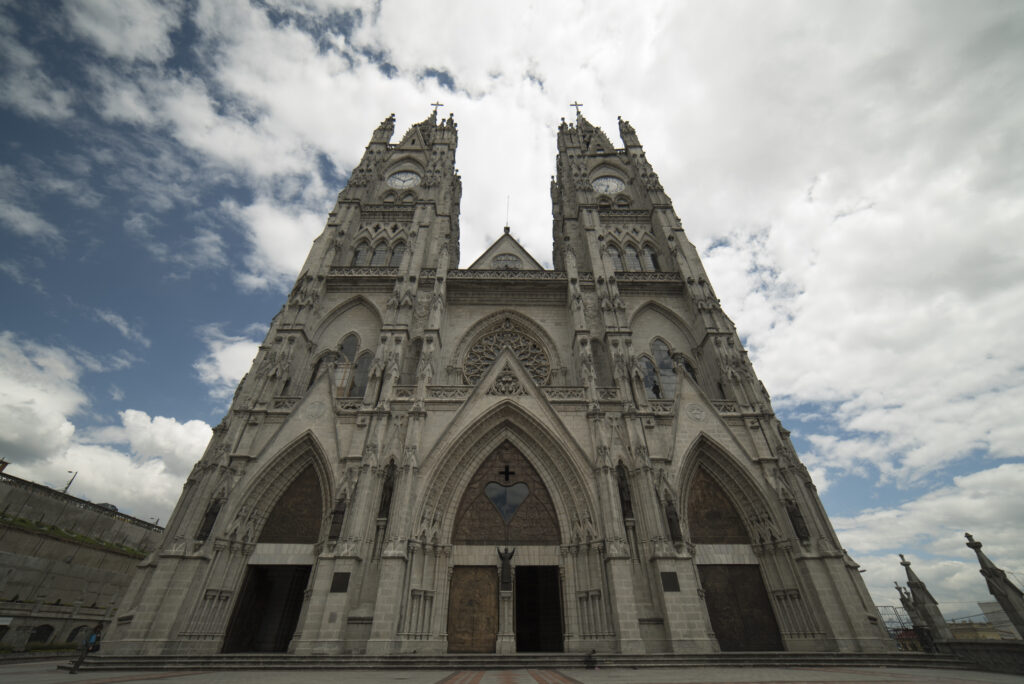
Dominating the skyline of the historic centre, the Basílica del Voto Nacional is a structural marvel that commands respect. While it draws heavy inspiration from European neo-Gothic design, it features a brilliantly local twist.
Instead of traditional mythical gargoyles, the exterior is adorned with stone carvings of Ecuadorian fauna, including iguanas, giant tortoises, armadillos, and condors. For those who enjoy a physical challenge and a touch of adrenaline, the basilica offers the chance to climb its towering spires. Ascending the steep, open-air ladders rewards you with magnificent panoramic views across the old town.
When you travel independently, you can spend hours admiring the intricate stained glass and the quiet grandeur of the nave, completely immersing yourself in the architectural triumph before you.
Compañía de Jesús
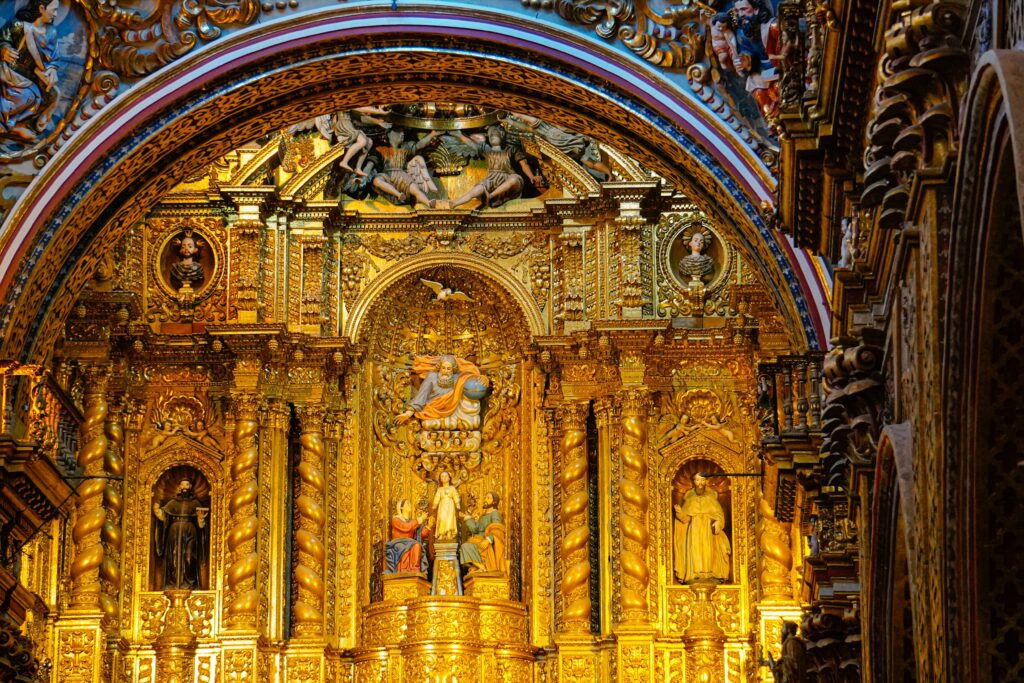
Tucked away in the labyrinth of the old town, the Compañía de Jesús is frequently cited as the most beautiful church in the country, and perhaps the entire continent. The facade is intricately carved from volcanic stone, but the true spectacle lies inside. The interior is a sensory overload of baroque art, with nearly every surface covered in brilliant gold leaf.
Taking roughly 160 years to complete, the church is a profound testament to the skill of indigenous artisans and Jesuit ambition. Visitors who appreciate deep cultural knowledge will want to stand quietly under the vaulted ceilings to absorb the overwhelming golden glow.
Unlike large tour groups that shuffle quickly through the aisles, you have the luxury of finding a quiet corner to sit, reflect, and study the Moorish-influenced geometric patterns that decorate the pillars.
The Ecuadorian Amazon.
The most biodiverse place in the world
Plaza Grande and the Historic Centre
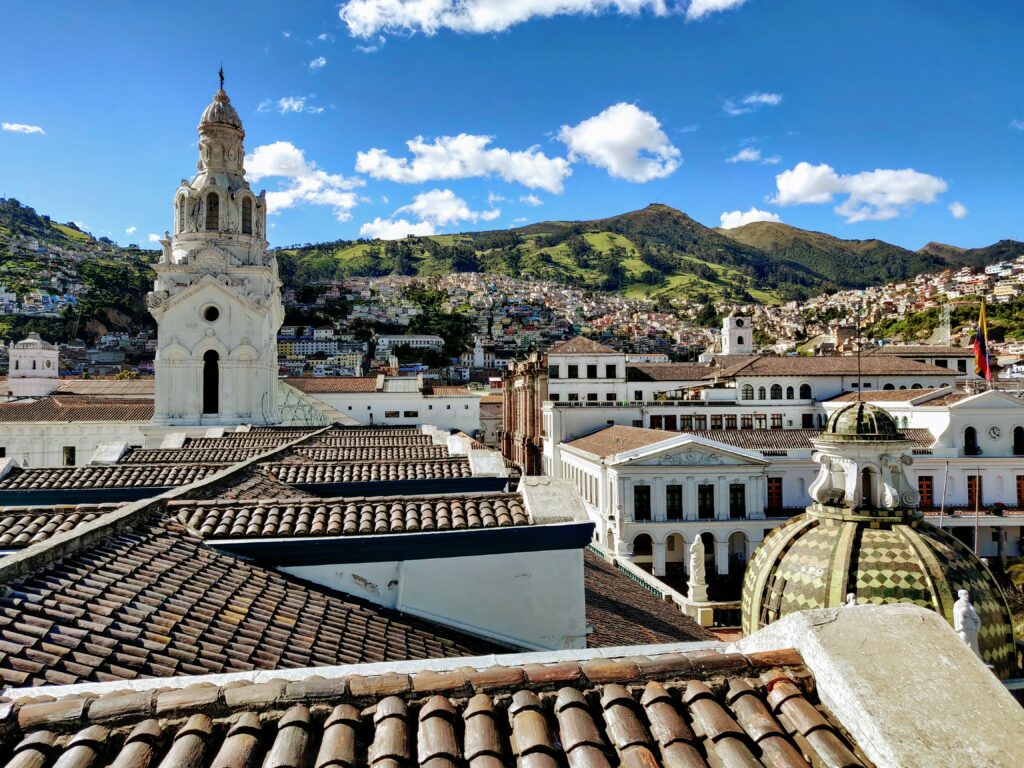
The Plaza Grande, or Independence Square, is the beating heart of Quito. It is flanked by the Presidential Palace, the Metropolitan Cathedral, and the Archbishop’s Palace. To walk through this square is to walk through the living history of Ecuador.
Elderly locals gather on benches to debate the news of the day, vendors sell traditional sweets, and the air is thick with the aroma of roasted peanuts. Radiating outwards from the plaza is a network of impeccably preserved colonial streets.
Wandering through these cobblestone alleys, perhaps stopping at the vibrant La Ronda street, allows you to discover hidden courtyards, local artisan workshops, and small cafes serving robust Ecuadorian chocolate. This is an environment that rewards the curious and the unhurried.
El Panecillo
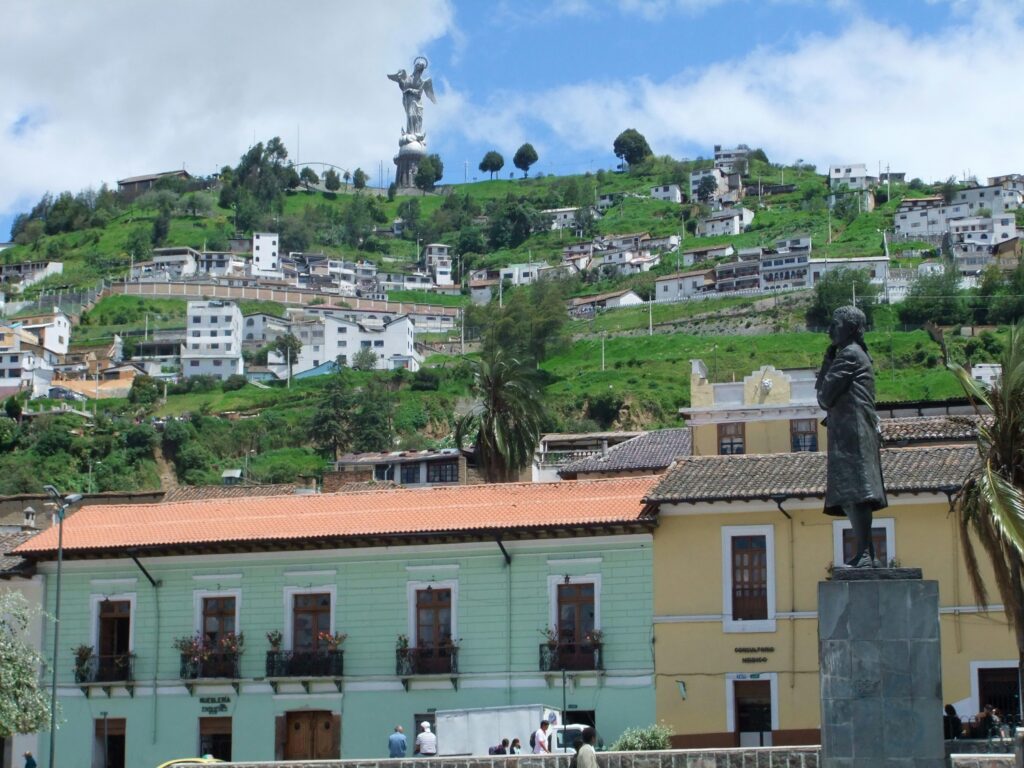
Rising dramatically between northern and southern Quito is El Panecillo, a volcanic hill that serves as the city’s most recognisable landmark. Crowning the hill is the Virgin of Quito, a 45-metre-tall statue constructed from thousands of aluminium panels. Uniquely depicted with angel-like wings and standing upon a chained serpent, the monument is a striking piece of religious art inspired by a 17th-century sculpture.
The hill provides a sweeping, 360-degree vantage point of the city below. Making the journey to the top, especially in the late afternoon, offers spectacular views as the sun casts long shadows over the historic centre and illuminates the snow-capped volcanoes in the distance.
The Ecuadorian Coast.
Where you’ll find the very best food
Exploring beyond the city limits by bike
While navigating the steep, congested streets of the historic centre is best done on foot, the regions immediately surrounding the capital offer exceptional opportunities for cyclists. Once you have absorbed the urban history, it is time to saddle up and discover the Andean countryside.
Just outside the city, you will find the Chaquiñán trail, a brilliantly repurposed railway track that begins in Cumbayá, less than 20 kilometres away. This flat, scenic route is perfect for an afternoon ride through rural valleys.
For a more dramatic landscape, the Pululahua Geobotanical Reserve features one of the few inhabited volcanic craters on Earth and provides stunning dirt tracks for the adventurous rider. If you are looking for more extensive day trips, the Cotopaxi National Park offers awe-inspiring high-altitude cycling in the shadow of a perfect, snow-capped conical volcano.
Alternatively, descending into the lush, biodiverse Mindo Cloud Forest provides a thrilling change of scenery and climate, proving that travelling by bike is the ultimate way to connect with the raw beauty of Ecuador.
Frequently asked questions about the top attractions in Quito
Like any major South American city, Quito requires a standard level of urban awareness. The historic centre is generally safe during the day, with a visible tourist police presence. However, it is advisable to take taxis or ride-share apps at night rather than walking dark streets. Keep your belongings secure in crowded areas.
Quito sits at 2,850 metres above sea level. Many visitors experience mild altitude sickness upon arrival. The best way to prepare is to stay hydrated, avoid heavy meals and excessive alcohol for the first few days, and take your time when walking up steep hills. Acclimatising here is essential before tackling higher elevations like the TelefériQo or Cotopaxi.
While cycling is central to the Wheely Tyred philosophy, the heart of Quito is exceptionally hilly, and the traffic can be heavily congested. We recommend exploring the old town on foot to fully appreciate the architecture. Save your energy and your tyres for the stunning dedicated cycling routes just outside the city, such as the Chaquiñán trail.
Ecuador.
Pure wonder on the equator.