Beyond the river bend / Discovering the icons of Ústí nad Labem
The best things to do in Ústí nad Labem / A guide to Střekov Castle, Větruše, and Northern Bohemia’s top sights
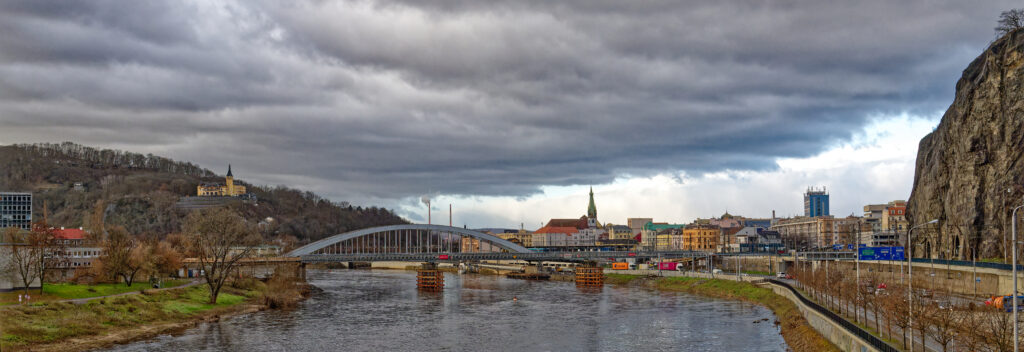
Crag-top castles and leaning spires / Uncover the grit and grandeur of the Elbe at your own pace
BEN FINCH
Nestled within the deep, verdant valley of the Elbe River, Ústí nad Labem is a city that often surprises those who take the time to look beyond its industrial silhouette. Known historically as a powerhouse of trade and manufacturing, it has evolved into a destination where dramatic Gothic ruins, avant-garde architecture, and resilient history coexist. For the traveller who values autonomy and deep cultural immersion, Ústí offers a unique landscape shaped by both the forces of nature and the shifting tides of Central European history.
Crag-top icons / Key highlights of Ústí nad Labem
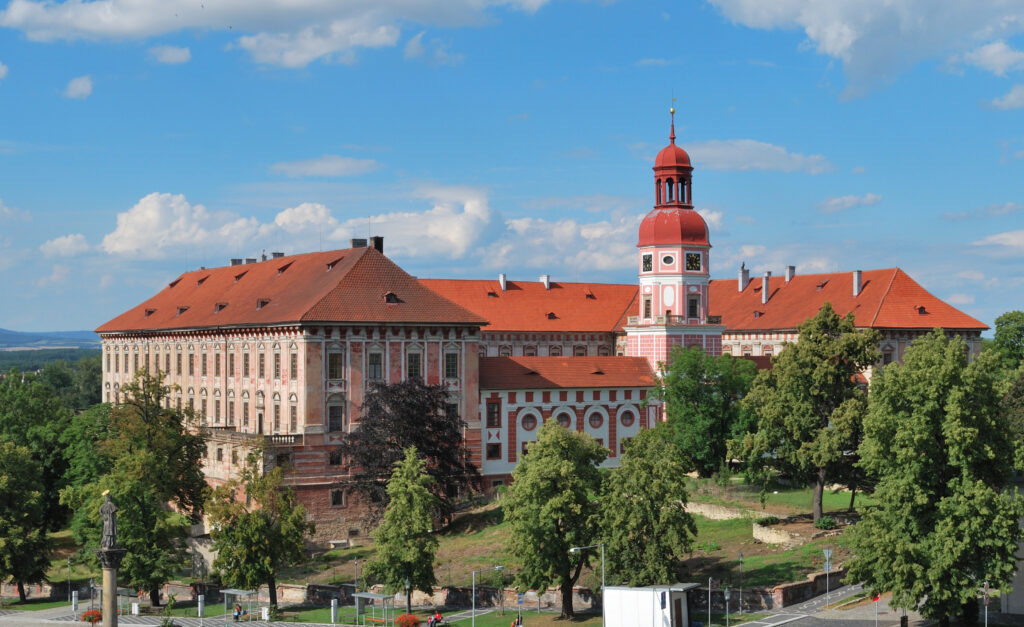
Set within the dramatic valley of the Elbe River, Ústí nad Labem is a city where industrial history meets rugged natural beauty. For the independent explorer, these six landmarks represent the essential icons of the region:
- Střekov Castle: A 14th-century Gothic fortress perched on a basalt cliff, famous for inspiring Richard Wagner and offering sweeping views of the Elbe’s curve
- Větruše Chateau: A 19th-century Neo-Renaissance social hub reachable by cable car, featuring a mirror maze, lookout tower, and paths overlooking the river confluence
- Church of the Assumption of the Virgin Mary: A resilient Gothic landmark known for its leaning tower, which tilted nearly two metres following a 1945 air raid
- Mariánský Bridge: A world-renowned late-20th-century cable-stayed bridge that serves as a sleek, white architectural sculpture connecting the city’s banks
- Vaňov Waterfall: A 12-metre drop framed by striking hexagonal basalt columns, showcasing the volcanic geological origins of the Bohemian Central Highlands
- Ústí nad Labem Zoo: A hillside sanctuary founded in 1908 on Mariánská hora, noted for its conservation work and expansive enclosures integrated into the terrain
Prague.
There’s no other city like it
The romantic silhouette of Střekov Castle
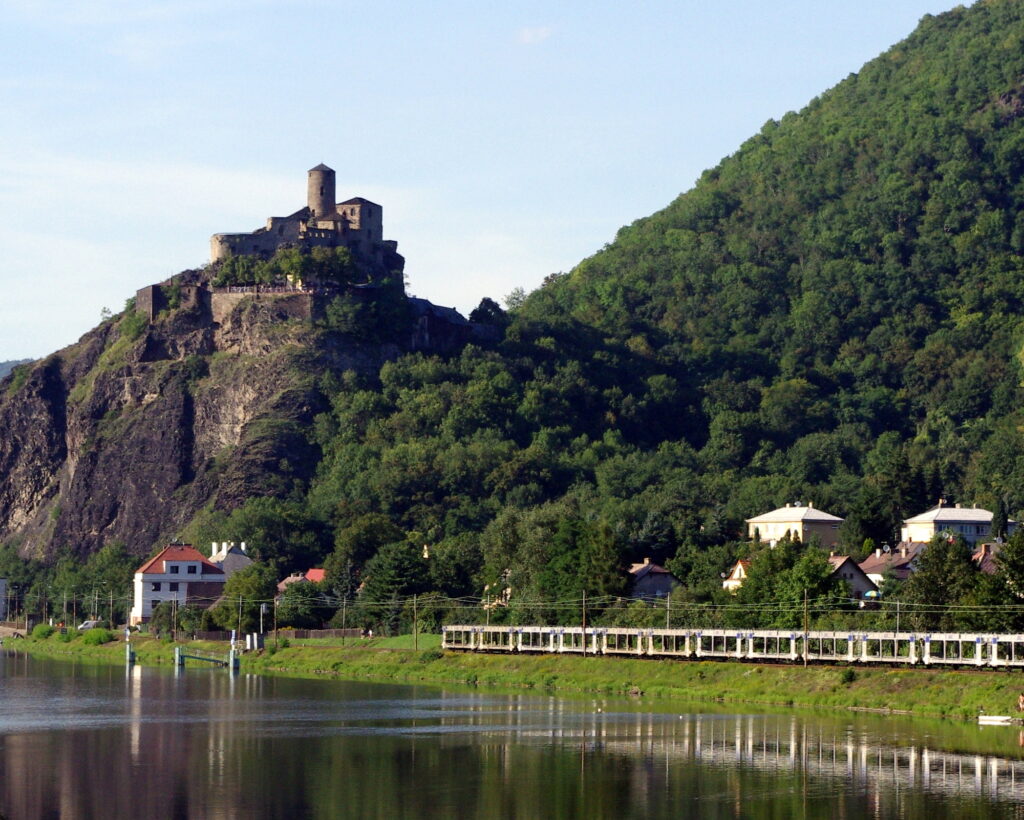
High above the right bank of the Elbe sits Střekov Castle, perhaps the most recognisable landmark in the region. Built in the early 14th century to protect the river trade routes, the fortress remains an imposing example of Gothic architecture. Its jagged walls and crumbling ramparts seem to grow directly out of the dark basalt rock, creating a vista so atmospheric that it famously inspired Richard Wagner to compose the sketches for his opera Tannhäuser.
Visitors can explore the Great Tower, the knights’ hall, and the castle chapel, each offering a window into a time when the Elbe was the lifeblood of the Holy Roman Empire. The view from the castle terrace is unparalleled, providing a sweeping look at the river’s curve as it cuts through the Bohemian Central Highlands. It is a place that rewards those who appreciate the quiet weight of history without the distraction of a megaphone-led tour group.
Větruše and the art of the vista
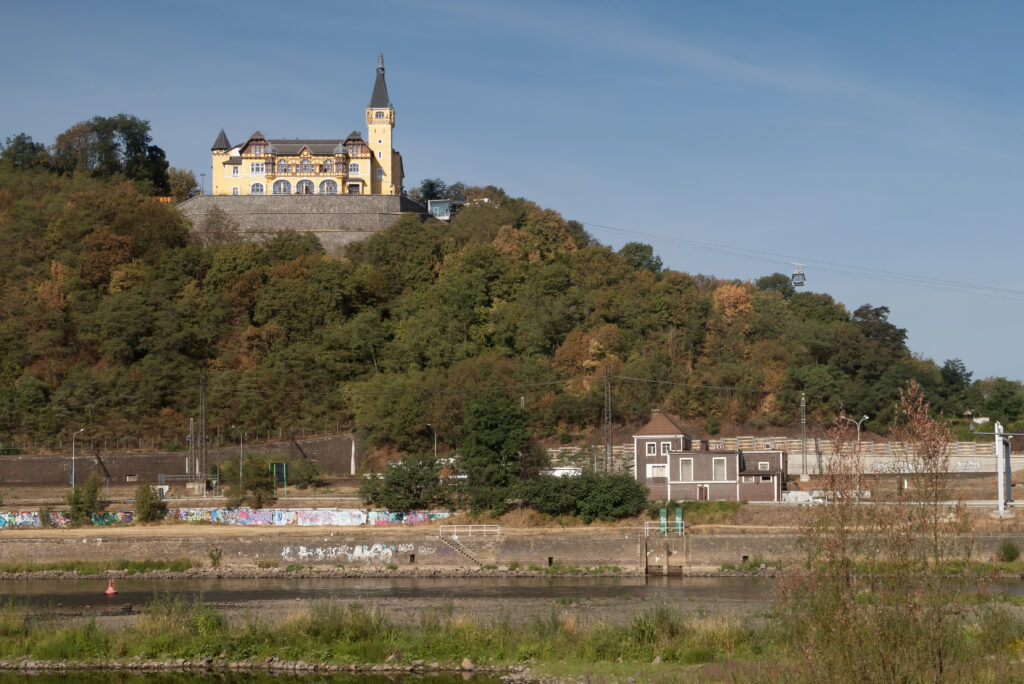
Directly across the valley from Střekov, the Větruše chateau stands as a sentinel over the city. This 19th-century social hub, originally built as a restaurant and lookout point, is easily reached via a cable car that departs from the Forum shopping centre. While the chateau itself is a fine example of Neo-Renaissance style, the real draw is the surrounding grounds and the vantage points.
Větruše features a mirror maze and a wooden lookout tower, but for the discerning visitor, the interest lies in the geography. From here, the confluence of the Elbe and the Bílina rivers is visible, illustrating why this spot has been a strategic hub for centuries. The surrounding forest trails provide a refreshing contrast to the urban grit below, offering a serene space to contemplate the city’s layout before descending back into its winding streets.
Bohemia.
Explore the heart of the Czech Republic
Resilient architecture and the leaning tower
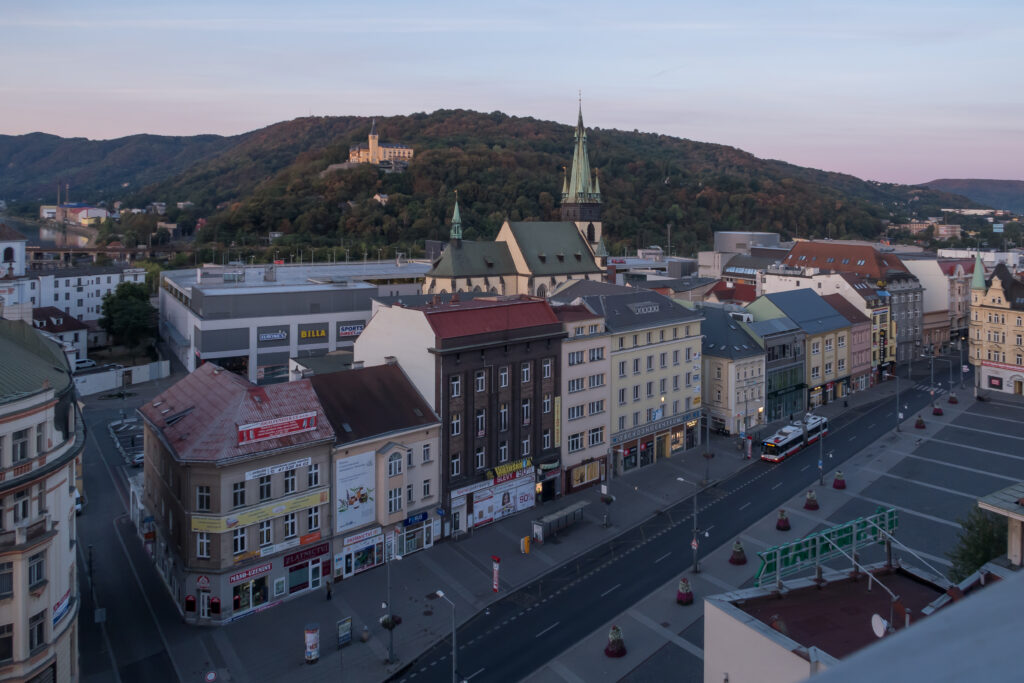
In the city centre stands a monument to survival: The Church of the Assumption of the Virgin Mary. At first glance, the Gothic structure appears traditional, but a closer look at its tower reveals a startling tilt. During an air raid in April 1945, the church was severely damaged, causing the 65-metre tower to lean nearly two metres off the vertical.
Instead of being demolished or fully straightened, the tower was preserved in its slanted state, serving as a poignant reminder of the city’s wartime experiences. The interior of the church is equally compelling, featuring a rare late-Gothic altar. For anyone interested in how cities heal and remember their past, this leaning tower is a must-visit. It represents a refusal to erase history, choosing instead to lean into it.
Modernity on the Elbe / Mariánský Bridge

While much of Ústí nad Labem is steeped in the past, the Mariánský Bridge represents its forward-looking spirit. Completed in 1998, this asymmetric cable-stayed bridge has become a global architectural icon, often cited as one of the most beautiful bridges constructed in the late 20th century. Its sleek, white pylon and fan-like cables create a sense of lightness that contrasts beautifully with the heavy, dark cliffs of the river valley.
Crossing the bridge on foot allows one to appreciate the precision of its engineering. It is not merely a transport link but a sculpture that defines the modern identity of the city. At night, when illuminated, it serves as a beacon for the entire valley, bridging the gap between the historic residential districts and the industrial zones.
Český Krumlov.
The crown jewel of the Czech Republic
The basalt columns of Vaňov Waterfall
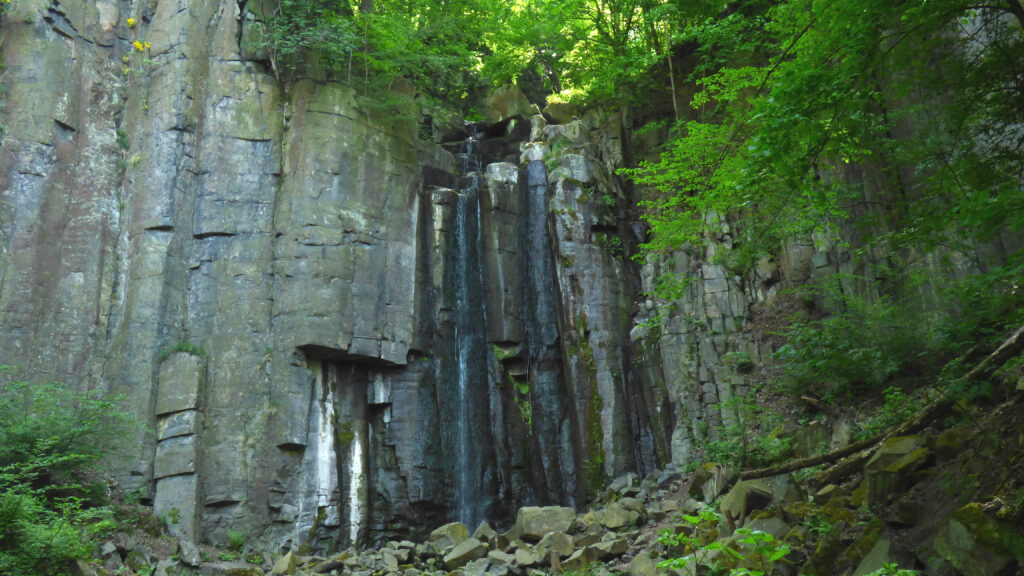
Nature in Northern Bohemia is often defined by its volcanic origins, and nowhere is this more evident than at the Vaňov Waterfall. Located on the southern outskirts of the city, this 12-metre drop is framed by perfectly formed basalt columns, reminiscent of a smaller, hidden Giant’s Causeway. The water tumbles over these hexagonal pillars, creating a microclimate that feels worlds away from the city’s bustle.
Reaching the waterfall involves a light hike through the forest, a journey that reveals the rugged, untamed beauty of the České Středohoří (Bohemian Central Uplands). It is a site that appeals to those who seek the quietude of the natural world and the geological marvels that underpin this entire landscape.
A sanctuary on the hill / Ústí nad Labem Zoo
Perched on the slopes of Mariánská hora, the local zoo is far from the flat, cramped enclosures found in many European cities. Founded in 1908 as a bird sanctuary, it has grown into a significant conservation centre. The hillside layout means that a visit here is also a brisk walk through varied terrain, providing unique perspectives on the animals and the city below.
The zoo is particularly noted for its work with endangered species and its expansive enclosures that mimic natural habitats as closely as possible. It offers a peaceful retreat where the focus is on education and preservation rather than spectacle. For those who enjoy a brisk walk with a view, the path through the zoo is one of the most pleasant ways to spend an afternoon in Ústí.
Bohemia.
Explore the heart of the Czech Republic
Explore further on two wheels
While the city’s icons are best explored at a measured pace, the true scale of the Elbe valley is best understood when you have the freedom to roam. The Elbe Trail (Labe Cycle Path) runs directly through the city, offering a flat, beautifully paved route that follows the river towards the German border.
Within 20 kilometres of the city centre, you can easily reach the charming town of Děčín, with its own magnificent castle and the gateway to the Bohemian Switzerland National Park. To the south, a gentle ride will bring you to Litoměřice, one of the oldest and most beautiful towns in Czechia, famous for its colourful Gothic, Renaissance, and Baroque architecture.
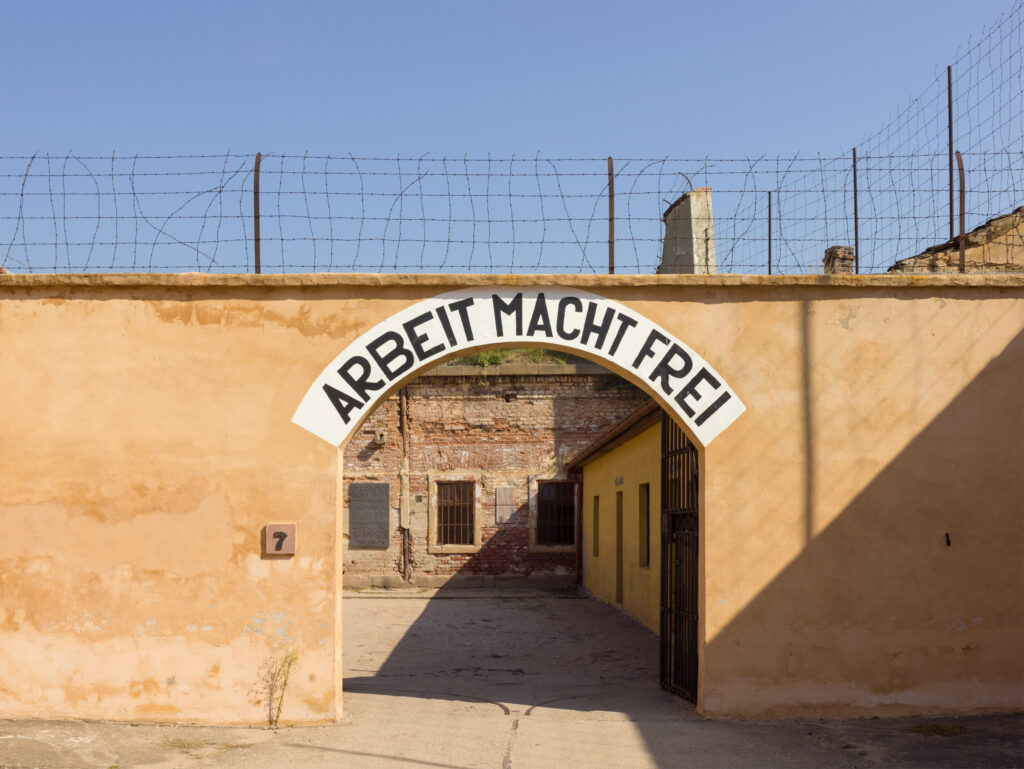
For those looking for a full-day trip, the basalt wonders of Panská skála or the sobering history of Terezín are both within reach, offering a deeper dive into the complex tapestry of this region. Travel by bike allows you to notice the small details—the way the light hits the river at dusk or the scent of the pine forests—that those confined to a tour bus will always miss.
Affiliate Disclaimer: Some of the links on Wheely Tyred are affiliate links. If you click through and make a booking or purchase, we may earn a small commission at no extra cost to you. We only recommend gear, tours, stays, and services we genuinely use, trust, and stand behind — our editorial independence always comes first. These commissions help keep our independent cycling guides and travel stories free to read. Thanks for supporting the ride!
Frequently asked questions about Ústí nad Labem attractions
While it has a strong industrial heritage, the city’s location in the Elbe valley makes it a gateway to some of the most dramatic landscapes in the country. The grit of its history is balanced by the grandeur of its Gothic ruins and modern architecture, making it a rewarding stop for those who enjoy uncovering a city’s unique character.
The most popular way to reach Větruše is via the cable car, which departs from the Forum shopping centre in the city centre. It provides a quick and scenic ascent to the chateau grounds. Once at the top, you can enjoy the restaurant, lookout points, and forest trails without the need for a steep climb.
The church itself is a place of worship and can be visited to see its late-Gothic altar. The leaning tower is preserved as a monument to the city’s wartime experience. While access to the upper sections of the tower may vary, its unique silhouette is best appreciated from the outside, where the nearly two-metre tilt is clearly visible.
The castle is located on the right bank of the Elbe. It is easily accessible by foot or bike from the city centre along the riverside paths. Exploring the interior allows you to see the Great Tower and the knights’ hall, but for many, the highlight is the castle terrace, which offers the most famous view of the river valley.
Yes, the bridge is a vital transport link that also accommodates pedestrians and cyclists. Walking across the bridge is highly recommended for anyone interested in modern engineering, as it offers a close-up look at the asymmetric pylon and cables that have made it an architectural icon.
The Elbe Trail is one of Europe’s most famous cycle paths. Heading north for about 20 kilometres brings you to Děčín, the gateway to Bohemian Switzerland. Heading south, you can reach the historic town of Litoměřice or the sobering memorial at Terezín. The terrain is largely flat, following the river, which makes it ideal for independent day trips on two wheels.
Czechia.
Discover Czechia / History reimagined