The ultimate guide to Montañita / Must-see sights on Ecuador’s coast
Discover the top attractions in Montañita, Ecuador’s most famous coastal town
Surf, sun, and unforgettable scenery for the independent traveller
BEN FINCH
Montañita is a destination that demands your full attention. Once a sleepy fishing village on the sun-drenched Pacific coast of Ecuador, it has evolved over the decades into a vibrant, pulsing hub for surfers, backpackers, and independent wanderers from every corner of the globe. It is a place of striking contrasts.
On one hand, you have the relentless energy of its nightlife and the sheer power of its ocean swells; on the other, you have immediate access to tranquil nature reserves, misty tropical forests, and quiet neighbouring stretches of sand.
For the traveller who likes to explore at their own pace, Montañita serves as an incredibly dynamic base camp. You can spend your mornings tackling the legendary waves, your afternoons exploring indigenous archaeological sites, and your evenings soaking in the lively street culture.
There is no need to be herded onto a tour bus or rushed through an itinerary here. The beauty of this coastal enclave lies in its freedom. Whether you are arriving with a surfboard under your arm or your trusty bike gear packed away for the next leg of your journey, this town offers a sensory experience unlike anywhere else in South America.
To help you navigate this bustling coastal gem, we have curated the definitive list of the top attractions in Montañita and its immediate surroundings.
The wild edge of the Pacific
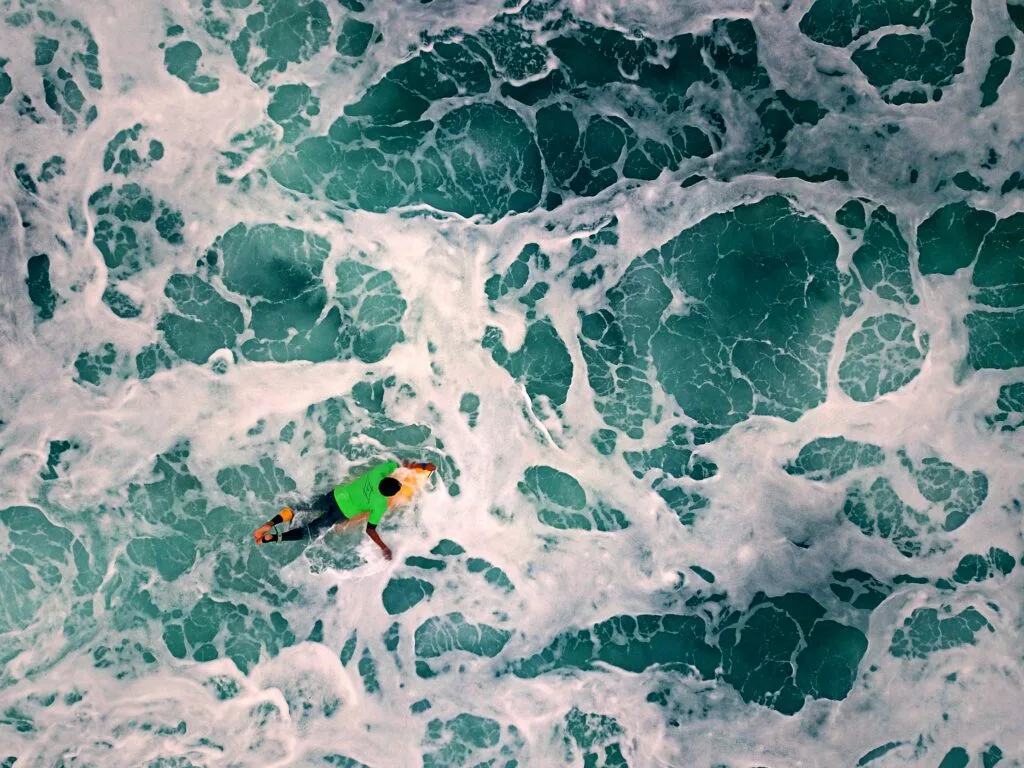
Montañita is far more than just a surf break; it is a gateway to the diverse and untamed landscapes of coastal Ecuador. From the rhythmic pulse of the town centre to the quietude of ancient tropical forests, it offers a rich tapestry for the curious wanderer.
- La Punta Surfing: The northern tip of the beach serves as a sanctuary for those chasing world-class swells or simply admiring the raw power of the Pacific
- Cocktail Alley: A sensory explosion where local flavours and vibrant music define the legendary evening atmosphere of this coastal enclave
- Isla de la Plata: A rugged offshore sanctuary offering incredible sightings of blue-footed boobies and migrating humpback whales without the crowds of the Galápagos
- Agua Blanca Heritage: An indigenous community providing a rare look into pre-Columbian history alongside a therapeutic, mineral-rich sulfur lagoon
- Dos Mangas Trails: A lush transition into the humid tropical forest where howler monkeys and hidden waterfalls await those who venture inland
- Coastal Escapes: The nearby villages of Olón and Ayampe offer a slower, more contemplative pace for those looking to retreat from the town’s high energy
Montañita.
Surfer’s paradise
Playa Montañita and La Punta
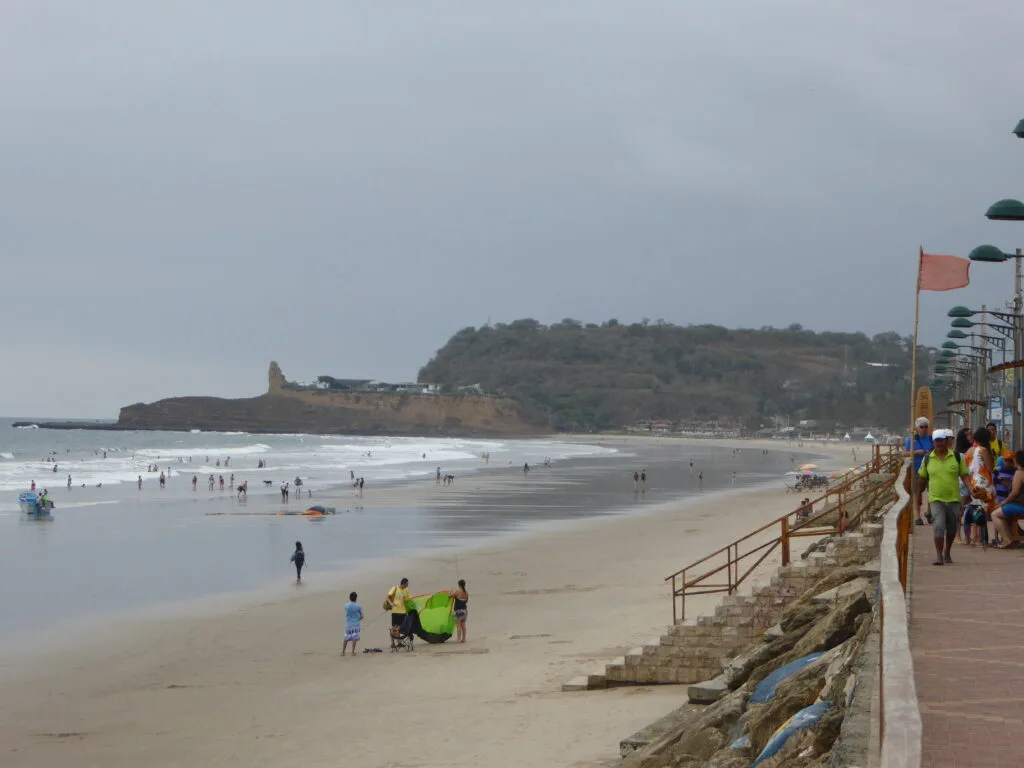
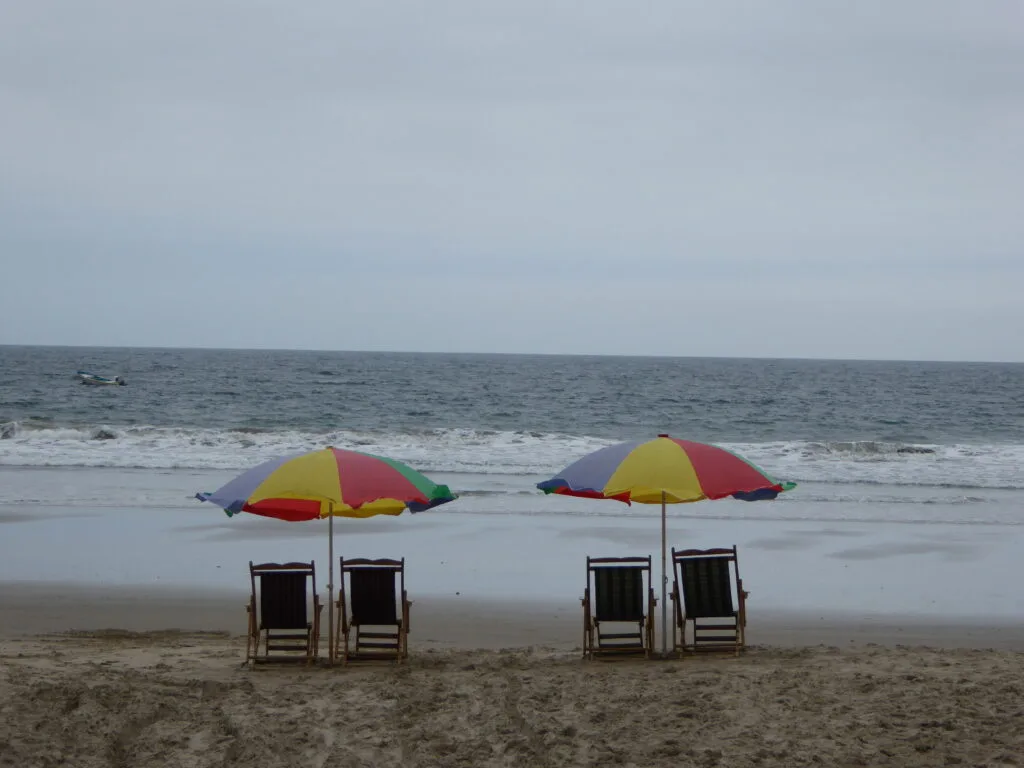
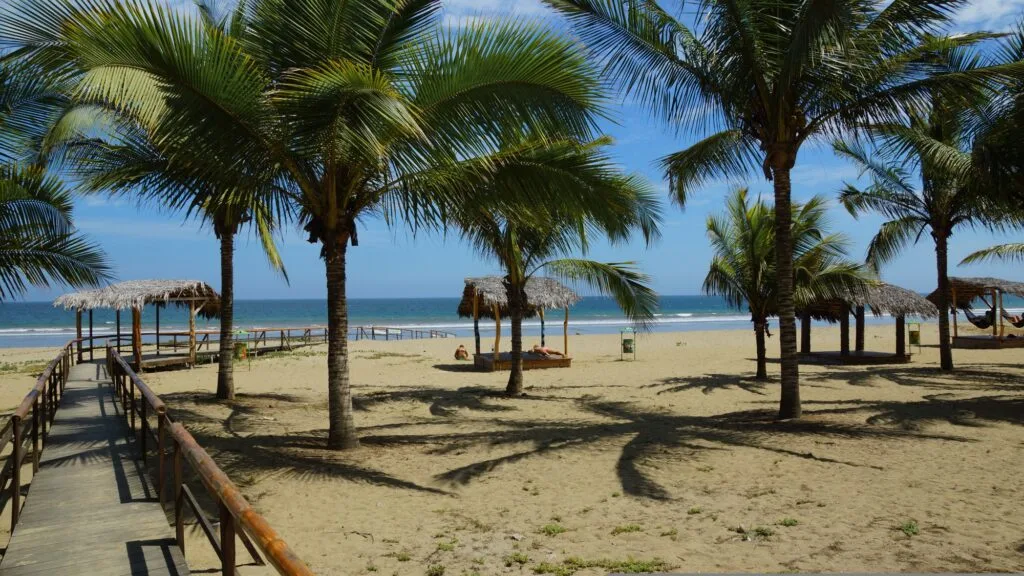
The sweeping expanse of Playa Montañita is the undeniable beating heart of the town. Stretching for miles along the equatorial coastline, this golden beach is the primary reason the town found its way onto the global travel map.
The ocean is famously warm, and the breaks are legendary. At the very northern tip of the beach lies La Punta, a rocky outcrop that creates some of the most consistent and powerful waves on the continent. Even if you have never set foot on a surfboard, walking down to La Punta is a mesmerising experience.
You can sit on the warm sand and spend hours watching experienced surfers carve through towering swells against the backdrop of a setting sun. When the tide recedes, the rocky pools around the point reveal a miniature ecosystem of crabs and marine life, offering a quiet escape from the busier central stretches of the beach.
The vibrant energy of Calle de los Cócteles
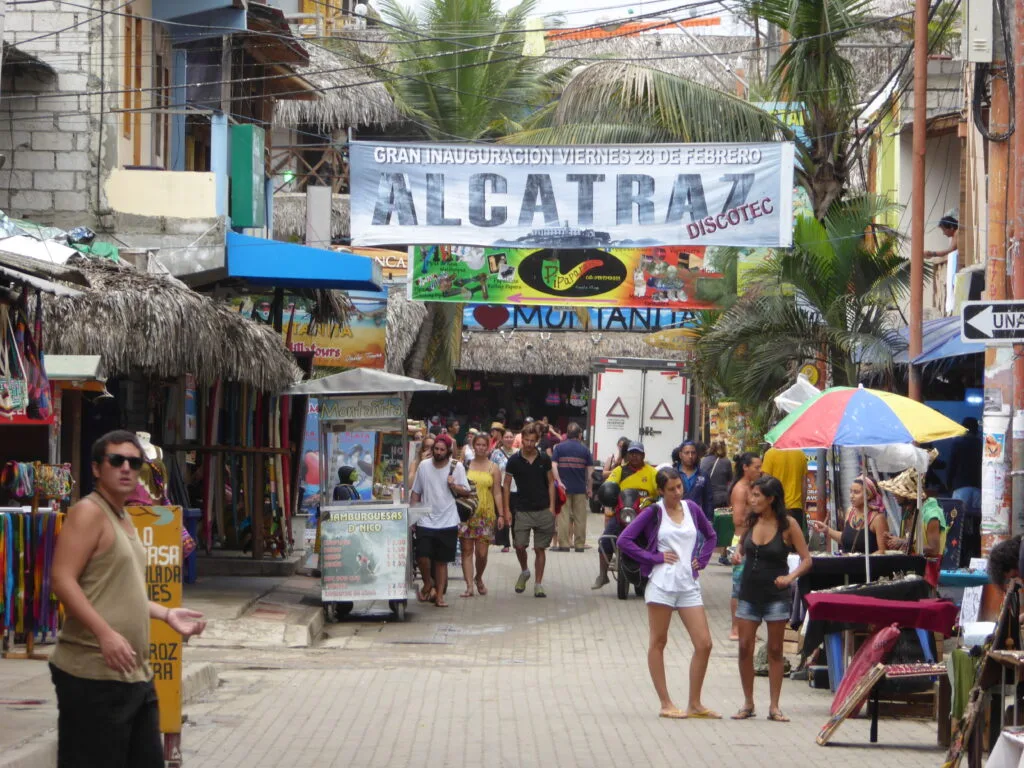
When the sun dips below the horizon, the energy of the town shifts inland to what is affectionately known as Calle de los Cócteles—Cocktail Alley. This bustling pedestrian street is lined with dozens of small, brightly decorated stalls, each manned by local vendors mixing fresh tropical fruit with local spirits. It is a brilliant, chaotic assault on the senses.
Reggaeton and salsa music spill out from neighbouring bars, while the scent of grilled street food fills the warm night air. For the independent traveller, taking a stroll down this vibrant thoroughfare is a cultural rite of passage. You can pull up a plastic chair, order a drink made with freshly crushed passionfruit, and simply watch the world go by.
It is the perfect place to swap stories with fellow travellers and soak in the legendary bohemian atmosphere that defines the region.
The Ecuadorian Coast.
Where you’ll find the very best food
Wildlife wonders at Isla de la Plata
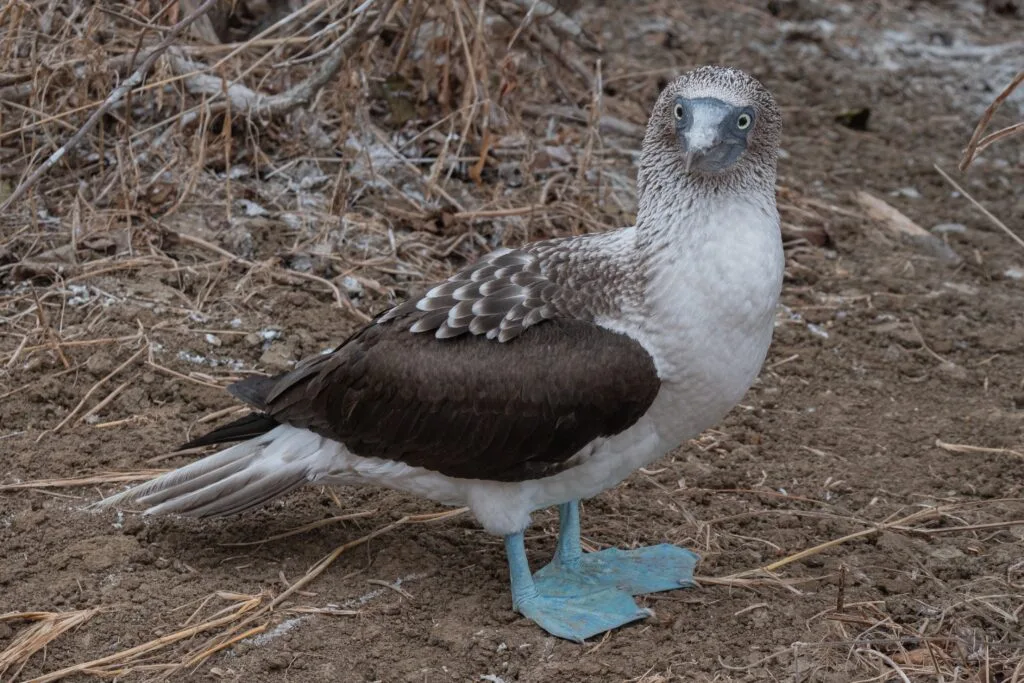
Just a short journey away from the mainland, Isla de la Plata offers an unforgettable day trip for nature enthusiasts. Often referred to as the alternative to the Galápagos, this rugged island is part of the Machalilla National Park and is a sanctuary for an incredible array of marine and avian wildlife.
Getting there involves a scenic boat ride from the nearby coastal town of Puerto López. Once you set foot on the island, you can hike along dusty, sun-baked trails while spotting colonies of blue-footed boobies, magnificent frigatebirds, and waving albatrosses. If you time your visit between June and October, the surrounding waters become a migratory playground for humpback whales.
Watching these massive creatures breach the surface of the Pacific Ocean is a truly humbling experience and a stark, beautiful contrast to the lively streets of Montañita.
Cultural immersion at Comuna Agua Blanca
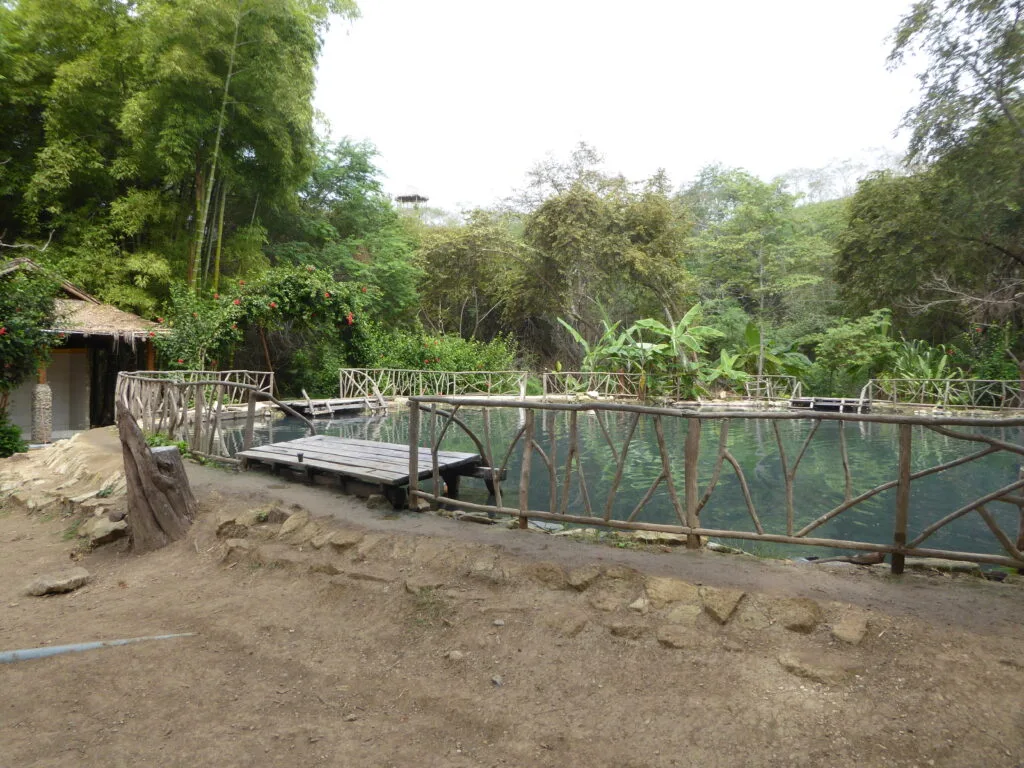
For a change of pace and a dose of ancient history, Comuna Agua Blanca is an essential addition to your itinerary. Nestled within the dry tropical forest of Machalilla National Park, this indigenous community maintains a profound connection to its pre-Columbian ancestors.
The site features a fascinating archaeological museum that houses artefacts from the Manteño culture, offering deep insights into the historical significance of the region. However, the highlight for many visitors is the large natural sulphur lagoon situated at the heart of the community.
The mineral-rich waters are said to have healing properties, and you can partake in a traditional mud facial using the nutrient-dense clay found along the banks. It is a profoundly relaxing and grounding experience, allowing you to connect with the heritage and natural landscape of the Ecuadorian coast.
The Galápagos.
Ecuador’s Enchanted Isles
The jungle trails of Cascada Dos Mangas
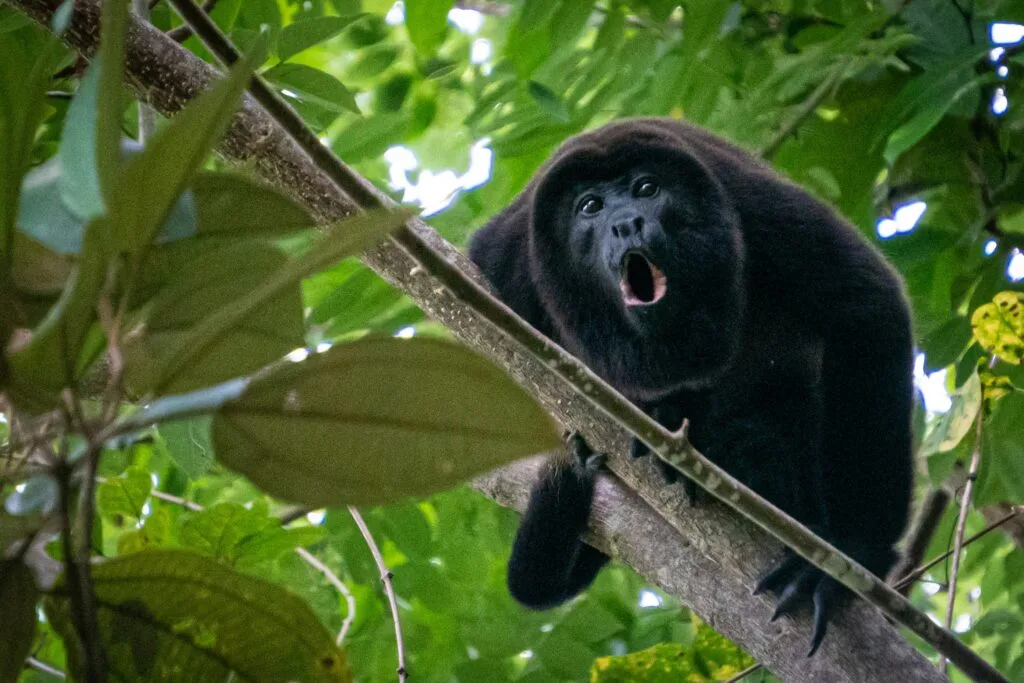
If you need a break from the salt and sand, the lush environs of Cascada Dos Mangas provide the perfect ecological retreat. Located just a short distance inland, this area offers a transition from coastal plains to dense, humid tropical forest.
The local community manages a series of well-maintained trails that follow the winding path of the river, eventually leading to a series of cascading waterfalls. The hike itself is a fantastic opportunity to immerse yourself in the local biodiversity. Keep your eyes peeled for toucans flitting through the canopy and listen for the distinct, echoing calls of howler monkeys swinging through the high branches.
The dense foliage provides welcome shade from the equatorial sun, making it an ideal half-day adventure for those looking to stretch their legs and breathe in the fresh jungle air.
The neighbouring escapes of Olón and Ayampe
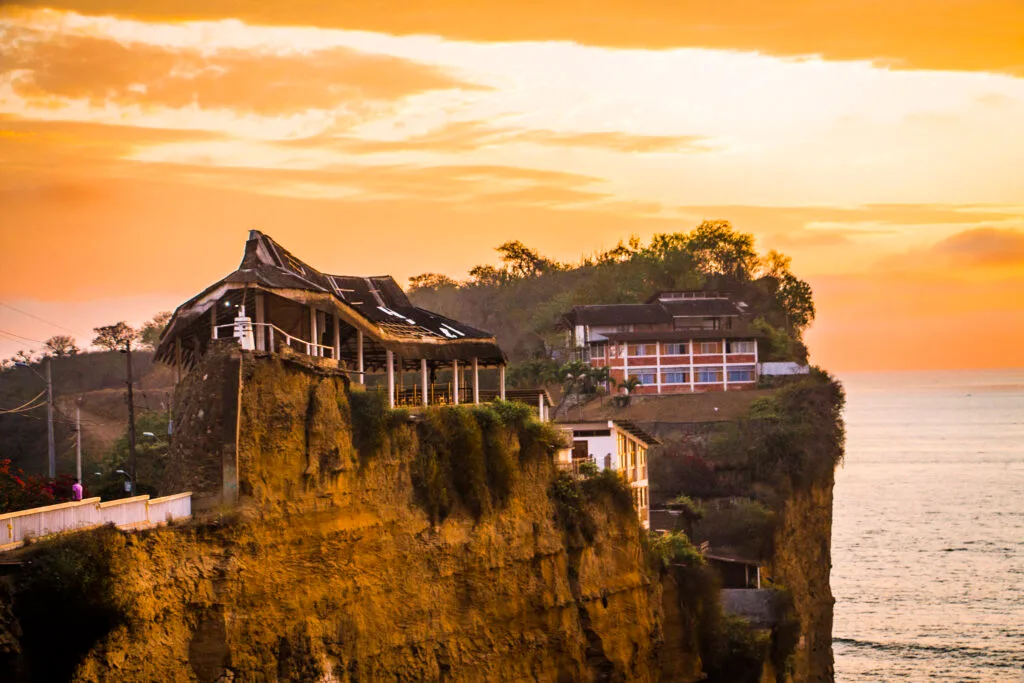
While Montañita is fantastic for its high energy, the beauty of this coastline is the variety of atmospheres available within a stone’s throw of each other.
Just to the north lies Olón, boasting one of the widest and most tranquil beaches in the area. It is exceptionally peaceful, featuring a beautiful cliffside sanctuary that overlooks the sprawling Pacific.
A little further up the coast is Ayampe, a tiny village framed by lush jungle and steep hills. Ayampe operates on a completely different frequency. It is a haven for yoga retreats, quiet reading, and uncrowded surf breaks.
Visiting these neighbouring towns highlights the sheer diversity of the Ecuadorian coastline, ensuring that you can always find the exact environment to match your mood for the day.
The Ecuadorian Sierra.
Get lost in the hills
Exploring the coast at your own pace
Read this far?
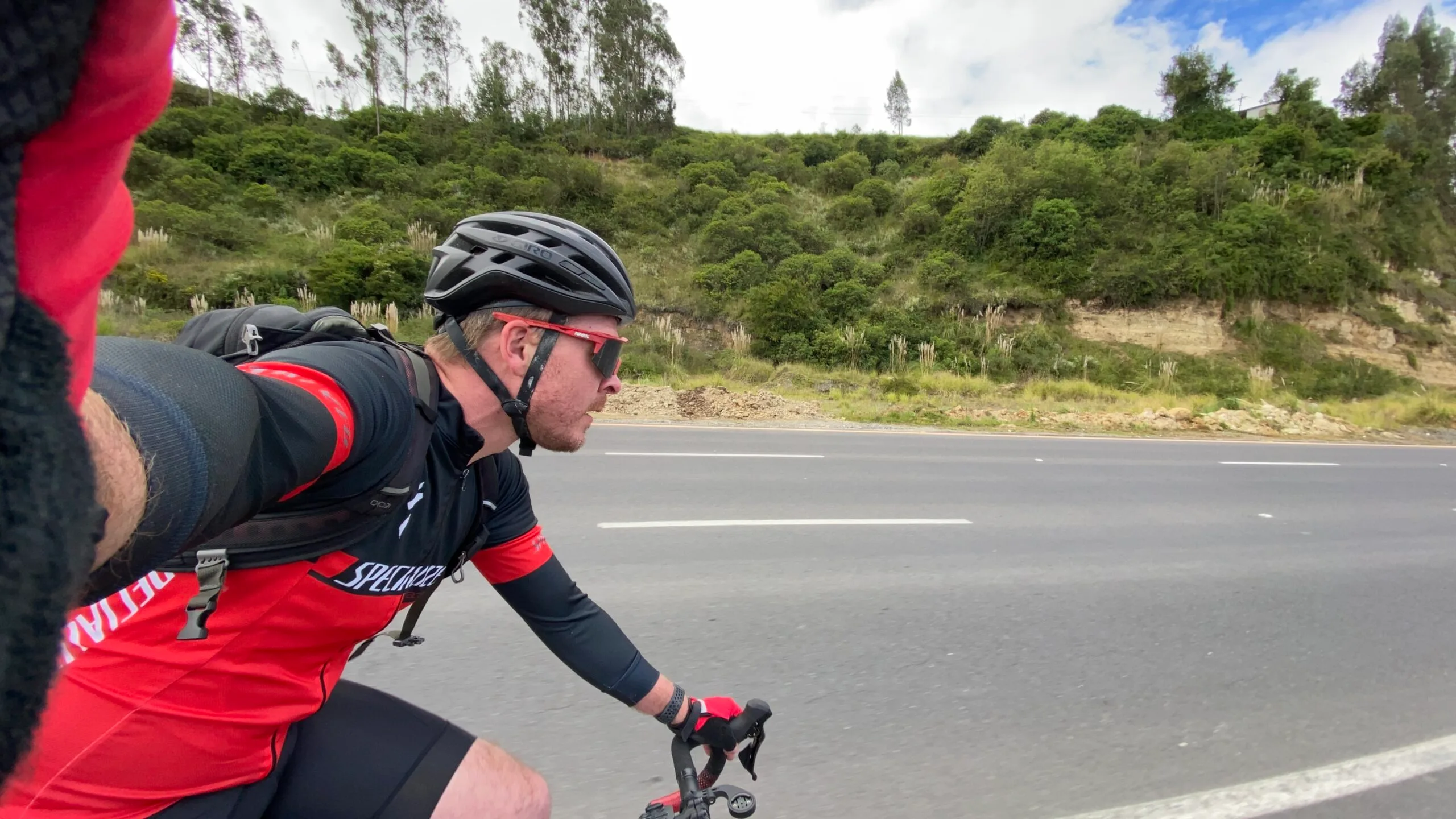
While Montañita itself is easily explored on foot, the surrounding coastal roads and inland paths make this region a brilliant destination for the independent cyclist. If you have brought your bike along or plan to hire one locally, the journey north towards Olón is a flat, scenic, and incredibly rewarding ride of just a few kilometres.
For a longer day trip, you can continue along the Ruta del Spondylus to Ayampe, roughly 20 kilometres away, where the coastal highway offers sweeping ocean vistas on one side and dense tropical greenery on the other.
Alternatively, pointing your handlebars inland towards the trails of Dos Mangas offers a robust, nature-filled ride away from the main traffic.
Before you clip in and head out onto the Ecuadorian roads, it is always wise to be fully prepared and aware of the local regulations. We highly recommend brushing up on the legalities with our comprehensive guide to cycling laws in Ecuador, rights, rules, and fines explained.
By understanding the local infrastructure and taking control of your own itinerary, you unlock the true freedom of independent travel, allowing you to experience the breathtaking beauty of the Pacific coast exactly the way you want to.
Affiliate Disclaimer: Some of the links on Wheely Tyred are affiliate links. If you click through and make a booking or purchase, we may earn a small commission at no extra cost to you. We only recommend gear, tours, stays, and services we genuinely use, trust, and stand behind — our editorial independence always comes first. These commissions help keep our independent cycling guides and travel stories free to read. You can also buy me a coffee here — thanks for supporting the ride!
The Ecuadorian Amazon.
The most biodiverse place in the world
Frequently asked questions about the top attractions in Montañita
Humpback whales migrate through the waters surrounding Isla de la Plata between June and October, making this the peak season for marine wildlife sightings.
The lagoon is situated within an indigenous community and is famous for its high mineral content. Visitors can apply nutrient-dense mud from the banks for a traditional skin treatment before bathing in the calm, therapeutic waters.
Olón is a very short trip of approximately 3 kilometres to the north, while the quieter village of Ayampe is situated roughly 20 kilometres away along the scenic Ruta del Spondylus.
It is a lively pedestrian thoroughfare where dozens of small stalls serve drinks made with fresh tropical fruits. It is the social heart of the town after dark, filled with music and a bohemian spirit.
Yes, the Dos Mangas area features well-maintained jungle trails that lead through dense tropical vegetation to several small, secluded waterfalls.
While not part of the archipelago, Isla de la Plata is home to many of the same species, including blue-footed boobies, frigatebirds, and waved albatrosses, earning it a reputation as a more accessible alternative for birdwatchers.
Ecuador.
Pure wonder on the equator.