Conquering the equator / A cyclist’s guide to Ecuador’s driving culture
Ecuador cycling guide / Driving culture, road safety, and driver behaviour
Master the chaos and pedal the Andes with confidence and a watchful eye
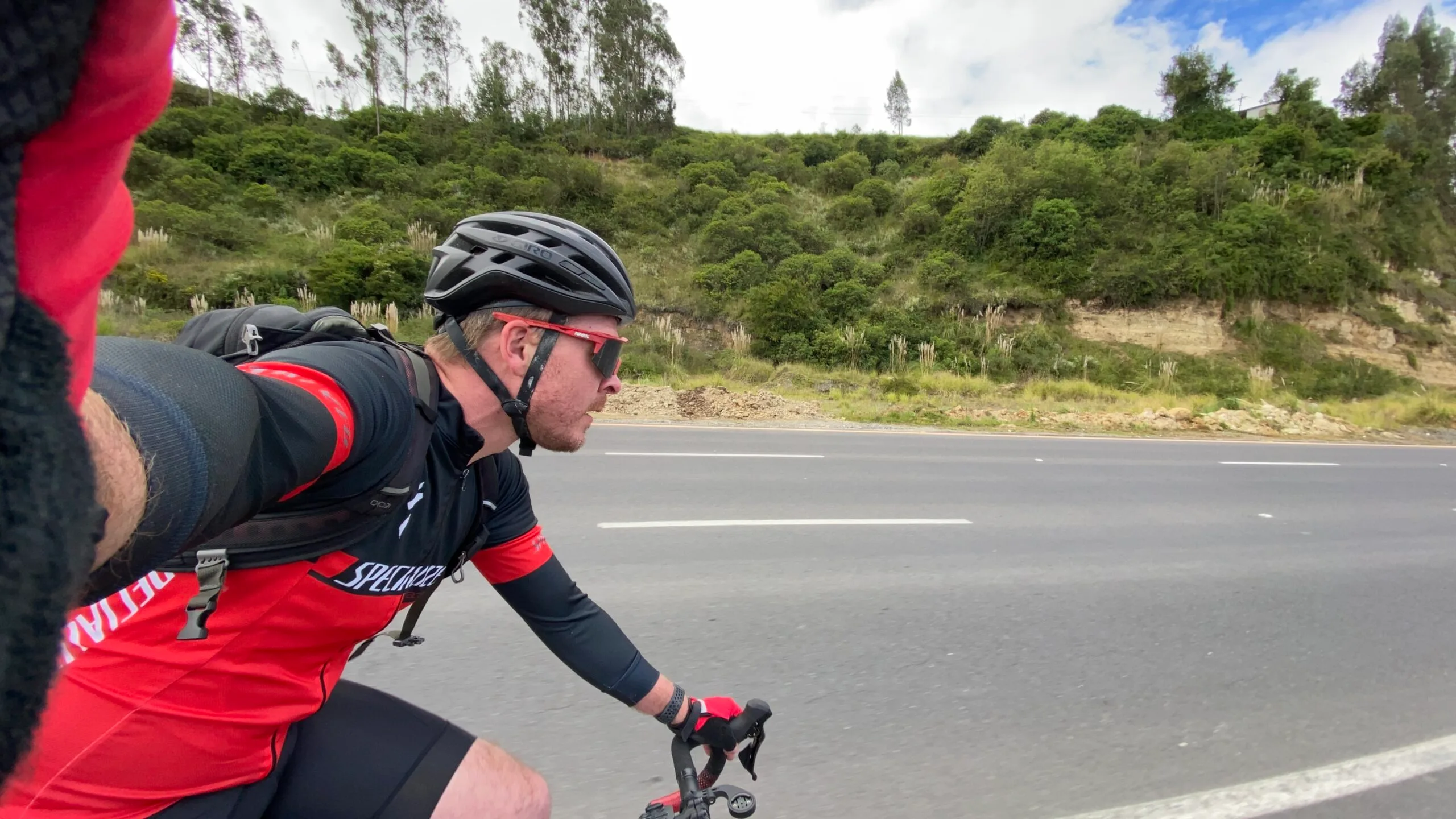
BEN FINCH
Ecuador is a dream destination for adventurous cyclists. From the dizzying heights of the Andes and the volcanic avenues to the dense Amazonian borders and sweeping coastal roads, the landscape offers unparalleled beauty. Bikepacking routes like the Trans Ecuador Mountain Bike Route draw enthusiasts from across the globe. However, sharing the road with Ecuadorian traffic is an entirely different kind of adventure. Navigating the tarmac here requires more than just strong legs and reliable tyres; it demands a deep understanding of a driving culture that can feel overwhelmingly chaotic to the uninitiated.
At Wheely Tyred, we believe that preparation is the ultimate performance enhancer. Before you clip in and set off towards Quito or Cuenca, it is vital to understand the rhythm of the roads. You must learn how drivers interact with cyclists, what the statistical realities of road safety look like, and how you can protect yourself whilst enjoying the ride of a lifetime.
The essentials of riding in Ecuador
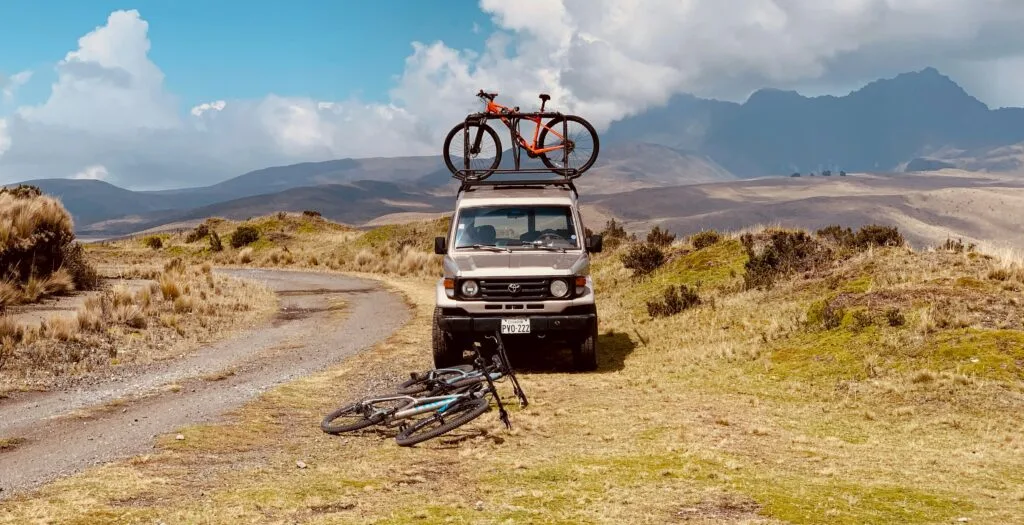
Before we dive into the details, here is a quick overview of what you need to know about mixing with traffic in Ecuador:
- Size dictates the hierarchy: The unwritten rule of the road is that the largest vehicle has the right of way. Buses and heavy goods vehicles dominate, cars follow, and cyclists must yield to almost everyone
- The horn is a language: Honking is rarely an expression of anger. Instead, it is used to signal presence, warn of an overtaking manoeuvre, or simply say hello
- Infrastructure is highly localised: Major cities are slowly embracing cycle lanes, but rural mountain roads remain narrow, shoulderless, and demanding
- Defensive riding is non-negotiable: You must anticipate sudden stops, blind overtaking, and a general disregard for formal traffic signals
The Ecuadorian Sierra.
Get lost in the hills
The driving culture / A cyclist’s perspective
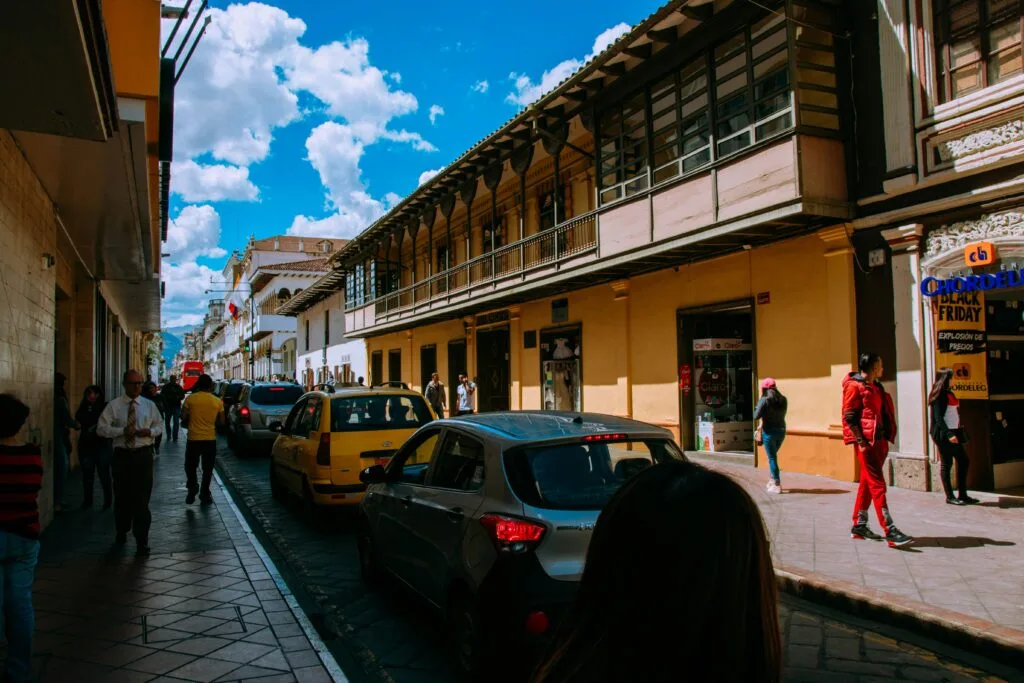
To cycle safely in Ecuador, one must first accept that traffic flows more like a bustling river than an organised system. Rules are often viewed as suggestions rather than strict laws. In urban centres like Guayaquil and Quito, congestion is heavy, and drivers are incredibly opportunistic. If a gap opens, a car will fill it instantly, regardless of lane markings or rights of way.
For a cyclist, this means you must be hyper-aware. Drivers do not maliciously target cyclists, but they are often oblivious to them. The driving culture is heavily reliant on momentum and assertiveness. If you are timid, you will be squeezed out. If you are predictable and hold your line, drivers will generally flow around you, albeit much closer than you might be used to in European or North American countries.
Rural roads present a different challenge. The Pan-American Highway and various mountain passes feature winding, single-carriageway stretches with blind corners. Here, the driving culture is defined by speed and impatience. Overtaking on blind bends is alarmingly common, and as a cyclist, you must constantly listen for the roar of approaching engines and be prepared to take the lane to prevent unsafe passes, or dive onto the verge if an oncoming truck misjudges a manoeuvre.
Driver attitudes / Polite or aggressive?
Labelling Ecuadorian drivers as purely aggressive is a slight oversimplification, though it certainly feels that way when a heavily laden lorry passes within inches of your handlebars. The attitude is better described as fiercely pragmatic and occasionally reckless.
When it comes to cyclists, the general attitude leans towards indifference. You are seen as an incredibly slow-moving obstacle that must be bypassed as quickly as possible. This is where the local use of the horn comes into play. In the UK, a horn is a sign of aggression or a warning of imminent danger. In Ecuador, a short beep simply means: I am behind you, I am larger than you, and I am coming past. It is an aggressive environment, but it is rarely personal.
That being said, politeness does exist, particularly in rural villages where the pace of life slows down. You will often receive waves and shouts of encouragement from drivers who are impressed by the physical feat of cycling up altitude-defying gradients. However, in the heat of heavy traffic, expect no quarter to be given.
The Ecuadorian Amazon.
The most biodiverse place in the world
Accident rates and road safety realities
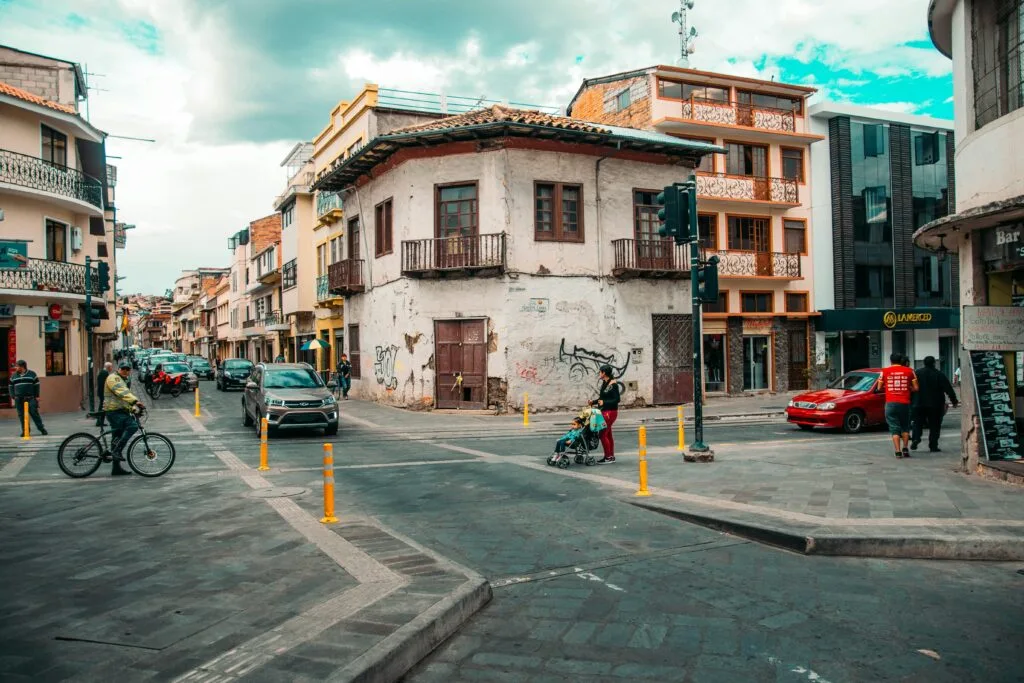
It is crucial to face the facts regarding road safety in Ecuador. The country historically struggles with high accident and casualty rates. According to local transit authorities and global health data, road traffic accidents are a leading cause of preventable injury and death in the country.
The main factors driving these statistics are multifaceted. Speeding is rampant, especially on newly paved highways that invite drivers to push their vehicles to the limit. Drink driving remains a persistent issue, particularly at weekends and during national holidays. Furthermore, the topography of the country contributes heavily; steep Andean roads with sheer drops, poor visibility, and frequent landslides create treacherous conditions.
For cyclists, the lack of dedicated infrastructure outside of major city centres is the biggest risk factor. When bicycles are forced to share a narrow lane with speeding buses, the margin for error is zero. While exact figures isolating cyclist casualties are difficult to verify consistently, advocacy groups in Ecuador frequently highlight that vulnerable road users bear a disproportionate amount of risk.
Steps towards safer streets
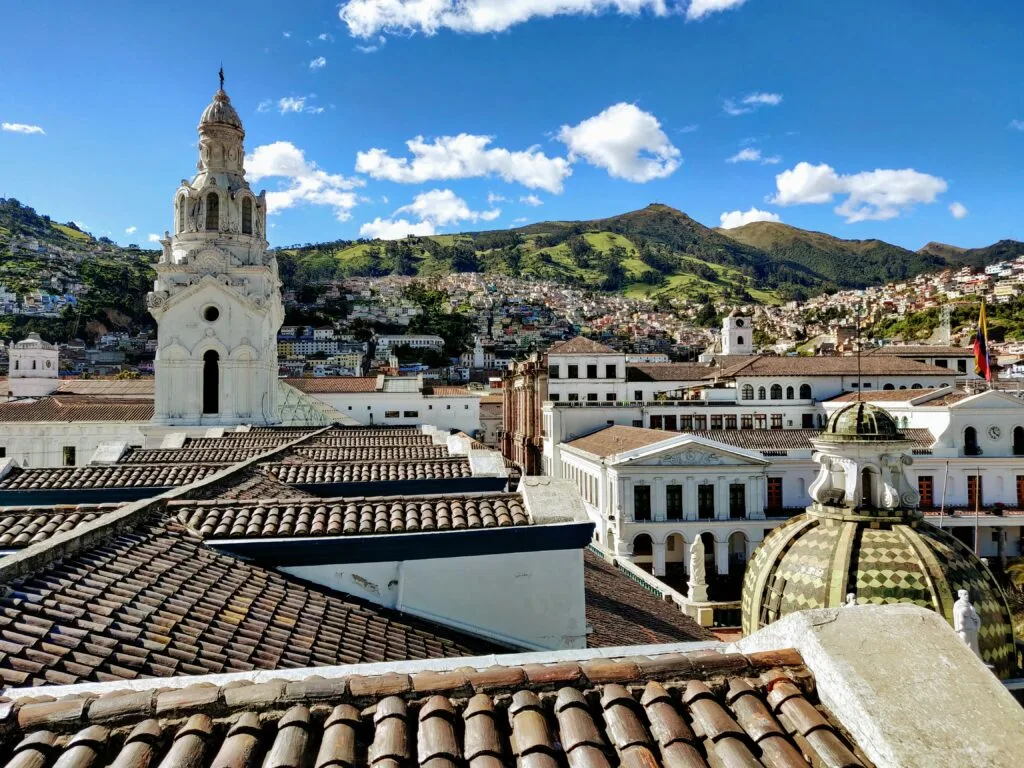
Despite the grim statistics, the situation is not entirely without hope. There are active, ongoing steps being taken to improve road safety and integrate cycling into the national culture.
Quito is a leading example. The city hosts the famous Ciclopaseo every Sunday, where major arterial roads are completely closed to motorised traffic, allowing thousands of cyclists, runners, and families to enjoy the streets safely. This initiative has done wonders for raising the profile of cycling. Additionally, Quito and Cuenca have been investing in physical infrastructure, building separated cycle lanes known as ciclovías to encourage eco-friendly commuting.
On a national level, cycling advocacy groups are becoming more vocal. The success of Ecuadorian professional cyclists on the world stage, most notably Richard Carapaz, has sparked a massive surge in local interest in the sport. This national pride is slowly translating into a subtle shift in respect. Campaigns urging drivers to leave a safe distance of 1.5 metres when overtaking are appearing on billboards and social media, though enforcement by traffic police remains inconsistent.
Quito.
Explore the Middle of the World
Tips for riding safely in Ecuador
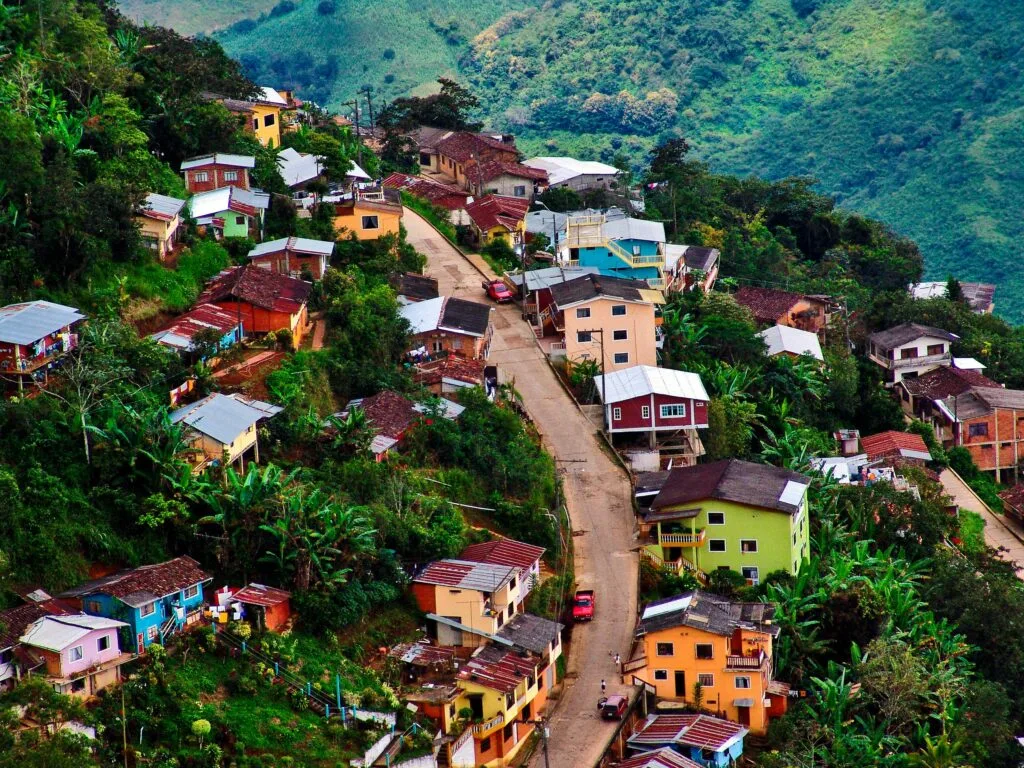
At Wheely Tyred, we want you to experience the magic of the Andes safely. To thrive in this environment, ensure your bicycle is equipped with incredibly bright daytime running lights to pierce through the mountain fog and alert drivers to your presence early. Fit the widest, most puncture-resistant tyres your frame can handle, as the transition from smooth tarmac to potholed dirt can happen instantly.
Furthermore, plan your routes carefully. Avoid the main Pan-American Highway wherever possible and seek out the secondary rural roads. They might be steeper and rougher, but the drastic reduction in heavy traffic makes them infinitely safer and more enjoyable. Finally, ride with confidence. Claim the lane when necessary to prevent dangerous overtaking, and always keep an escape route in mind.
Cycling in Ecuador is an intense, rewarding experience. By understanding the driving culture and adjusting your tactics accordingly, you can turn a potentially stressful journey into the ride of a lifetime.
Affiliate Disclaimer: Some of the links on Wheely Tyred are affiliate links. If you click through and make a booking or purchase, we may earn a small commission at no extra cost to you. We only recommend gear, tours, stays, and services we genuinely use, trust, and stand behind — our editorial independence always comes first. These commissions help keep our independent cycling guides and travel stories free to read. Thanks for supporting the ride!
Frequently asked questions about cycling in Ecuador
It is generally not recommended to cycle on major arterial highways like the main sections of the Pan-American due to high speeds, heavy freight traffic, and a lack of hard shoulders. It is much safer to map out routes using secondary and unpaved roads. Saying that, drivers are used to cyclists being in places where they shouldn’t be. I have been terrified on three-lane highways.
While you do not strictly need a mountain bike for the paved routes through the Sierra, a gravel bike or a robust touring bike with wide tyres is highly recommended. The road conditions can deteriorate rapidly, and wide tyres offer better control and comfort over potholes and unpaved detours. I run 28 / 700 for touring, racing and day-to-day rides.
Drivers primarily use their horns to communicate. A short toot usually means they are approaching and intend to overtake. It is a warning system rather than an insult, so try not to take offence and simply maintain a steady, predictable line.
Sundays are undoubtedly the best time. Many large cities, including Quito, run Sunday initiatives where major roads are closed to cars entirely, making it incredibly safe and enjoyable to navigate the urban landscape.
Ecuador.
Pure wonder on the equator.