When to visit Bohemia: A seasonal guide to the heart of Czechia
The best time to visit Bohemia: Monthly weather and travel guide
From mist-veiled castles to sun-drenched valleys: Timing your Bohemian escape

Choosing when to visit Bohemia is less about finding a perfect window and more about matching your temperament to the shifting moods of Central Europe. This region, a tapestry of rolling hills, ancient sandstone rock cities, and Gothic spires, does not do things by halves. Whether one is seeking the sharp, pine-scented air of the Bohemian Switzerland National Park or the heady buzz of a Prague beer garden, timing is everything.
Wheely Tyred has assessed the shifting patterns of this historic land to provide a definitive guide on the best time to visit Bohemia. This is a landscape that is changing, both in its seasonal rhythm and its long-term climate, making an informed choice more vital than ever for the modern traveller.
Spring: The great awakening / March to May
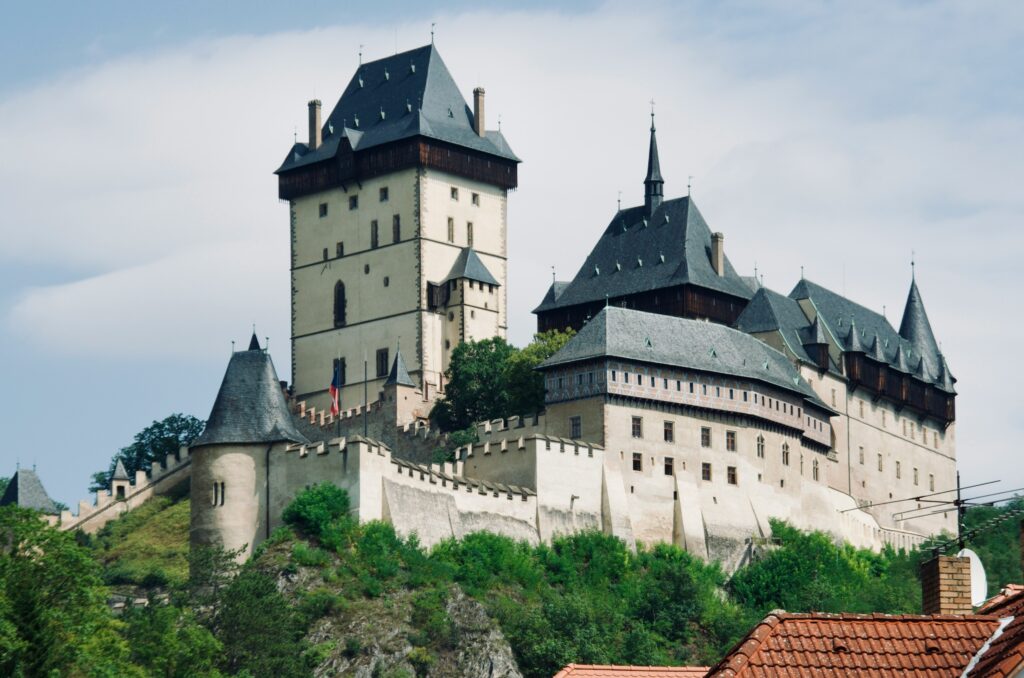
Spring in Bohemia is a study in patience. In March, the region is often still shaking off the remains of winter. It is a month of transition where the valleys begin to green, but the higher elevations of the Krkonoše or the Šumava mountains may still hold onto their snow. For those who prefer crisp air and quiet trails, this is an excellent time to visit the lowland castles like Karlštejn without the summer crowds.
April is famously temperamental. The Czechs have a word for it—aprílové počasí—referring to weather that can swing from brilliant sunshine to a sudden snow squall within twenty minutes. However, by May, Bohemia is arguably at its most beautiful. The fruit trees in the Central Bohemian uplands are in full blossom, and the Prague Spring International Music Festival brings a sophisticated energy to the capital. For cyclists, May offers the ideal temperature range of 15°C to 20°C, perfect for tackling the Elbe Cycle Route before the summer humidity settles in.
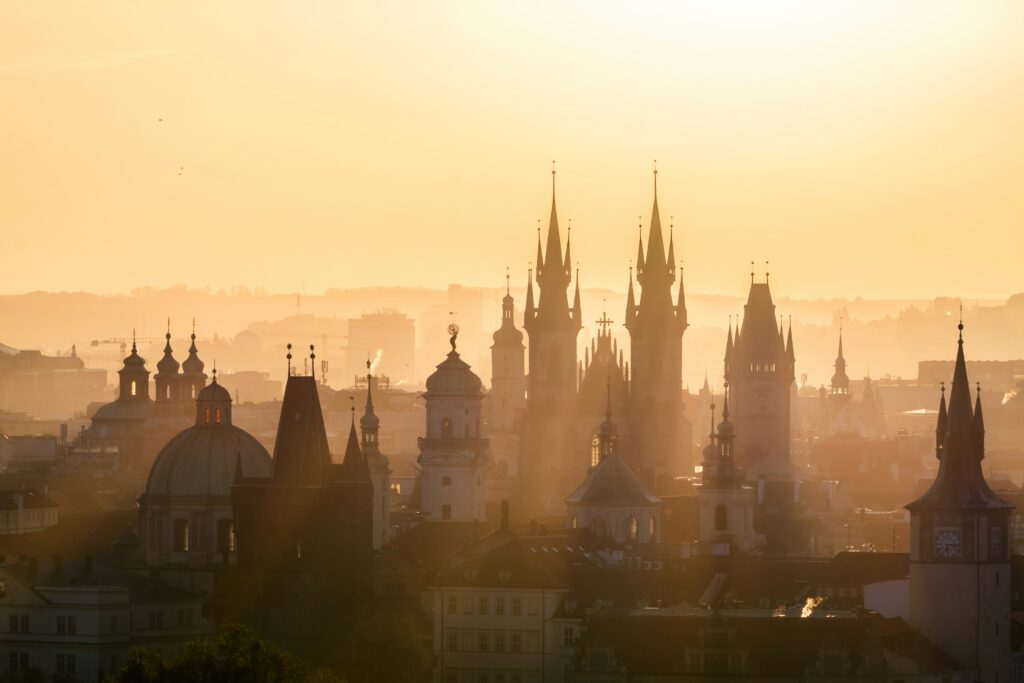
Prague.
There’s no other city like it
Summer: The high season glow / June to August
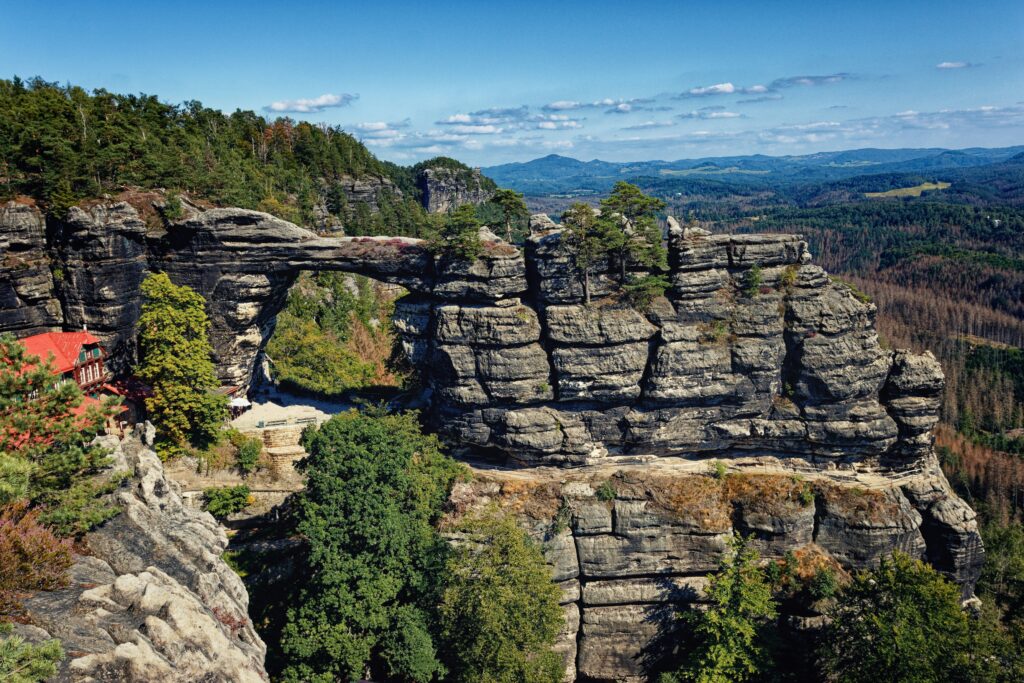
When June arrives, Bohemia fully embraces the outdoors. The days are long, with light lingering until nearly 10:00 PM, allowing for epic days in the saddle or long, rambling walks through the Bohemian Paradise (Český ráj). Temperatures typically sit in the mid-20s, though recent trends show June is becoming increasingly prone to sudden, heavy thunderstorms.
July and August are the warmest months, with averages around 24°C, though heatwaves exceeding 30°C are now a regular occurrence. This is the peak of the tourist season. The rivers are dotted with canoes, and the town squares of places like Český Krumlov are vibrant with life. While the heat is perfect for a dip in the Máchovo Jezero, it requires a slower pace for those exploring the more rugged sandstone formations. If visiting during these months, the deep, shaded gorges of the Kamenice river offer a natural air-conditioned retreat from the midday sun.
Czechia.
The heart of Europe
Autumn: Gold, mist, and wine / September to November
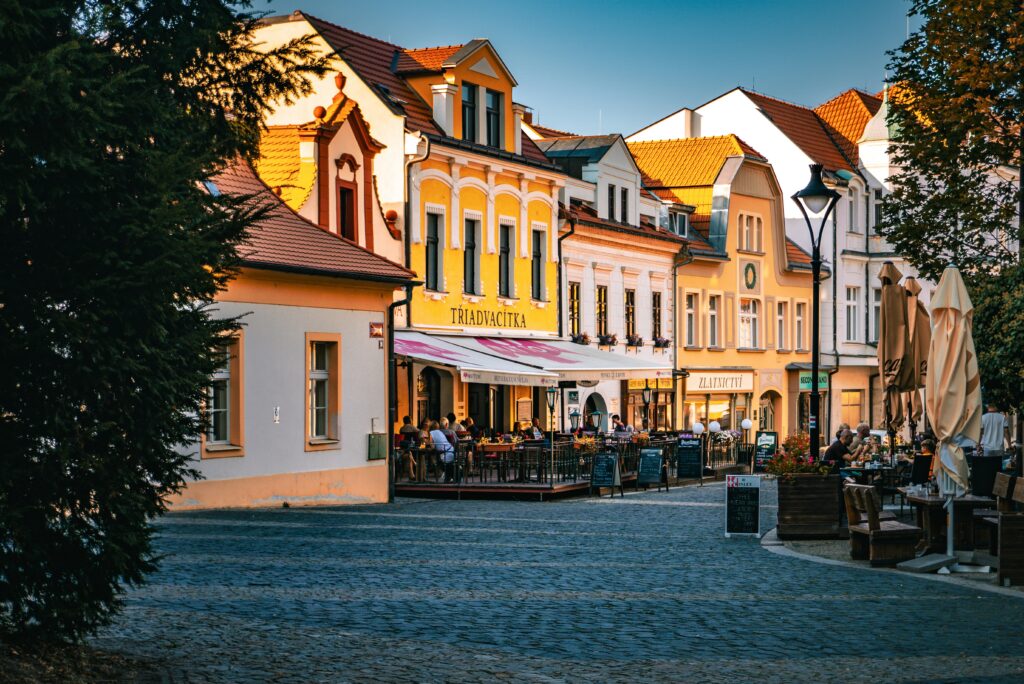
September is often the sweet spot for visiting Bohemia. The chaotic energy of the summer holidays dissipates, but the warmth remains, often manifesting as a glorious Indian summer. This is the season of Vinobraní (wine harvest festivals). Towns like Mělník come alive with the scent of fermenting grapes and traditional folk music. The air is drier than in summer, making it perhaps the most stable month for long-distance cycling or hiking.
In October, the landscape transforms. The beech forests of the Bohemian highlands turn a fiery copper and gold. It is a photographer’s dream, particularly in the early mornings when mist clings to the valleys of the Vltava River. By November, the mood shifts. The days shorten significantly, and a damp, grey chill begins to settle. This is the time for interior tourism—exploring the countless galleries, museums, and cosy medieval taverns that define the region’s cultural heart.
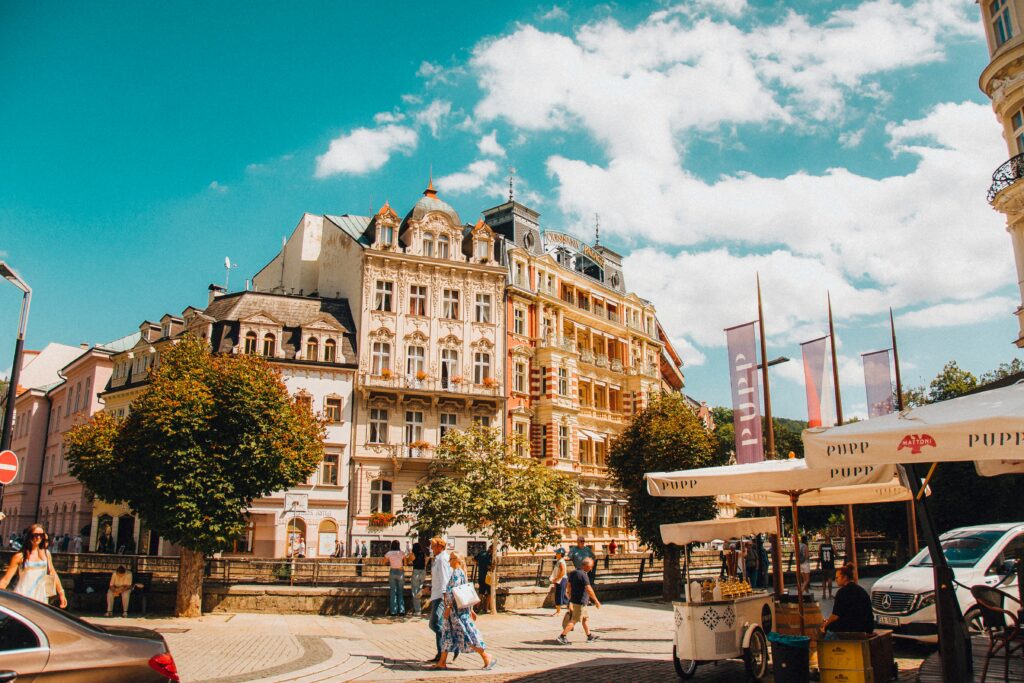
Bohemia.
The heart of the Czech Republic
Winter: The fairy tale frost / December to February
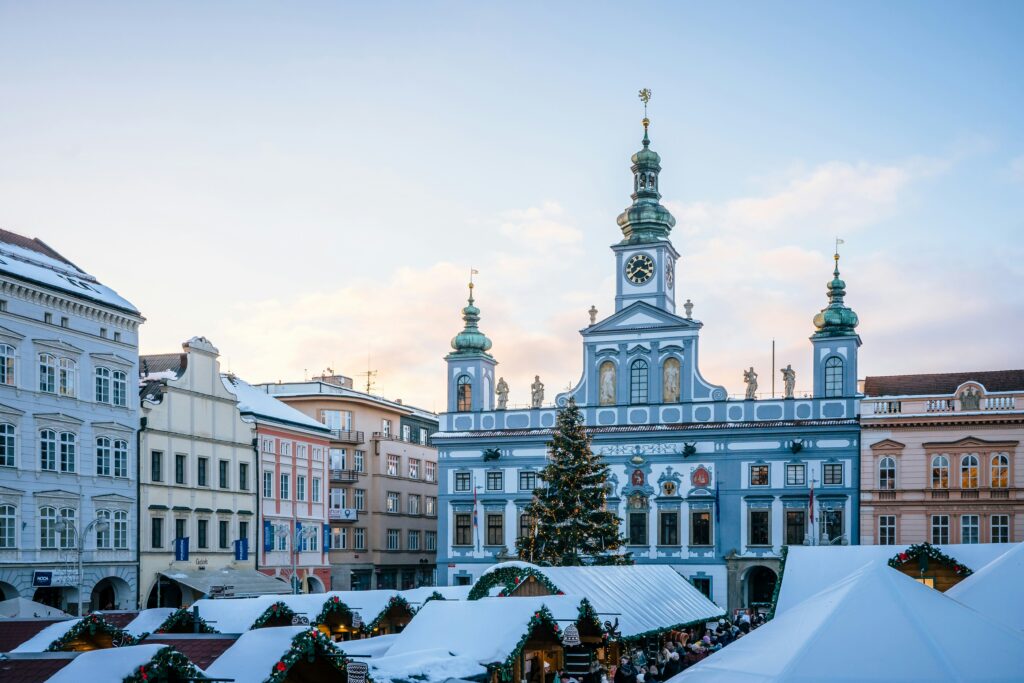
December in Bohemia is defined by the scent of svařák (mulled wine) and roasted chestnuts. The Christmas markets in Prague, Plzeň, and České Budějovice are world-renowned, and for good reason. If the frost bites, the Gothic architecture looks its most imposing under a dusting of snow.
January and February are the coldest months, with temperatures frequently dropping below freezing. While the lowlands may experience slushy winters, the mountains remain a bastion for winter sports. For a truly unique experience, a visit to the Brtníky icefalls in North Bohemia during a deep freeze reveals spectacular frozen waterfalls that look like something out of a Narnia film. These are the quietest months for tourism, offering a sense of solitude that is impossible to find at any other time of year.
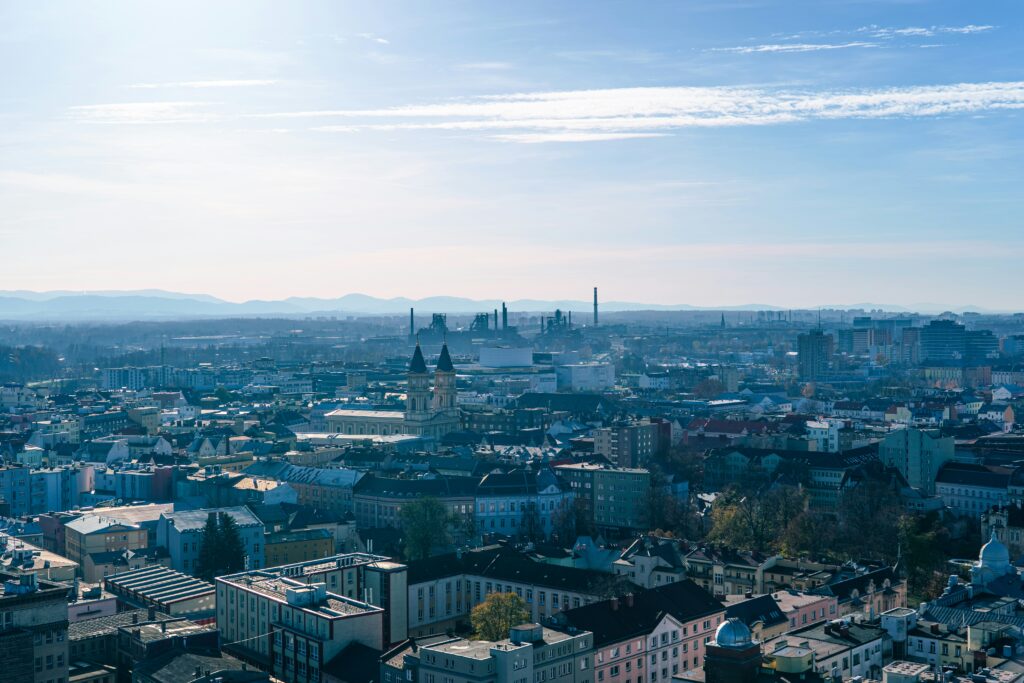
Moravia.
Welcome to wine country
Historical weather trends: The Bohemian standard
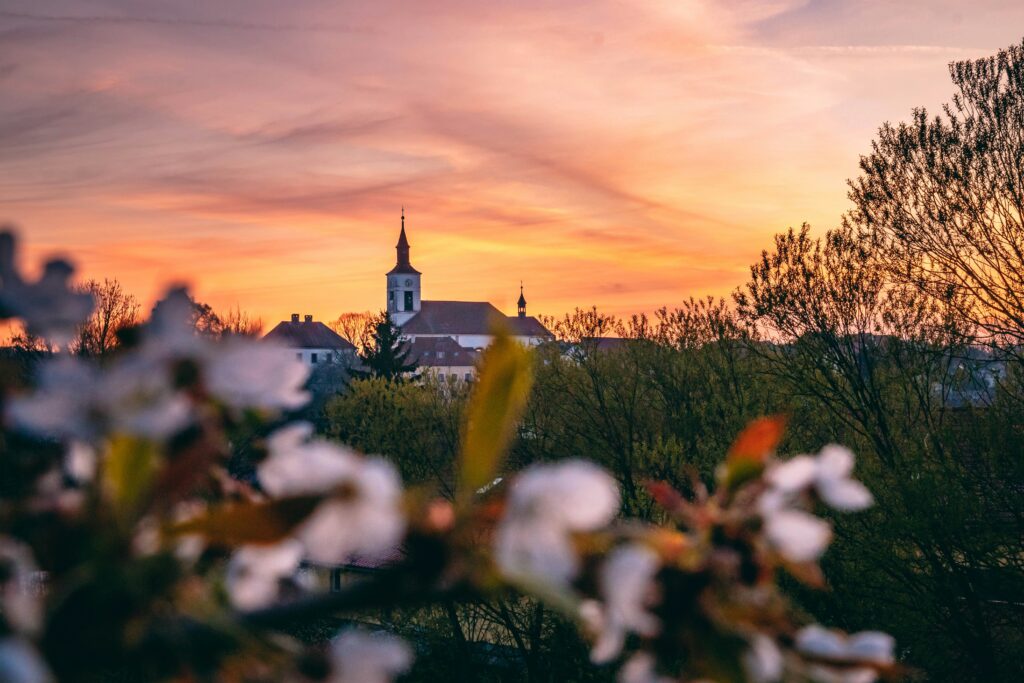
Historically, Bohemia has enjoyed a classic temperate continental climate. This has traditionally meant four distinct seasons with a fairly predictable distribution of precipitation. Summer has always been the wettest season, not due to constant rain, but because of heavy convective storms.
The average annual temperature in the lowlands has historically hovered around 9°C to 10°C. Winters were reliably cold enough to ensure snow cover in the mountains from November through March, providing a steady meltwater source for the rivers in spring. This stability allowed the region’s famous agriculture—particularly its hops and vines—to flourish for centuries.
Český Krumlov.
The jewel of Bohemia
The changing horizon: Future trends and climate reality
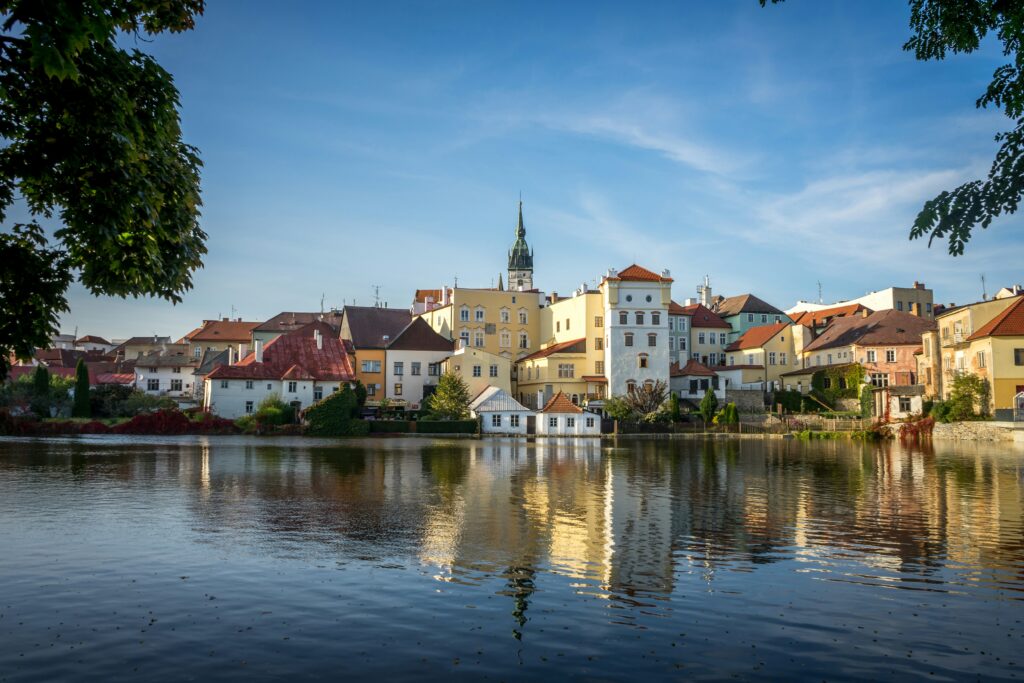
It is impossible to discuss the best time to visit Bohemia without acknowledging that the climate is in a state of flux. Historical averages are being rewritten. The Czech Republic has warmed by approximately 2.4°C since the mid-19th century, and this trajectory is changing the travel experience.
1. The rise of the tropical day
Future projections suggest that the number of tropical days (exceeding 30°C) will continue to increase. For travellers, this means that mid-summer visits now require better hydration and a more flexible itinerary to avoid the midday heat. Wheely Tyred recommends planning outdoor activities for the early morning or late evening during July and August.
2. The shift in winter reliability
The traditional Bohemian winter is becoming shorter and milder. Snowfall in the lowlands is increasingly rare, replaced by rain and slush. For those visiting for the winter aesthetic, the window for guaranteed snow is narrowing, pushing the best chances into late January and February, and exclusively at higher altitudes.
3. Spring droughts and flash floods
Climate models indicate that while total annual rainfall may remain relatively stable, its distribution is becoming more volatile. Spring droughts are becoming more frequent, followed by intense summer flash rain events. This shift suggests that the late spring window (May and June) is becoming drier and more reliable for outdoor pursuits, while mid-summer carries a higher risk of being interrupted by significant storms.
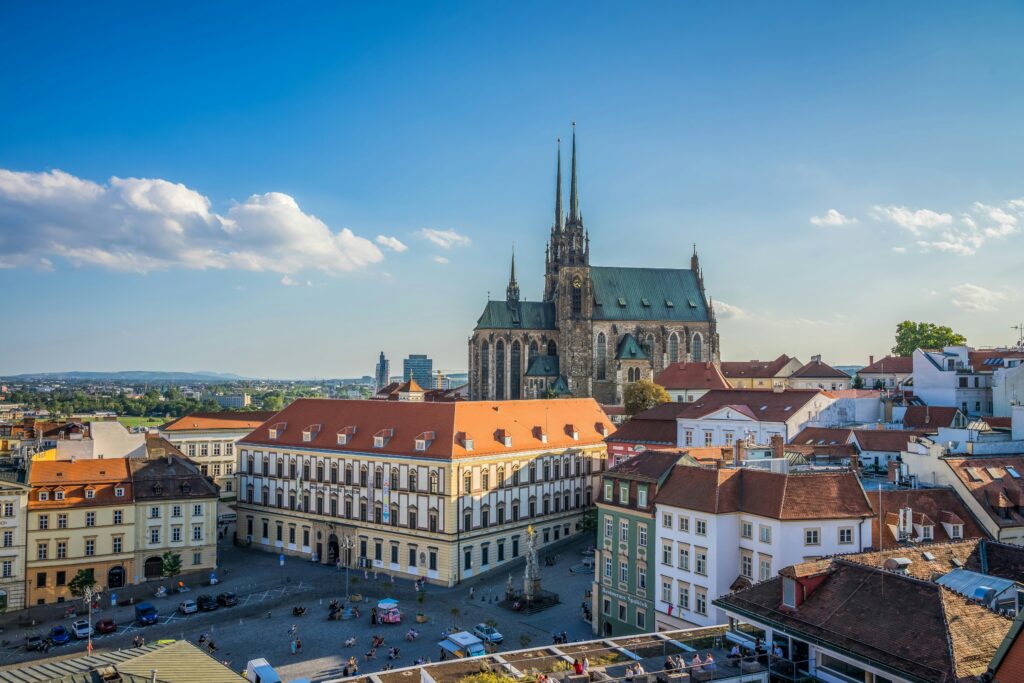
Brno.
Explore Czechia’s second — and best — city
Final thoughts on Bohemia’s weather
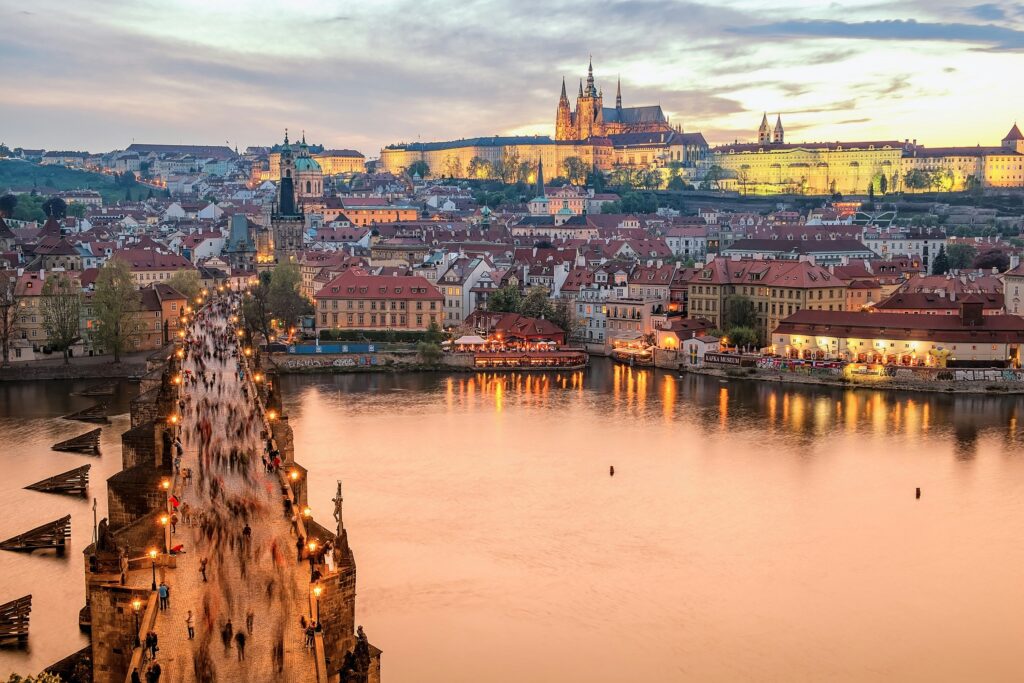
Bohemia remains one of Europe’s most enchanting destinations, a place where history is etched into every stone and forest. To truly capture its essence, May, June, and September remain the gold standard. These months offer the best balance of manageable temperatures, vibrant scenery, and reliable weather.
However, as the climate shifts, the shoulder seasons are expanding. Late April and early October are becoming increasingly attractive for those looking to avoid the crowds while still enjoying comfortable conditions. No matter when you choose to go, Bohemia will meet you with a glass of world-class lager and a landscape that stays with you long after you’ve returned home.
Czechia.
Discover this incredible country.