Spires, Silver, and Stone: The Most Iconic Attractions in the Czech Republic
Discover the landmarks that define Bohemia and beyond at your own pace
The Czech Republic is a land that seems to have been designed specifically for the curious soul. It is a place where the history is layered as thickly as the foam on a freshly poured pilsner, and where every cobblestone alleyway in the capital seems to whisper secrets from the Holy Roman Empire. For those who scoff at the idea of following a tour guide’s neon umbrella or being herded onto a coach for a whistle-stop tour of Central Europe, this country offers a different kind of reward. It is a destination that demands to be seen slowly, with a focus on the details that make the transition from Gothic gloom to Renaissance elegance so captivating.
Wheely Tyred understands that the best way to experience a culture is to immerse oneself in its landmarks without the pressure of a rigid schedule. Whether it is the staggering scale of Prague’s fortifications or the haunting beauty of a provincial ossuary, these are the sites that serve as the anchor for any Bohemian adventure.
1. Prague Castle (Pražský Hrad)
The Largest Ancient Castle Complex in the World
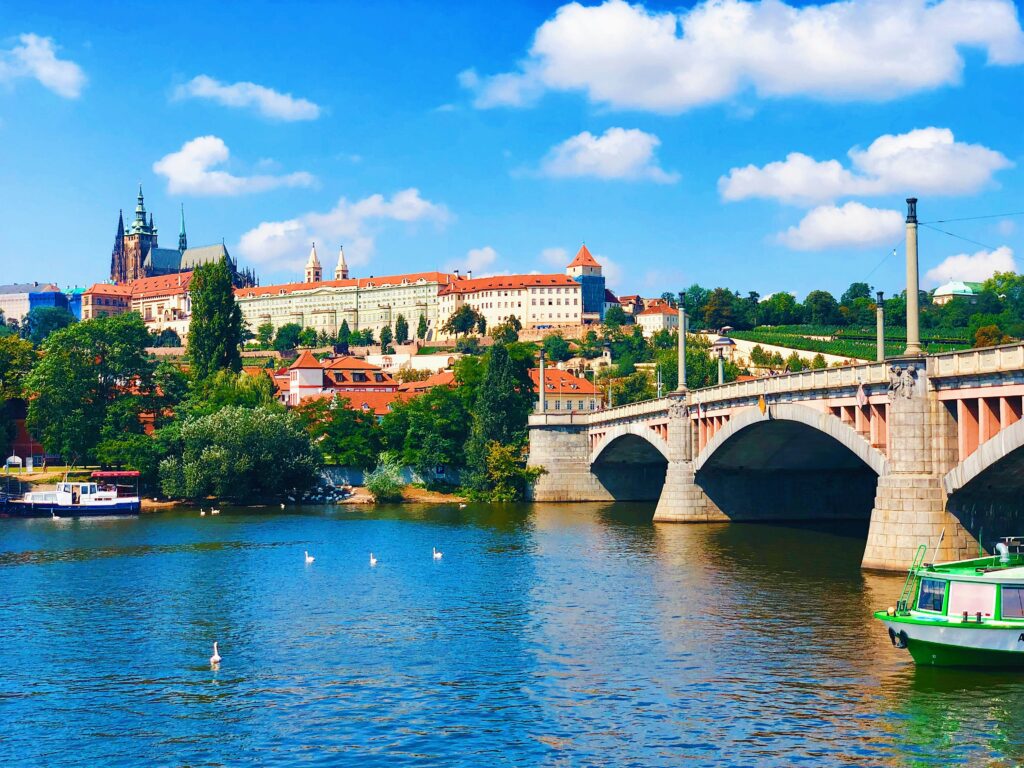
Dominating the skyline of the capital, Prague Castle is not merely a single building but a sprawling administrative and religious city-within-a-city. Spanning nearly 70,000 square metres, it holds the Guinness World Record for the largest ancient castle complex. For the independent traveller, the castle is a masterclass in architectural evolution, featuring everything from 10th-century Romanesque basilicas to 14th-century Gothic cathedrals and 18th-century Classical palaces.
The centrepiece is undoubtedly St Vitus Cathedral. Its soaring spires are visible from almost every corner of the city, acting as a permanent compass for those navigating the streets below. Inside, the stained glass—including a famous window designed by Alfons Mucha—casts a kaleidoscope of colour across the stone naves. Beyond the cathedral, the Golden Lane offers a glimpse into medieval life, with its tiny, brightly coloured houses once inhabited by castle guards and goldsmiths. Avoiding the mid-day rush is essential here; arriving early or staying late allows the scale of the courtyards to truly sink in without the distraction of large tour groups.
2. Charles Bridge (Karlův Most)
A Gothic Masterpiece Over the Vltava
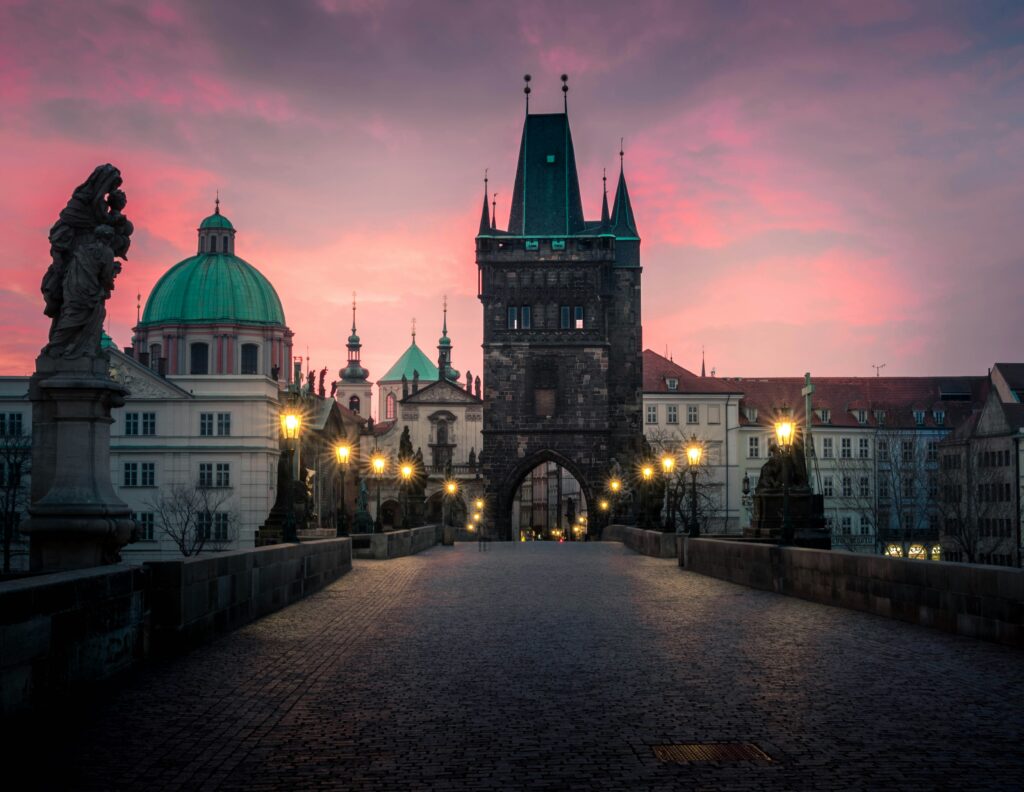
If Prague Castle is the crown, Charles Bridge is the heart of the city. Commissioned by King Charles IV in 1357, this sandstone bridge connects the Old Town with the Lesser Quarter (Malá Strana). It is guarded at both ends by formidable Gothic towers, and its span is lined with 30 statues of saints, the most famous being St John of Nepomuk. Legend suggests that touching the base of this statue will ensure a return to Prague, a superstition that has polished the bronze to a golden sheen over the centuries.
To see Charles Bridge at its best, one must visit at dawn. As the mist rises off the Vltava River and the first light hits the blackened baroque statues, the bridge feels less like a tourist thoroughfare and more like a gateway to another century. It is a place for quiet observation, where the symmetry of the arches and the flow of the water create a rhythm that is lost during the midday bustle.
3. Old Town Square and the Astronomical Clock
The Living Pulse of Prague
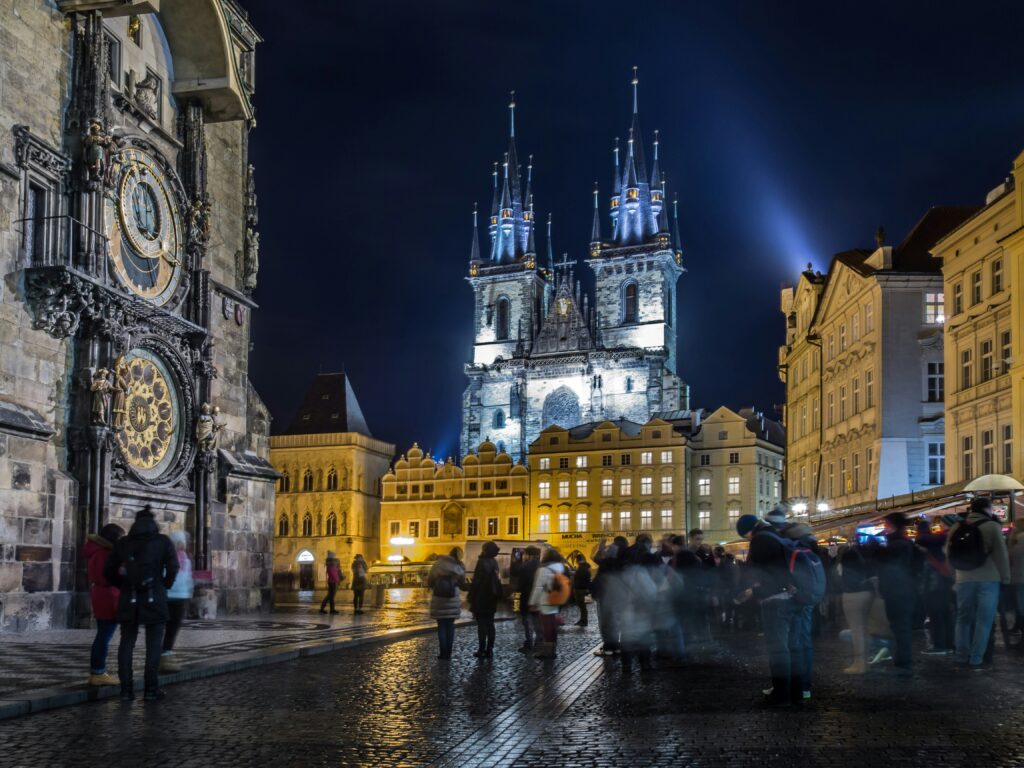
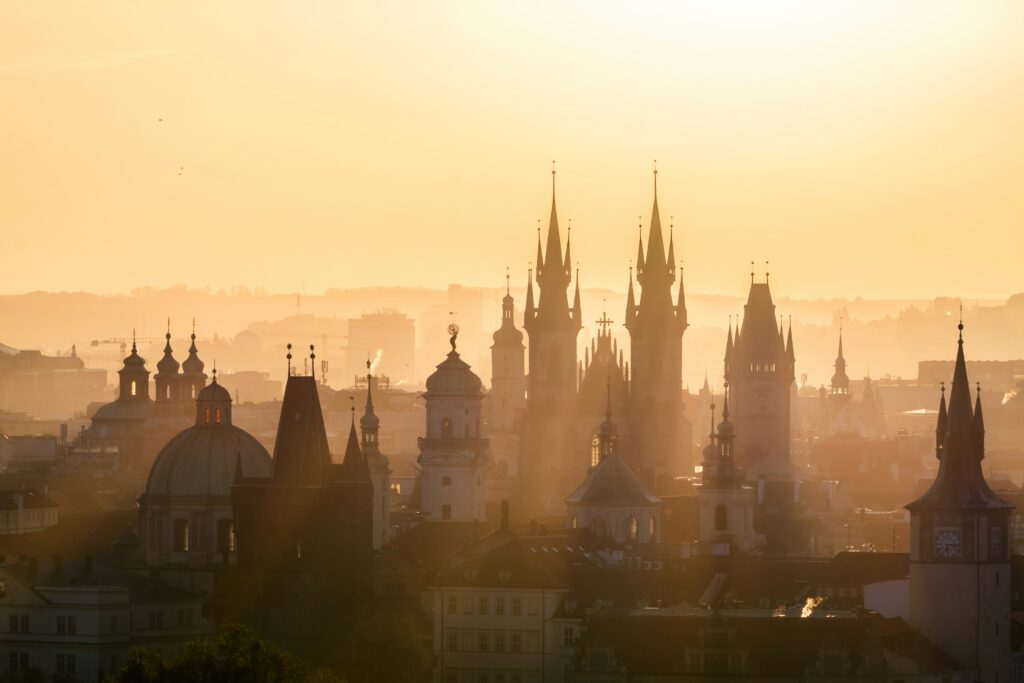
Old Town Square (Staroměstské náměstí) remains one of the most beautiful public spaces in Europe. Surrounded by a mix of architectural styles—from the twin-towered Týn Church to the pastel-hued baroque houses—it is the ideal spot to sit and observe the theatre of city life. The main draw is the Prague Orloj, the medieval astronomical clock mounted on the Old Town Hall.
Every hour, a crowd gathers to watch the Procession of the Apostles, a mechanical performance that has fascinated onlookers since 1410. While the spectacle is brief, the clock itself is a marvel of medieval engineering, tracking the positions of the sun and moon and representing the zodiac. For those who prefer to look deeper, the square also holds reminders of the country’s turbulent past, including the 27 crosses set into the pavement marking the execution of Bohemian lords in 1621.
4. Český Krumlov Castle
A Renaissance Fairytale in South Bohemia
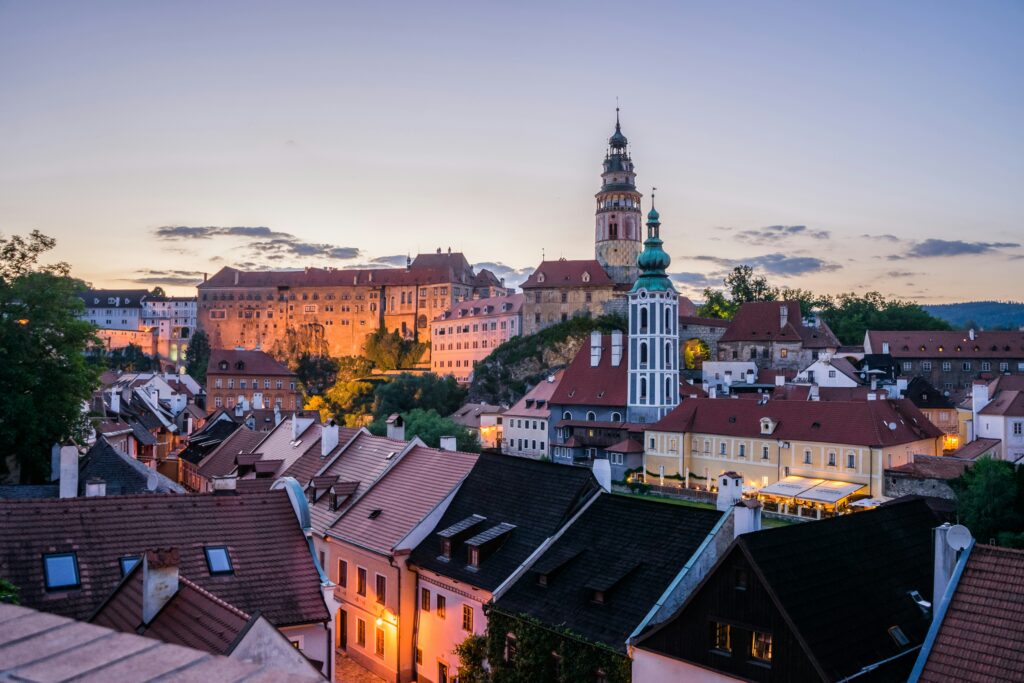
Leaving the capital behind, the town of Český Krumlov feels like a world trapped in amber. The Vltava River loops tightly around the historic centre, and perched on a rocky promontory above is the massive Český Krumlov Castle. It is the second-largest castle in the country and is defined by its whimsical round tower, decorated with vibrant Renaissance paintings.
The castle complex is an explorer’s dream, featuring a unique baroque theatre—one of only two in the world that retains its original machinery and scenery—and extensive gardens. The town itself, a UNESCO World Heritage site, is almost entirely pedestrianised, making it a joy to navigate on foot or by bike. The lack of modern architecture within the town walls ensures that the transition from the castle gates to the riverside taverns feels seamless and authentic.
5. Kutná Hora and the Sedlec Ossuary
Silver Wealth and the Macabre
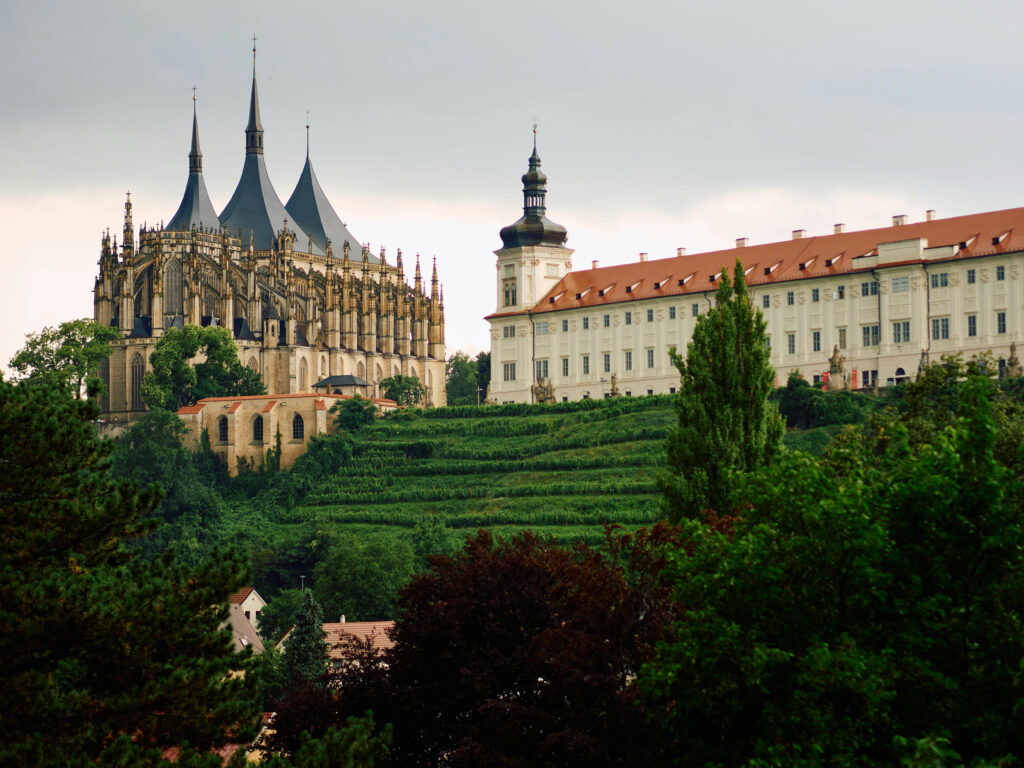
In the 14th century, Kutná Hora was a rival to Prague in both wealth and importance, thanks to its silver mines. Today, it is a quiet, atmospheric town that houses some of the most extraordinary sights in Central Europe. St Barbara’s Cathedral, a five-naved Gothic masterpiece dedicated to the patron saint of miners, is a testament to the town’s former glory. Its flying buttresses and tent-like roofs make it one of the most distinctive religious buildings in the region.
However, most visitors are drawn by something far more unusual: the Sedlec Ossuary. This small chapel is decorated with the bones of an estimated 40,000 people. Far from being a morbid spectacle, the arrangements—including a massive bone chandelier and the coat of arms of the House of Schwarzenberg—are a stunning, if sobering, display of memento mori. It is a site that encourages reflection and provides a unique contrast to the gilded splendour of Prague.
6. Karlovy Vary
The Grandeur of the Imperial Spas
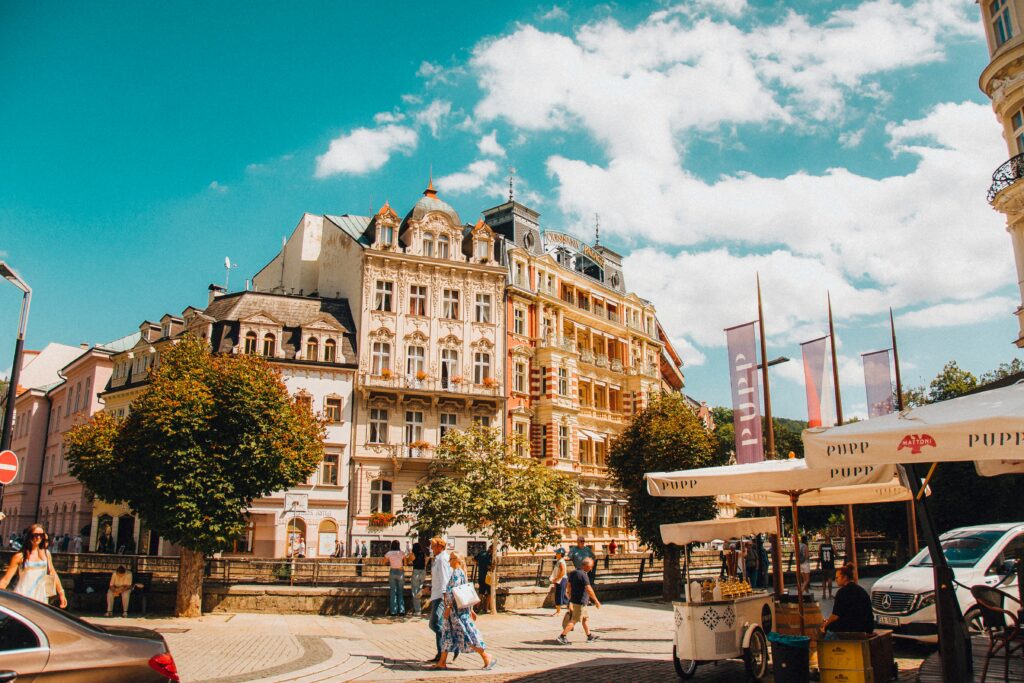
Located in the west of the country, Karlovy Vary (Carlsbad) is the quintessential European spa town. Famous for its twelve thermal springs, it became a playground for European royalty, artists, and thinkers in the 19th century. The town is defined by its elegant colonnades, such as the Mill Colonnade and the Market Colonnade, where visitors can still drink the mineral-rich waters from specially designed porcelain cups.
The architecture here is grand and neoclassical, with the grand hotels and colourful villas climbing the steep sides of the Teplá river valley. For the independent traveller, the surrounding hills offer a network of well-marked trails that provide panoramic views of the town below. It is a place to slow down, indulge in a spa treatment, and appreciate a style of travel that has changed very little in over a hundred years.
The Freedom of the Journey
The Czech Republic is best understood when you have the autonomy to choose your own path. While these icons are essential, the spaces between them hold just as much magic. For those who travel by bike, the landscape opens up in ways that no train or bus can offer. You notice the way the light hits a roadside shrine, the scent of the pine forests in South Bohemia, and the subtle change in the air as you climb toward a mountain pass. This is travel at its most visceral.
In the Prague area, a perfect morning ride takes you along the Vltava toward Troja Palace, a baroque gem just 6 kilometres from the centre, or out to the rugged valleys of the Divoká Šárka nature reserve, located within 10 kilometres of the city. For a longer day trip, the ride from Prague to Karlštejn Castle follows the Berounka River through stunning limestone scenery, offering a rewarding blend of physical effort and historical payoff. Further afield, the Lednice-Valtice Cultural Landscape in Moravia is a flat, vineyard-strewn paradise that is perfect for a full day of cycling between neoclassical follies and grand chateaus.